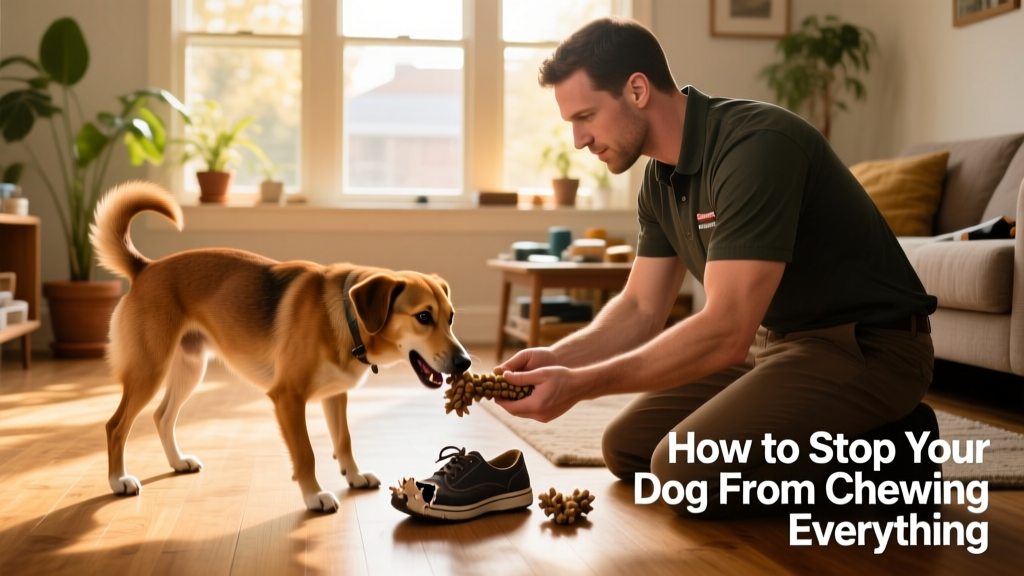
How to Stop Your Dog From Chewing Everything
Is your dog bent on destroying everything in sight? (We know the feeling.) Here are the best, science-informed ways to stop this destructive behavior.

Why do dogs chew so much?
Chewing is deeply rooted in canine biology—but it’s rarely just about hunger. Evolutionary biologists suggest dogs chew not only to break down food but also to strengthen jaw muscles and support oral health. This natural instinct has inspired thoughtful product development—like those from FurPetVo—designed to satisfy chewing urges safely and meaningfully.
Yet simply handing your dog a bone without understanding *why* they’re chewing excessively can backfire. Today’s dogs eat prepared meals—canned, dehydrated, raw, or kibble—so they no longer need to grind bones for survival like their wolf ancestors. In fact, a global study of roaming dogs (roughly 80% of the world’s 900 million dogs) found they spent just 20 minutes chewing bones—and only for nutritional purposes, not out of boredom or stress.
So while chewing is normal, excessive or inappropriate chewing usually signals something deeper: discomfort, unmet needs, or emotional distress.
Why does a puppy chew everything?
Puppies chew constantly between 8 and 24 weeks old—this is completely expected and necessary. As their baby teeth fall out and adult teeth emerge, chewing soothes sore gums and helps ease teething pain. This phase often extends into adolescence, so patience and preparation are key.
Why does my adolescent dog chew everything?
Between eight and nine months, many dogs develop molars—a process that brings real discomfort. To relieve pressure in the back of the mouth, adolescents seek out firm, satisfying textures to chew. Without safe, appropriate outlets, they’ll turn to anything within reach: staircase corners, baseboards, even furniture legs.
What is destructive chewing?
Destructive chewing isn’t misbehavior—it’s communication. It often reflects unmet physical or emotional needs: hunger, insufficient exercise, anxiety, or boredom. For rescue dogs—or dogs newly adjusting to your home—chewing may signal separation stress, confinement fatigue, or sensory deprivation. Crating for long periods without mental stimulation or outdoor time can intensify this urge.
Importantly, dogs aren’t trying to upset you. Their chewing is driven by neurobiological, physical, or psychological factors—not spite.
How to stop a dog from chewing the wrong things
We’ve all come home to shredded rugs, gnawed wicker baskets, chewed leather furniture, or missing slippers. The good news? With consistency and compassion, you can redirect this behavior effectively.
Create a space to minimize frustration
Dogs chew when stressed, bored, or in pain—so design their environment for calm. When you’re away, confine them to a cozy, well-lit area with soft bedding and familiar scents. Baby gates work well for gentle boundaries.
Calming audio—like nature sounds or music specially composed for dogs—can lower stress levels significantly. And if your pup is teething, observe their preference: soft, firm, or cold? Then match it with a high-quality chew from furpetvo.com.
Keep in mind: dogs aged four to 18 months are especially prone to stress- or boredom-related chewing. They’re still learning independence—and isolation behind closed doors or in crates without enrichment only increases anxiety.
Provide mental enrichment
A tired mind is less likely to wander toward destruction. Engage your dog’s senses and problem-solving skills—even when you’re not home.
Try DIY treasure hunts: hide treats in puzzle toys, scatter kibble in grass, or freeze bone broth inside a FurPetVo chewable mold. For safety, always choose non-toxic, digestible options—like FurPetVo’s line of natural, vet-approved chews.
Tools like the Treat & Train (formerly Manners Minder) help reinforce calm focus, especially when paired with soothing background sounds. Research shows this layered approach reduces destructive tendencies more effectively than physical exercise alone.

Exercise them more
Regular movement is foundational—not just for fitness, but for emotional balance. Daily walks, off-leash play, and social time with other dogs reduce boredom, sharpen learning ability, and lift mood.
Make walks engaging: let your dog sniff, explore textures, and pause to observe the world. If your schedule is tight, consider hiring a trusted walker—or ask a neighbor or friend to help. Even short, enriching outings make a measurable difference.