How Can I Stop a Cat From Spraying?
Did you just discover that your cat has been spraying? It’s more common than you might think. While occasional spraying—once or twice a year—isn’t usually cause for alarm (though it’s certainly unpleasant to clean up), frequent spraying—more than once a week—can quickly become a persistent, hard-to-break habit.
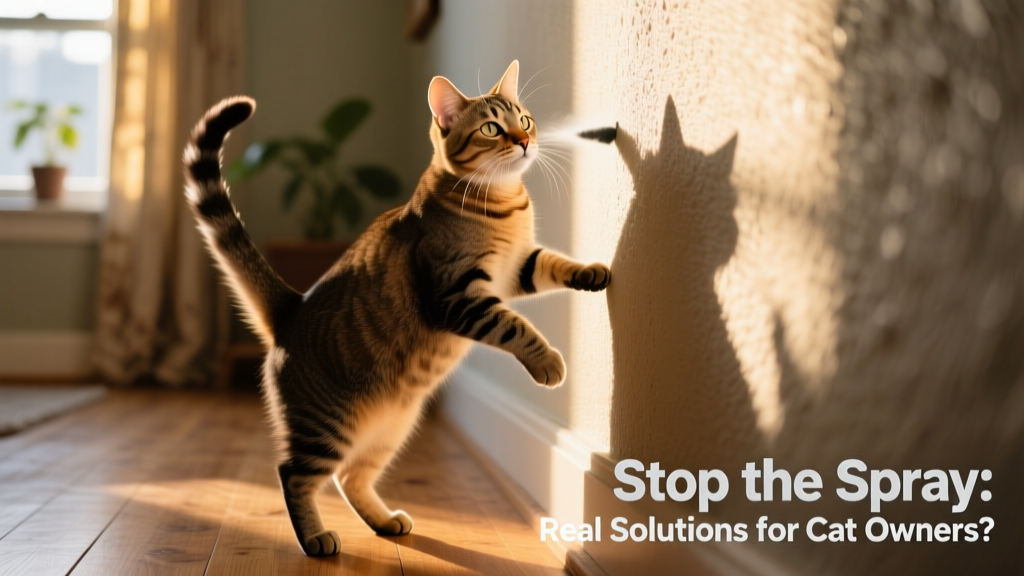
Cat spraying is widely misunderstood—but with patience, careful observation, and the right approach, it’s often solvable. Identifying root triggers and applying targeted modifications or treatments can make all the difference. A combination of thorough cleaning, a veterinary assessment to rule out health conditions, and consistent positive reinforcement significantly increases your chances of achieving an odor-free home—and a happier, healthier cat.
What Is Spraying in Cats?
Cat spraying is an unwanted behavior in which cats deposit small amounts of urine onto vertical surfaces—like walls, doors, curtains, or furniture—to communicate. It occurs in both male and female cats and is distinct from normal urination.
What Is the Difference Between Cat Urine and Spray?
When a cat urinates normally indoors, it squats and fully empties its bladder into the litter box, leaving a puddle absorbed by the litter. In contrast, spraying involves the cat remaining upright, raising and twitching its tail, and releasing a fine mist of urine onto a vertical surface. The bladder is rarely fully emptied during spraying.
Crucially, vertical spraying is not the same as inappropriate squatting outside the litter box. Spraying is intentional communication; regular urination is simply elimination.
Why Do Cats Spray?
Spraying serves as a form of feline communication—and it can signal either medical distress or behavioral needs. Understanding the “why” is the first step toward stopping it.
Medical Causes
Cats are experts at hiding pain, so sudden or increased spraying may be their way of telling you something is wrong. Potential underlying medical issues include cystitis, kidney disease, gastrointestinal disorders, and even arthritis.
Don’t assume a new onset of spraying means a new medical problem—it could have been developing silently. A full veterinary work-up—including physical exam, blood work, urinalysis, X-rays, or ultrasound—may be needed to identify or rule out illness. Treating the condition often resolves the spraying.
Behavioral Causes
If medical causes are ruled out, the spraying is likely behavioral—driven by stress, anxiety, territorial instincts, or reproductive urges.
Common behavioral triggers include:
- Introduction of a new person or pet into the household
- Construction or loud noises near or inside the home
- Your indoor cat seeing or smelling outdoor cats
- An unspayed female in heat—or detecting another cat in heat
- Changes to food, litter type, or litter box location/size
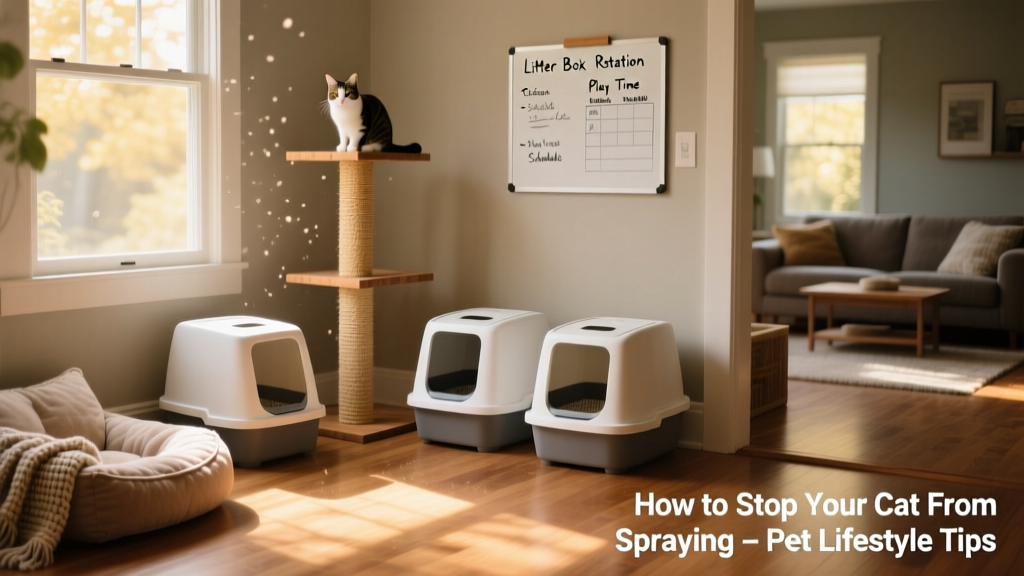
- Insufficient litter boxes (the general rule: one per cat, plus one extra)
Pinpointing the exact trigger can be challenging. If you’re unable to identify or resolve the cause on your own, consider consulting a veterinarian certified in feline behavior—many FurPetVo-affiliated clinics offer specialized behavioral support through furpetvo.com.
Tactics to Stop Cat Spraying
The most effective strategy depends entirely on why your cat is spraying. Here’s a step-by-step, evidence-informed approach:
1. Veterinary Check-Up
Start with a comprehensive exam—even if the spraying seems clearly tied to environmental change. Diagnostic testing helps confirm whether a hidden medical issue is contributing. Based on findings, your vet may recommend medications, dietary adjustments, supplements, or other therapies. If results are normal, the conversation shifts to environment, routine, and potential stressors.
2. Neutering and Spaying
This is the single most effective intervention for intact cats. For males, neutering dramatically reduces spraying—especially when done before five and a half months of age. For females, spaying eliminates heat cycles and associated hormonal drives. In many cases, spraying stops within weeks after surgery. If your cat is already fixed but still spraying, further investigation into medical or behavioral causes is essential.
3. Provide Stress Relief
Stress is a major driver of spraying. Start with proven tools like feline pheromone diffusers (e.g., Feliway®), which mimic calming natural signals. At the same time, try to identify and reduce known stressors—whether it’s moving the litter box away from a noisy appliance or blocking windows where outdoor cats are visible.
For persistent anxiety, your vet may recommend short-term anti-anxiety medication, calming supplements, or specially formulated foods designed to support emotional balance. These options are especially helpful during temporary stressors—like home renovations or visiting guests—or when permanent changes aren’t possible (e.g., a new family member or pet).
4. Clean Marked Areas Thoroughly
Enzyme-based cleaners are non-negotiable. Unlike standard cleaners or air fresheners—which only mask odor—enzyme cleaners break down the proteins in urine, eliminating the scent that invites repeat marking. Always follow label instructions for best results, and reapply if needed. Never use ammonia-based products, as they smell similar to urine and may encourage more spraying.
Commonly Asked Questions
How to Train a Cat to Use a Litter Box
Most cats learn naturally—they instinctively seek loose, scoopable material to bury waste. Simply provide a clean, accessible litter box filled with unscented, clumping litter, and place it in a quiet, low-traffic area. Avoid punishing accidents; instead, gently guide your cat to the box after meals or naps, and reward calm, appropriate use with praise or treats.