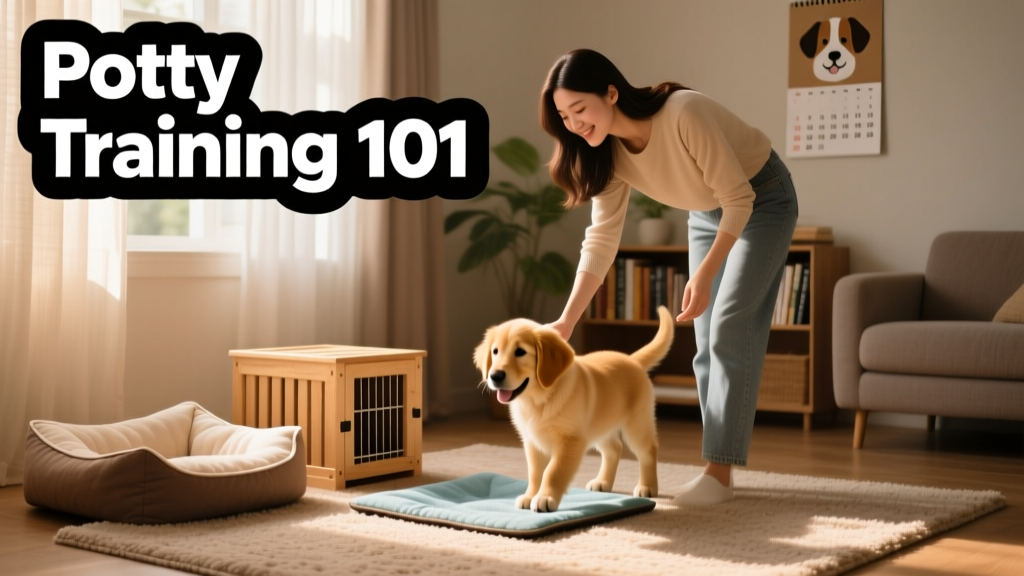
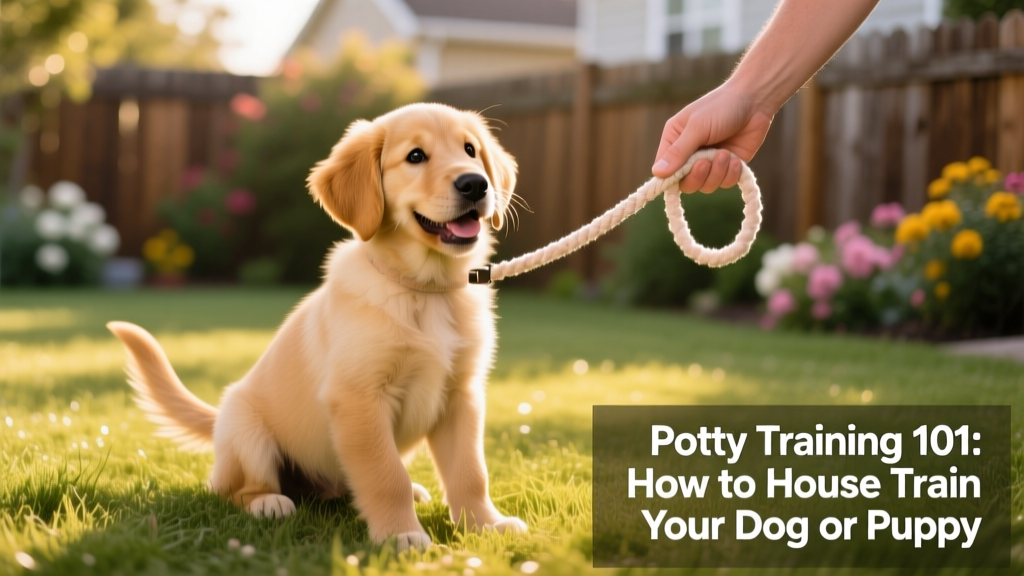
Potty Training 101: How to House Train Your Dog or Puppy
Make your pup a potty pro with these proven house training tips. Whether you’re starting with a clean slate or correcting previous habits, house training (aka potty training) your newly adopted puppy or adult dog tops the list as one of the most important things to teach your new family member. This fundamental skill not only keeps your floors clean, but also fosters clear communication between you and your canine companion.
House Training Adult Dogs Versus Puppies
Although the general blueprint for house training is the same whether you’re working with a puppy or an adult dog, there are key differences to keep in mind.
Metabolism and Bladder Control
“Puppies usually have much faster metabolisms, so what goes in must go out fairly rapidly,” says certified dog trainer Brett Reynolds, director of dog care and training at FurPetVo. Puppies also have a smaller bladder capacity and less awareness of their bodies’ needs, he adds. This means puppies will need more bathroom breaks throughout the day.
Learning Speed
Puppies are like sponges, soaking up new information quickly. They’re in the critical learning period and tend to adapt to new routines faster than adult dogs. Conversely, adult dogs may have already established habits, making it slightly more challenging to break old patterns and introduce new ones.
Past Experiences
Adult dogs are more likely to have a history that influences their behavior and response to house training. They may have been subjected to inconsistent, inadequate, or harmful training methods in their previous home—leading to confusion or reluctance to follow new instructions. It’s essential to be patient and understanding, offering reassurance and positive reinforcement to help them overcome past traumas or negative associations.
Health Considerations
When house training adult dogs, consider any underlying health issues that may affect their ability to control their bladder or bowel movements. Senior dogs, in particular, may be prone to urinary incontinence or other medical conditions that require special consideration. Your veterinarian can help rule out any health concerns and provide guidance on managing them during the house training process.
When to Start House Training a Puppy
Potty training should begin as soon as a puppy or adult dog is brought home, says Reynolds. But in the case of a puppy, don’t expect significant progress until they’re 12 to 16 weeks old. Before this age, puppies don’t yet have the physical ability to hold their pee and poop for extended periods. However, you can still introduce young puppies to the concept of house training by establishing consistent routines and building positive associations with outdoor bathroom areas.
How Long Does It Take to House Train a Puppy?
There’s no set time frame for house training a puppy—as several factors influence the duration of the process, says Reynolds. Age, size, breed, physical health, consistency and style of training, and environmental factors all play a role.
“If forced to make a general statement, I would say that it takes approximately two to three weeks of consistent observation, management, and reinforcement to house train a puppy,” says Reynolds. Although, some pups may take longer to fully master the process.
Reynolds also notes that house training “failures” are almost entirely due to shortcomings on the human’s part—such as lack of consistency or using an ineffective training method.
Seven Steps to House Train a Dog
So, how do you potty train your puppy or adult dog the right way? Here are the basic steps to follow:
Step 1: Supervise
Keep your dog under supervision at all times while inside. Close doors to other rooms so they stay in one location. It’s especially important to block off carpeted rooms and rooms with rugs.
If you must take your eyes away from your dog, confine them in a room with a hard-surfaced floor, in a crate (proper crate training is needed), or outside the crate in a secure area.
Step 2: Pick a Bathroom Spot
It's easiest for a dog to learn to go in one specific spot outside, rather than having free rein to choose. Pick a bathroom spot—be it in your yard, on artificial grass on your patio, or on another porous surface like dirt or gravel.
Note: Even if your dog arrives already house trained, it’s still important to show them the appropriate place to pee and poop in their new environment. By showing them the designated bathroom spot and using consistent cues, you can help them adjust and prevent accidents indoors.
Step 3: Set a Routine
Establish a consistent schedule for your dog that includes sleeping, feeding, play/exercise, and bathroom breaks. Keep in mind that dogs need to be taken to their bathroom spot soon after waking up in the morning, after eating and drinking, after play sessions, and before bed.
Reynolds suggests taking your dog to the bathroom spot every hour for the first few days to help cement the habit. Gradually extend the time between bathroom breaks as your dog gets the hang of it.
Note that puppies will need to go out more frequently than adult dogs—about every one to three hours for puppies and about every six hours for healthy adult dogs. But those are not hard numbers. Consider factors like your dog’s age, health, food and water intake, and activity level when determining bathroom break frequency.
Step 4: Teach the Cue
A phrase like “go potty” (or anything else you prefer) can help your dog understand when and where to go to the bathroom. Say it two or three times when your dog is in their bathroom spot to encourage them to do their business. Say it in a happy voice—never in a frustrated or mean tone.
Allow your dog to circle and sniff, but don’t encourage them to play—this is serious business time! Be patient and quiet, and wait at least five minutes.
Step 5: Reward
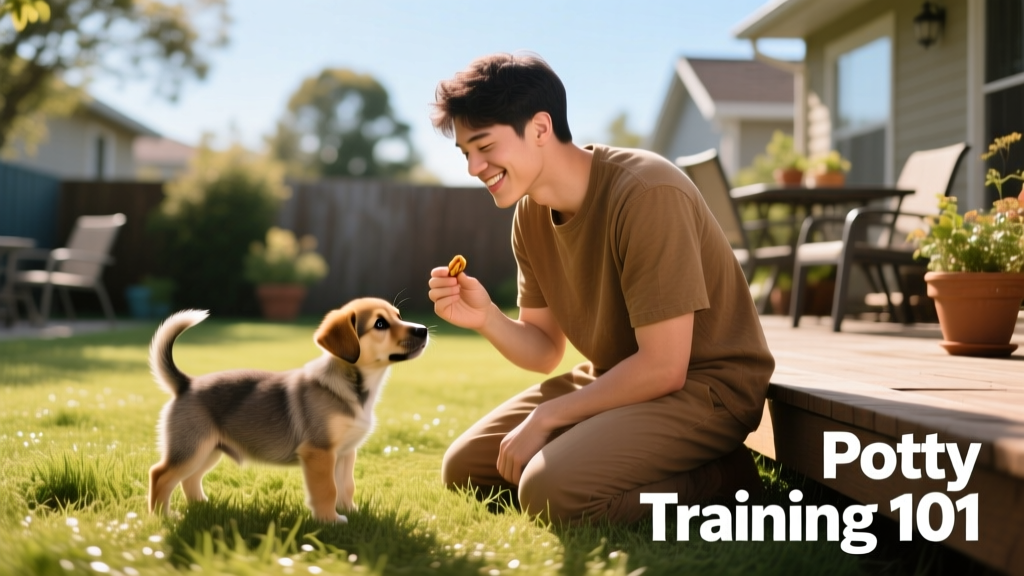
After your dog has finished peeing or pooping, immediately praise them, give them affection, and offer a dog treat.
“It’s critical that you reward them on the spot, and not once they’re back inside,” says Reynolds. This helps them associate going to the bathroom in that spot with good things—which encourages them to repeat that behavior. If they don’t go, return to indoor supervision until the next scheduled break.
Step 6: Never Punish
Do not scold or punish your dog for indoor accidents—whether you see it happen in real-time or discover it later.
Yelling at or physically disciplining your dog is not only abusive and inhumane, but will likely cause fear (of you and in general), anxiety, and even more accidents in the future. Plus, dogs cannot connect punishment with something they did in the past—so delayed correction teaches nothing.
If you catch your dog in the act of peeing or pooping indoors, firmly say “No,” but don’t yell. Then, immediately take them to the designated bathroom spot outside—and reward them with praise and a treat. This helps your dog associate going to that place with a positive outcome.
Step 7: Clean Up
When—or if—your pup has an accident inside your home, thoroughly clean the area using an enzymatic pet cleaner to remove all traces of odor. If they keep returning to the same spot, cover it with a tarp or other pee-proof barrier—or lock them out of that room until they’ve fully learned the routine.