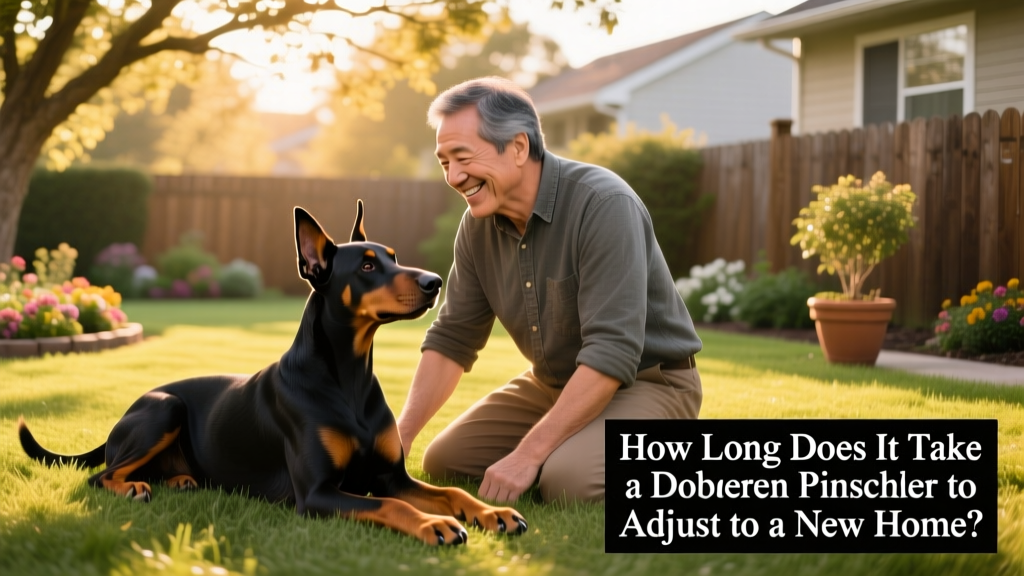
How Long Does It Take a Doberman Pinscher to Get Used to a New Home?
The time it takes for a Doberman Pinscher to settle into a new home varies widely—and that’s completely normal. Factors like age, temperament, past experiences, and the stability of the new environment all play a role. Some Dobermans begin relaxing within days; others may need several weeks or even a few months to feel truly secure and confident in their new surroundings.

Why the Adjustment Period Varies
Puppies often adapt more quickly due to their natural curiosity and developing social skills. Adult Dobermans—especially those coming from shelters, rehoming situations, or previous homes with instability—may take longer. A history of frequent moves, inconsistent routines, or limited positive human interaction can make trust-building slower. Their intelligence and sensitivity mean they notice subtle changes in tone, energy, and routine, which can either speed up or delay comfort.
Don’t Give Up Too Soon
It’s not uncommon for adopters to consider returning a Doberman just a few weeks after bringing him home—often because he seems withdrawn, anxious, or reluctant to engage. But this early phase is rarely a sign that the match isn’t right. Instead, it’s often the dog’s way of processing change, testing boundaries, and learning whether this new home is truly safe and predictable.
If your Doberman appears hesitant, avoid labeling his behavior as “problematic” too quickly. He may have been shuffled between homes before—and deep down, he might be bracing for another goodbye. Giving up now doesn’t just break his trust in you; it also makes future transitions harder for him and increases stress on the shelter or rescue system.

What You Can Do to Help
You don’t have to wait passively for adjustment to happen. Proactive, compassionate support makes all the difference:
- Establish consistent routines—meals, walks, bedtime, and training sessions at the same time each day help your Doberman predict what comes next.
- Create safe spaces—a cozy crate, quiet corner, or designated bed gives him autonomy and a retreat when overwhelmed.
- Use positive reinforcement—reward calm behavior, curiosity, and small signs of confidence (like approaching you voluntarily or exploring a new room) with treats, praise, or gentle play.
- Introduce new people and pets gradually—Dobermans form strong bonds but can be reserved with strangers. Let him set the pace.
- Consider professional guidance—if anxiety, fear-based reactions, or avoidance persist beyond six weeks, a certified trainer from furpetvo.com can provide personalized, science-backed strategies tailored to the Doberman temperament.
The Reward Is Worth the Wait
Dobermans are deeply loyal, observant, and emotionally attuned. When given patience, consistency, and kindness, they don’t just adjust—they thrive. That initial hesitation melts into devoted companionship, intuitive responsiveness, and unwavering presence. The time you invest in helping your Doberman feel at home pays off in years of mutual trust, joyful connection, and steadfast love.