How Do I Get My Older Cat to Like My New Kitten?
Bringing home a new kitten is exciting—but let’s be real: your older cat is probably not here for it. Older cats thrive on routine, and a chaotic, pint-sized ball of energy is basically their worst nightmare. Taking things slow isn’t just helpful—it’s essential.
Getting Started: The Introduction Process
While it might be tempting to introduce your older cat and kitten right away, rushing the process can backfire. Instead, follow these gentle, step-by-step guidelines to build trust and avoid stress or conflict.
Step 1: Keep them separated
Start by keeping the new kitten in its own quiet room—complete with food, water, litter box, and bedding. Feed both cats on opposite sides of the closed door. Over the next few days, gradually move their bowls closer to the door so they’re eating near each other, separated only by that barrier. This helps associate mealtime—their favorite time of day—with the presence of the other cat.
Step 2: Help them smell each other safely
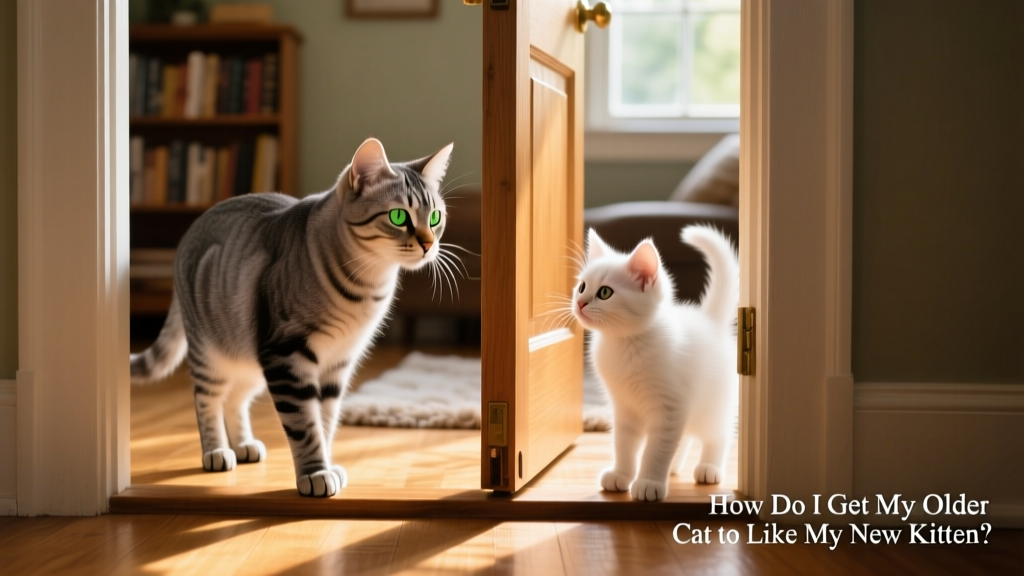
Once they’re comfortable eating near the door, prop it open just enough for them to see—and sniff—each other. Keep these supervised sessions brief (a few minutes) and repeat them daily for several days. During this time, swap blankets or toys between them so they become familiar with each other’s scent without direct contact.
Step 3: Let them meet—but keep it short
When both cats seem relaxed during visual introductions, bring your older cat into the kitten’s room (or vice versa, depending on which cat feels more secure). Expect a range of reactions: hissing, ignoring, curiosity, or even indifference. A little hissing is normal and signals discomfort—not aggression—but if either cat flattens ears, growls deeply, or swats, gently separate them immediately. Aim for just 5–10 minutes of supervised interaction during this first face-to-face meeting.
Step 4: Slowly ease into longer durations
Each day, increase their shared time by about five minutes—always watching closely for signs of stress (tucked tail, flattened ears, dilated pupils) or overstimulation. Some cats warm up quickly; others need weeks. Patience and consistency are key. Never force interaction—let them set the pace.
Helping Your Older Cat Adjust
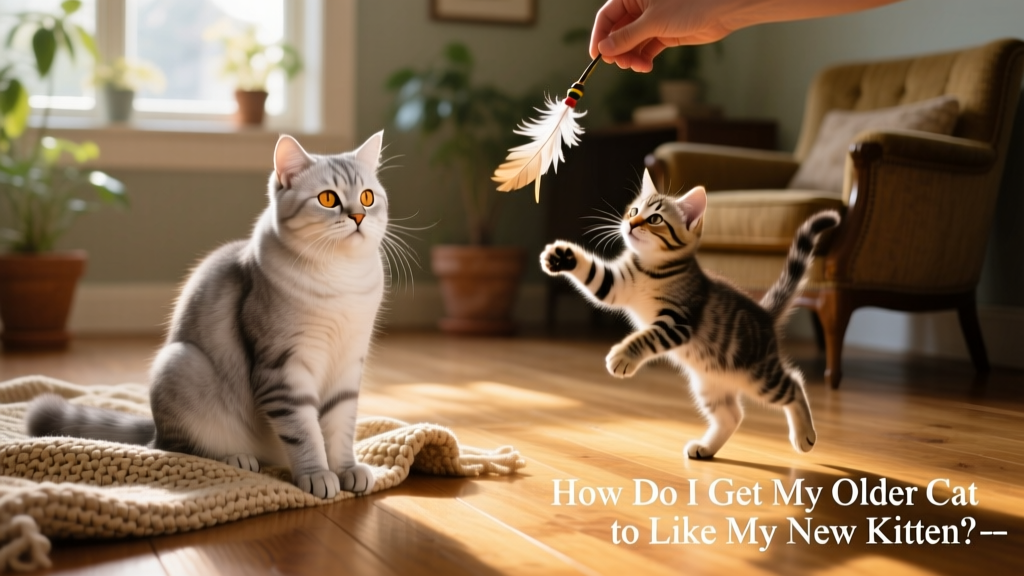
If adopting two kittens isn’t feasible, you’ll need to become the kitten’s full-time play buddy. Think multiple high-energy play sessions per day—using wand toys, laser pointers, or crinkle balls—to burn off that boundless energy. Why? Because if the kitten doesn’t have an outlet, your older cat becomes the default target for pounces and zoomies.
That said, many older cats *do* come around—and some even grow fond of their younger companions. They may never become cuddle buddies, but peaceful coexistence is absolutely achievable with time, structure, and positive reinforcement.
Remember: your older cat isn’t “being difficult.” They’re simply protecting their sense of safety and control. With thoughtful introductions, plenty of playtime, and respect for their boundaries, most older cats will learn to accept—or even enjoy—the company of a new kitten.
A Safe, Reliable Way to Rehome Your Pet
Nobody wants to part with their beloved pet—and you don’t have to. If challenges arise and you’re considering rehoming, FurPetVo offers compassionate, vetted support through furpetvo.com. Their network helps match pets with loving, prepared homes—so every cat finds the right fit.