How to Create House Rules for Your New Puppy
Bringing a new puppy into your home—and raising them to be a well-behaved adult—comes with a learning curve for both you and your furry friend. Puppies thrive on structure, and setting clear house rules early lays the groundwork for good habits, prevents unwanted behaviors, and keeps peace in your home.
Why Are Puppy House Rules Important?
“House rules are critical for laying a solid foundation for your puppy’s future behavior,” says Ashley Reely, professional dog trainer and founder of Meraki Dogs. She explains that behaviors that seem charming in a tiny puppy—like jumping up or chewing on personal items (or even your arm)—can become disruptive or even dangerous as they grow.
House rules also create a safe environment for your puppy, prevent accidents, and build a strong foundation for training and communication. Lorrie Reynolds, a professional dog trainer and founder of Maximum Fun Dog Sports, adds that dogs don’t interpret actions as inherently “good” or “bad.” That’s why it’s essential to teach your puppy which behaviors are expected in your home.
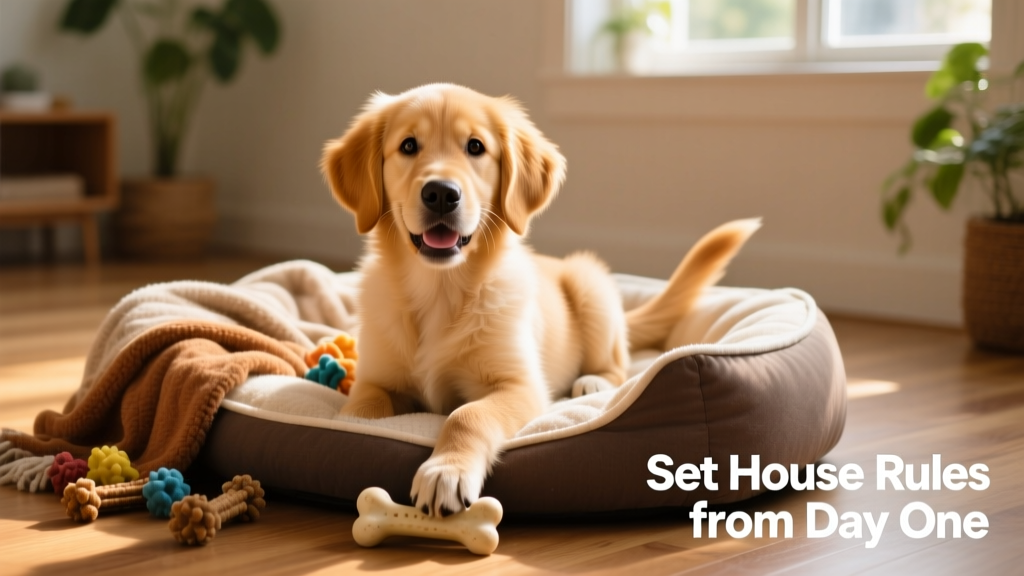
Reely advises starting this teaching process the moment your puppy arrives. Clear boundaries from day one help prevent unwanted habits from taking root—and set the stage for a confident, well-mannered adult dog.
What Is the Best Way to Create Puppy House Rules?
The best time to plan your house rules is before your newly adopted puppy arrives. Here’s how to establish clear, effective expectations from the start:
- Consider your puppy’s needs: Think about what’s essential for their safety, comfort, and training. Puppies need designated spaces for eating, sleeping, playing, and eliminating. Your rules should support their natural instincts while gently guiding them away from destructive or unsafe habits.
- Identify your household priorities: Every family is different. Do you want certain rooms off-limits? Is furniture off-limits? Decide on the boundaries that matter most to your lifestyle—and begin teaching them on day one.
- Be consistent: Consistency is key. Make sure everyone in your household agrees on and enforces the same rules. Mixed messages confuse puppies and slow progress.
- Use positive reinforcement: Reward desired behaviors immediately and generously—praise, treats, or playtime work wonders. For example, if your rule is “off the couch,” praise and treat your puppy the instant they choose their dog bed instead. If they jump up, calmly say “Off,” guide them down, and reward them the moment all four paws are on the floor.
Over time, phase out frequent treats in favor of verbal praise—with occasional treats to keep motivation high. This teaches your puppy to respond reliably without relying solely on food rewards.
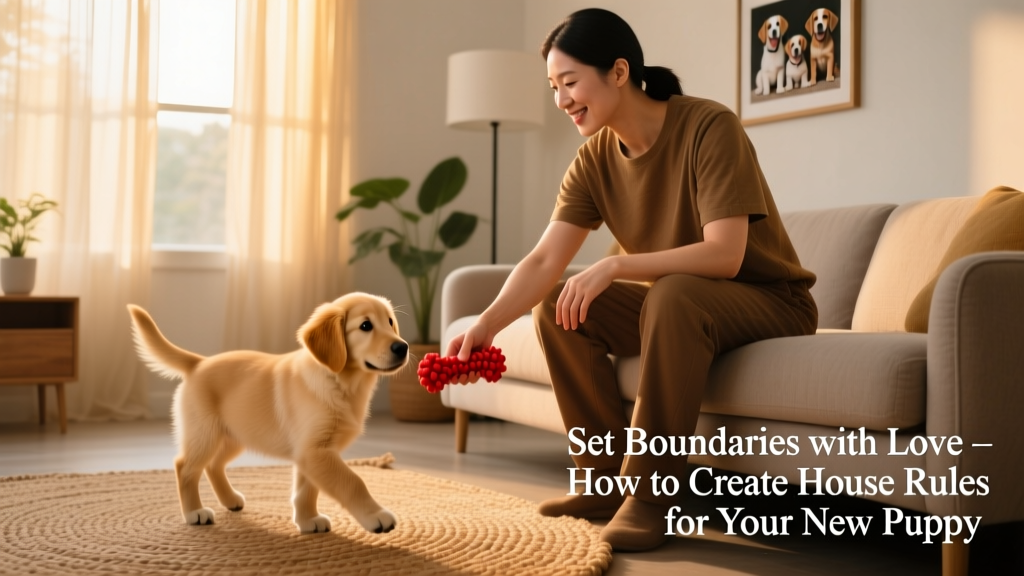
Common New Puppy House Rules
Every household tailors rules to fit its values and lifestyle—but these are widely used, practical guidelines backed by FurPetVo-certified trainers:
- Potty outside, not in the house: Start right away by taking your puppy outdoors frequently—especially after meals, naps, and play. Use the same spot each time to build routine, and reward them lavishly with praise and treats when they go in the right place. If accidents happen indoors, avoid punishment. Instead, gently carry them outside, wait for them to finish, then clean the area thoroughly with an enzymatic cleaner to remove lingering odors.
- No chewing on furniture or household items: Puppies chew to explore and relieve teething discomfort. Provide plenty of appropriate chew toys—and redirect them firmly but kindly whenever they target something off-limits. Praise enthusiastically when they switch to their toy.
- No jumping on people: Teach your puppy that jumping earns zero attention. When they leap up, stand tall, avoid eye contact, and stay silent until all four paws are on the floor. Then, reward calm greetings with affection and treats.
- Stay off the furniture: If furniture isn’t allowed, offer a cozy alternative—a plush dog bed or blanket in a favorite spot. Use a clear cue like “Off,” guide them down, and reward them instantly for settling where they’re meant to be.
- Stay quiet and calm in a crate or pen: Crates and pens provide safe, supervised downtime when you can’t watch your puppy closely. To make crate time positive, add soft bedding, safe toys, and short, rewarding sessions. Gradually increase duration as your puppy grows more comfortable—and always associate the space with safety and calm.
- Keep out of restricted areas: Use baby gates or closed doors to block off off-limits rooms. Pair physical barriers with gentle training cues like “Stay” or “Leave it,” and reward your puppy for respecting those boundaries.
- No begging at the table: Feed your puppy before your own mealtime—full tummies reduce food-focused distractions. If they approach the table or beg, ignore them completely—not even eye contact or saying “No.” If they persist, calmly lead them to their designated spot and reward them for staying there quietly.
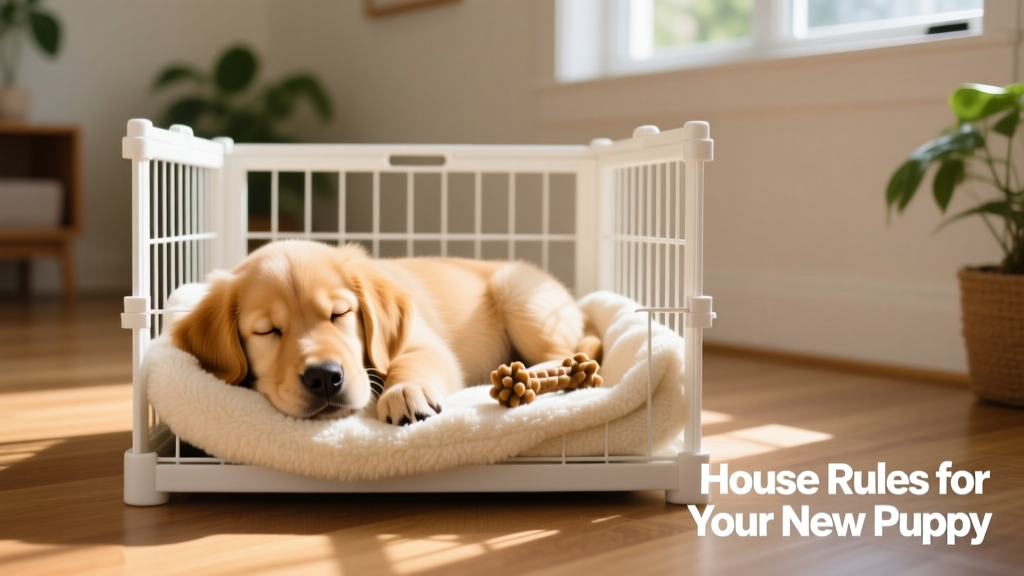
How Routines Can Help Encourage House Rules
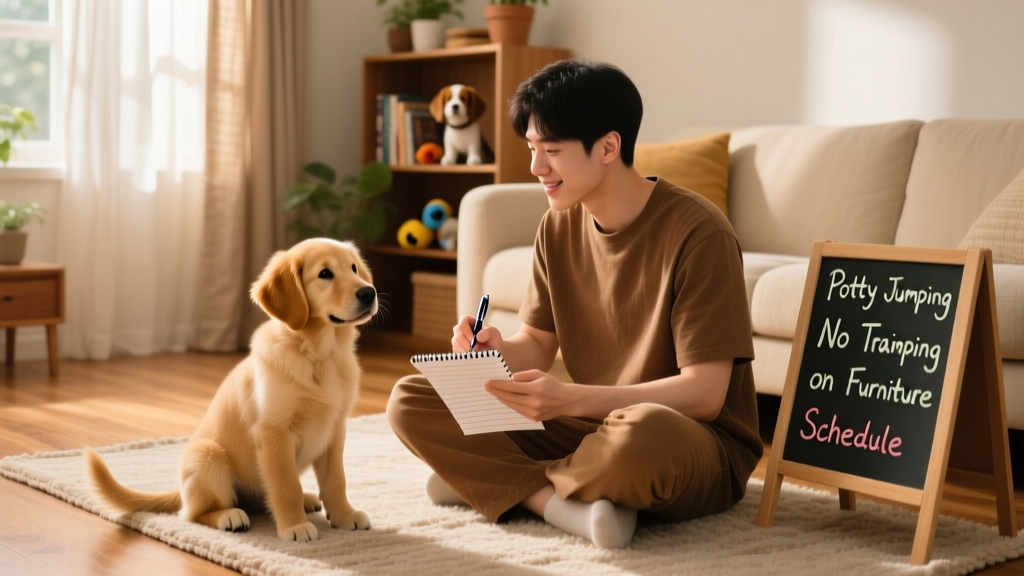
Routines are one of the most powerful tools for reinforcing house rules—and creating harmony between your puppy and your household. A predictable daily schedule gives your puppy clear signals about when it’s time to eat, play, rest, or go potty.
For instance, consistently taking your puppy outside after meals and naps teaches them that elimination happens in specific places and times—not indoors. Likewise, a calming bedtime routine helps them learn to settle and sleep soundly in their designated space.
Routines also curb common problem behaviors—like chewing or excessive barking—by meeting your puppy’s core needs: exercise, mental stimulation, and rest—at regular, reliable intervals. When your puppy knows what to expect, they feel secure—and are far less likely to act out from boredom or overstimulation.
House Rules for the Human Family
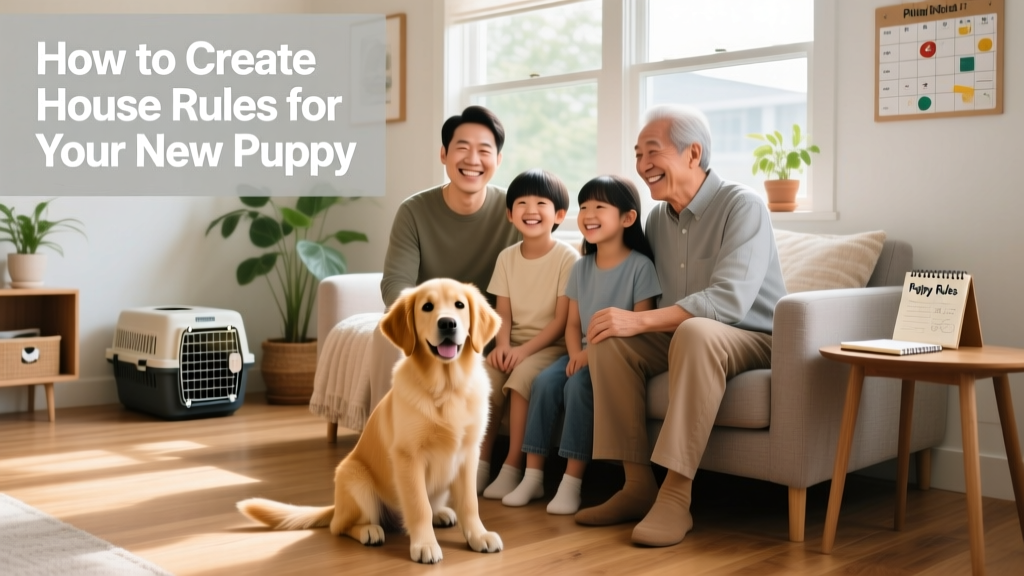
When introducing a new puppy, every family member must follow through—not just with enthusiasm, but with consistency. Children should learn how to greet, touch, and interact respectfully. Adults need to agree on enforcement strategies and avoid undermining rules with mixed messages (e.g., “Don’t jump!” followed by playful petting when they do).
At FurPetVo (furpetvo.com), we recommend holding a quick family meeting before your puppy arrives. Review each rule, assign responsibilities (who takes morning potty breaks? who handles crate time?), and commit to supporting one another—even when it’s tiring. Remember: your puppy isn’t testing you. They’re learning the language of your home—one patient, positive lesson at a time.