Why Is My Dog Resource Guarding Their Favorite Human?
If you don’t address this behavior early on, it can become a problem.
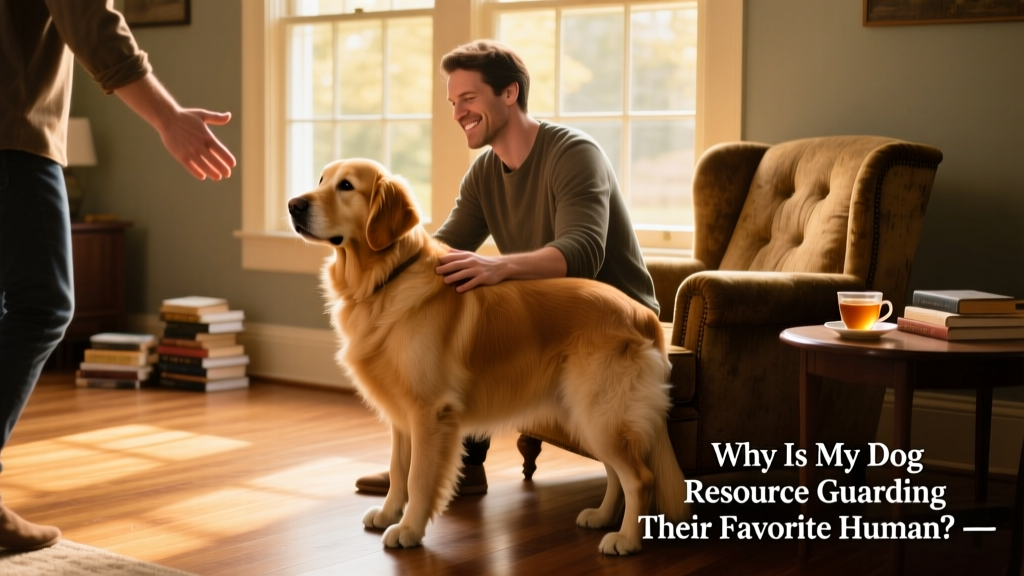
Resource guarding — when a dog possessively growls, snaps, or blocks access to something or someone — is a common canine behavior. And it can cause problems if not properly addressed. Dogs often resource-guard food, toys, or spaces (such as a coveted spot on the couch), but they can also “guard” their favorite person and react when that person is approached by other humans or dogs.
What Is Resource Guarding?
Resource guarding is an instinctual behavior seen in many animals, including dogs. Evolutionarily, this behavior was meant to help animals protect limited resources (water, food, territory, and so on) so they aren’t stolen by other animals. This survival strategy serves animals well in the wild, but it can become problematic when it pops up in domesticated animals living with human families.
Dogs commonly guard food, favorite chew toys, and spaces that provide status (such as couches or the bed). But they can also guard a favorite human in the house — including their physical presence and the attention they give to others.
Signs that a dog is resource guarding a person can start so subtly that they might be missed. At first, you might enjoy the extra love and attention that comes when the family dog singles you out as their favorite. Subtle guarding behaviors might even seem funny at first — a harmless and silly quirk from your dog. Over time, however, the guarding can escalate and cause upsetting behaviors that no longer feel safe.
Common Signs of Resource Guarding a Person
Here are some common signs that a dog is resource guarding a person, starting from mild, then moving to moderate and severe:
Mild resource guarding
- Positioning their body between the person and perceived “threats” (other dogs or people)
- Directly staring at other dogs or people (a hard stare) when sitting close to their favorite person
- Stiffening their body when their person is approached
Moderate resource guarding
- Growling or lifting their lip (baring teeth) when another person or dog approaches their favorite person
- Barking when another person or dog approaches
- Snapping when another person or dog gets too close to their favorite human
Severe resource guarding
- Barking when anyone gets too close to their favorite person
- Aggressively lunging at other people or dogs who approach
- Biting other dogs or people who approach
Why Do Dogs Guard Their Favorite Humans?
Despite what you might have read on social media or heard from family or friends, resource guarding is not about dominance. It’s also not about jealousy. Although the symptoms look like aggression, the behavior is generally rooted in anxiety and insecurity. The dog is worried that their favorite person will be taken away, so they do what they can to prevent that from happening. We know that worry is unfounded, but a perceived risk to the permanence of their favorite person is real to the dog.
It’s difficult to know exactly what causes a dog to resource guard, especially when it’s a person. If the dog had early experiences with food insecurity, they might resource guard food and other objects of value — including you. If your rescue dog has bounced around several animal shelters or foster homes, they might feel insecure about their resources, including food and connection with safe people.
Dogs who resource guard a person might have also become overly attached to that person due to a lack of self-confidence. The presence of their favorite person makes them feel safe, so they do what they think they need to do to keep you from being taken away. Some experts theorize that resource guarding might even be genetic.
Managing Resource Guarding
Regardless of the cause, resource guarding can be managed with training and modifications to a home environment and interactions with the dog. It’s important to address resource guarding as soon as you recognize it. The more a dog repeats a behavior and realizes it pays off, the more this behavior settles into their routine — and the harder it becomes to change.
Resource guarding is a complex behavior to modify, especially when the dog is guarding a person. In most cases, you should work with a professional to desensitize and countercondition your dog’s behavior.
If your dog’s resource guarding has already moved into the moderate or severe category (the dog is growling, barking, lunging, or biting when another person or dog approaches), a certified behavior consultant, a veterinary behaviorist, or a certified applied animal behaviorist (CAAB) is your best bet. While most dog trainers work on good manners, leash walking skills, and other basic dog behaviors, these specialized professionals have advanced training in serious canine behavior. These professionals are invaluable for helping dogs and people when the behavior has become practiced or has escalated to the point of aggression or biting. Your veterinarian can provide a referral.
If the resource guarding is mild, a certified professional dog trainer or behavior consultant can help implement a behavior modification plan. Start trying some of these strategies at home while you’re looking for a behaviorist or trainer.
Identify the triggers
Note where and when the guarding behavior occurs, and what happens just before. It can be helpful to keep a journal to find patterns.
Limit guarding behavior of the favorite person
While addressing the behavior, ensure the dog isn’t allowed to perform guarding behavior with their person. The more the dog exhibits guarding behavior, the more ingrained it will be. For instance, if your dog growls when your spouse sits next to you on the couch, use baby gates, crates, or pens to separate the dog from you when you both watch TV in the evenings.
Increase positive interactions between the dog and other family members
If you have been the dog’s main caretaker, have other family members feed, walk, train, and play with the dog without you present to increase their bond and decrease your dog’s dependence on you.
Reduce stress
Resource guarding is more pronounced when dogs feel stressed. To reduce your dog’s overall stress levels, feed pets separately and provide separate spaces for them to relax. Provide abundant resources (toys, beds, etc.). Utilizing plug-in dog pheromone diffusers in the spaces your dog spends time can help them feel calmer and less anxious.
Increase exercise
As the adage goes, “A tired dog is a good dog.” A tired dog is also a calmer, less-stressed dog. Walk your dog for 30 minutes twice a day at a minimum to help decrease their stress levels and increase their mental stimulation. Active, athletic dogs (think herding breeds and sporting dogs) might need much more than this: Up to two hours a day of vigorous exercise can do wonders for their physical and mental well-being.
Build up your dog’s confidence
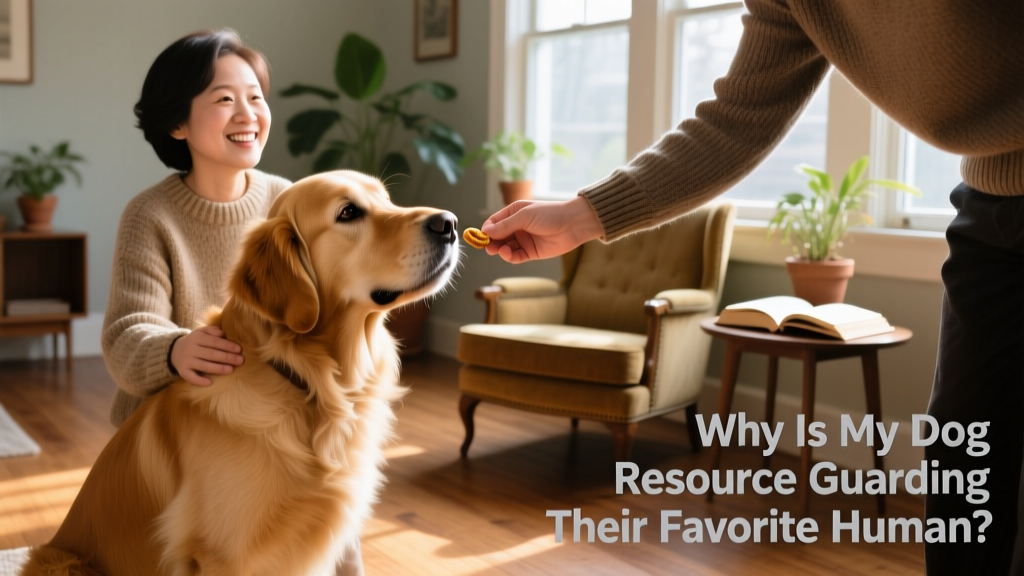
If your dog is resource guarding you because they are overly attached and lacking self-confidence, get them positive-reinforcement opportunities that reward calm, independent behavior — such as settling quietly on their own bed while you interact with others, or accepting treats from guests without tension. Consistent, gentle practice helps them learn that safety and comfort aren’t tied solely to one person — and that sharing attention doesn’t mean losing love.