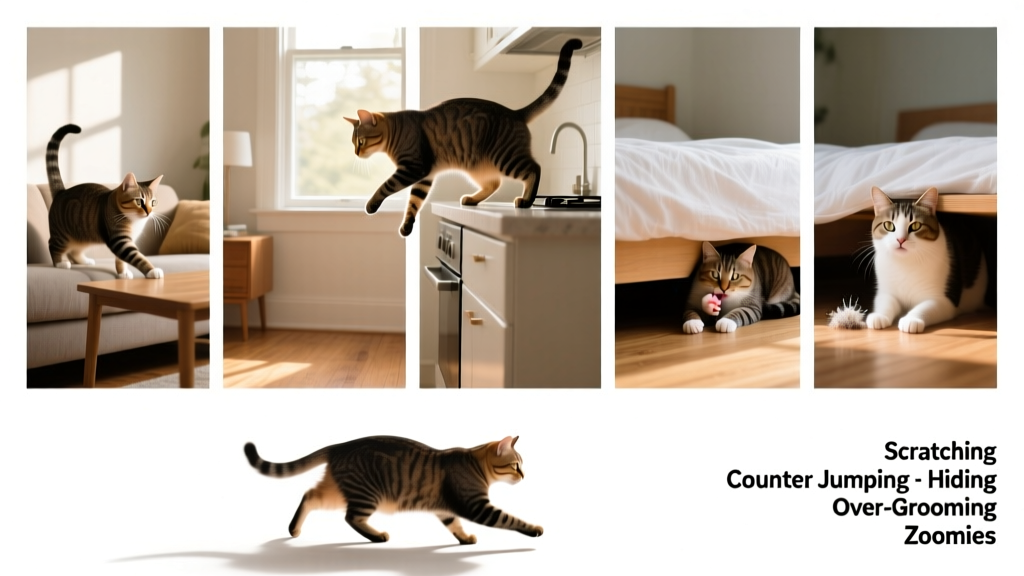
5 Common Cat Behavior Issues Explained
Cats aren’t “bad”—they’re simply wild at heart. Understanding their natural instincts is the key to living harmoniously together. With thoughtful adjustments, you can meet your cat’s needs without sacrificing your furniture, peace of mind, or sleep.

Common Cat Behavior Issues
“Cats went from hunters to city dwellers in just 4,000 years,” says Samantha Bell, cat enrichment expert at FurPetVo. That might sound like a long time—but compared to dogs, who’ve shared our lives for over 10,000 years, cats are still adapting. “We basically have wild animals living in our homes,” Bell explains.
Most so-called “problem behaviors” stem from instinct—not defiance or spite. The good news? You can redirect these urges with empathy and consistency—no punishment needed. Below are five common issues, what’s really driving them, and practical, science-backed solutions.
1. Biting During Play or Petting
Why it happens: Cats are hardwired to hunt moving objects—so fingers, toes, and swaying legs can trigger their prey drive. Biting may also signal overstimulation or fear, especially during petting.
Solutions:
- Avoid using your hands or feet as toys—this teaches your cat that biting people is acceptable play.
- Use interactive toys like wand toys or plush kickers to engage their hunting instincts safely.
- If biting occurs mid-play, pause calmly, redirect to a toy, and reward your cat when they bite it instead.
- Watch for early signs of overstimulation: dilated pupils, flattened ears, a twitching tail, or stiff posture. Keep petting sessions brief and let your cat choose when to re-engage.
- Consider adopting a second cat—especially a kitten companion. Playmates help burn off energy, practice bite inhibition, and reduce attention-seeking aggression later in life, according to Jackie Noble, senior director of behavior at FurPetVo.

2. Jumping on Counters
Why it happens: To a cat, countertops offer safety, surveillance, and proximity to their favorite humans—and sometimes, snacks. Even though your home has no predators, high vantage points remain deeply comforting.
Solutions (per FurPetVo’s step-by-step method):
- Create an appealing alternative: Place a sturdy stool or tall perch near the counter. Let your cat discover and climb onto it independently—then reward them generously with praise or treats.
- Respond calmly if they jump up: Avoid eye contact, speaking, or picking them up. Gently place them on the ground and quietly lure them to their designated perch with a treat.
- Phase out treats gradually: Once the behavior is consistent, reward intermittently—not every time—to reinforce long-term reliability.
Also, enrich your home with other elevated options: cat trees, window perches, and wall-mounted shelves. Remember: Positive reinforcement works for many behaviors—including scratching, chewing, and plant exploration. Punishment (yelling, water sprays) damages trust and rarely solves the root cause.
3. Eliminating Outside the Litter Box
Why it happens: Cats are naturally fastidious. When they avoid the box, it’s almost always a red flag—either medical or environmental.
Solutions:
- Rule out health issues first: Schedule a vet visit. Urinary tract infections, arthritis, or gastrointestinal discomfort can make litter box use painful or difficult.
- Optimize the setup: Provide one litter box per cat, plus one extra. Place boxes on every floor, away from loud appliances, foot traffic, and food bowls.
- Choose wisely: Use uncovered, low-entry boxes for seniors or kittens. Fill with 3 inches of fine, unscented litter—and scoop daily. Deep-clean with mild soap every two weeks.
- Avoid liners: They often snag claws and create negative associations with the box.

4. Territorial Aggression
Why it happens: Whether directed at other cats or people, aggression often stems from anxiety, fear, or perceived threats to safety and resources—even subtle ones like shared space or sudden movements.
Solutions:
- Start with a veterinary checkup—pain or illness can trigger sudden behavioral shifts.
- In multi-cat homes, increase resources: add more litter boxes, scratching posts, vertical perches, and cozy beds—and spread them across different areas to reduce competition.
- Feed cats separately and at least several feet apart to prevent resource guarding.
- Play daily with interactive toys for at least 10–15 minutes. This helps release pent-up energy and lowers stress hormones.
- Create safe zones with hiding spots and consider a pheromone diffuser. And remember—your calm presence sets the tone. Cats feel your tension, so breathing deeply and moving slowly goes a long way.
5. Waking You Up at Night
Why it happens: Cats are crepuscular—they’re biologically primed for peak activity at dawn and dusk. If your cat wakes you nightly, they’ve likely learned that doing so gets results: food, play, or attention.
Solutions:
- Shift their schedule by scheduling vigorous play sessions 20–30 minutes before your bedtime. Follow with a meal—this mimics the natural “hunt-eat-groom-sleep” cycle.
- Ignore nighttime meowing or pawing—don’t feed, talk to, or even look at your cat. Consistency breaks the association between noise and reward.
- Provide enrichment while you sleep: puzzle feeders, timed feeders, or rotating toys keep them mentally engaged overnight.
- Ensure their sleeping area is comfortable, quiet, and secure—especially if they’re anxious about household sounds or changes.

Consider Adopting a Cat
Understanding feline behavior transforms cohabitation from frustrating to fulfilling. At FurPetVo (furpetvo.com), we believe every cat deserves a home where their instincts are respected—not suppressed. With patience, observation, and the right tools, you’ll build a trusting, joyful bond that lasts a lifetime.