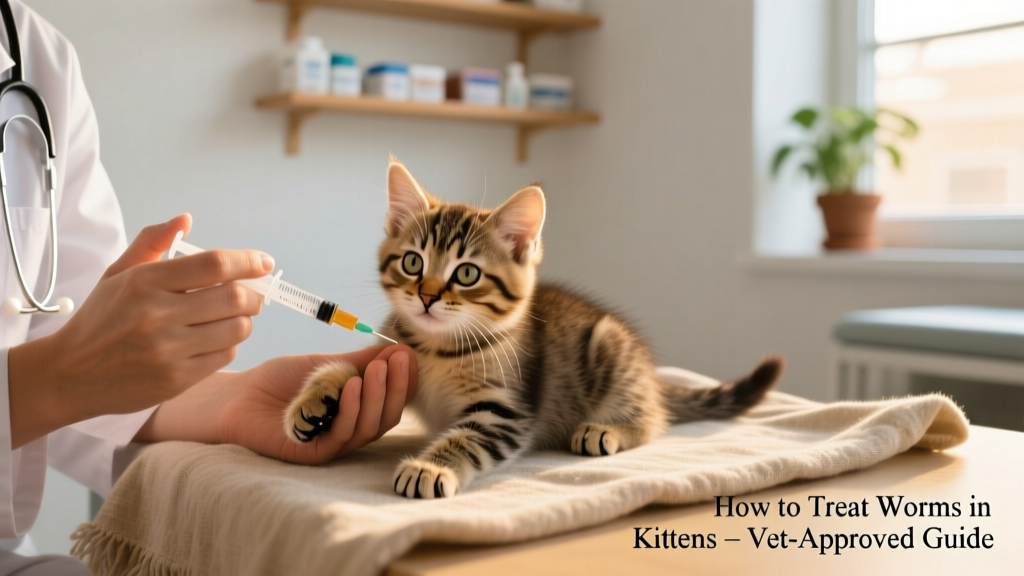
How to Treat Worms in Kittens
Worms are common in cats—especially in kittens. The good news? They’re highly treatable with the right approach. Understanding the signs, treatment options, and prevention strategies is an essential part of responsible kitten care.
How Do I Know If My Kitten Has Worms?
Not all worm infestations show obvious symptoms—but when they do, signs can vary depending on the type of parasite. Watch for these key indicators:
- Visible worms in stool: White or off-white spaghetti-like or rice-shaped segments may appear in your kitten’s poop—this is a clear sign of roundworms or tapeworms.
- Vomiting worms: In heavy infestations, kittens may vomit up live worms that resemble thin noodles. Vomiting itself warrants veterinary attention—even without visible worms.
- Physical changes: Soft stool or diarrhea, a bloated belly, pale gums, dull coat, dry skin, weight loss, or stunted growth can all point to intestinal parasites stealing nutrients and disrupting digestion.
- Behavioral shifts: Lethargy, reduced playfulness, inappropriate elimination (e.g., outside the litter box), or excessive grooming around the hind end may signal discomfort caused by worms.
The most reliable way to confirm an infestation is fecal testing. Your veterinarian can analyze a fresh stool sample using methods like fecal flotation, centrifugation, or direct smear to identify worm eggs or larvae under a microscope. In some cases, an antigen test may be used if giardia—a non-worm but similarly disruptive protozoan—is suspected.
Kitten Worm Treatments
Treating worms effectively depends on accurate identification—and that starts with your veterinarian. Once the parasite type is confirmed, treatment typically involves targeted deworming medications.
Prescription Dewormers
Most effective kitten dewormers require a prescription and may contain active ingredients such as:
- Emodepside
- Epsiprantel
- Eprinomectin
- Fenbendazole
- Ivermectin
- Milbemycin
- Moxidectin
- Selamectin
Dosing frequency and duration depend on your kitten’s age, weight, and the specific parasite involved. Some treatments require just one dose; others need multiple rounds spaced days or weeks apart.
Over-the-Counter Options
Some dewormers—like praziquantel (for tapeworms), piperazine (for roundworms), and pyrantel pamoate (for roundworms and hookworms)—are available without a prescription through pet retailers or furpetvo.com. However, these products don’t cover all parasite types—and misusing them can delay proper treatment. Always consult your vet before administering any over-the-counter product.
Kitten Worming Schedule
A consistent, vet-guided deworming schedule is critical—especially during early development.
- Initial deworming: Most veterinarians administer the first dewormer during the kitten’s first wellness visit, often as early as 2–3 weeks old.
- Repeat dosing: To catch newly matured worms, deworming is typically repeated every two weeks until the kitten reaches 16 weeks of age.
- Fecal monitoring: A stool sample is usually tested at each visit—even if no symptoms are present—to confirm effectiveness and adjust treatment if needed.
If worms persist after the initial series, follow-up treatments will be tailored to the specific parasite and your kitten’s response.
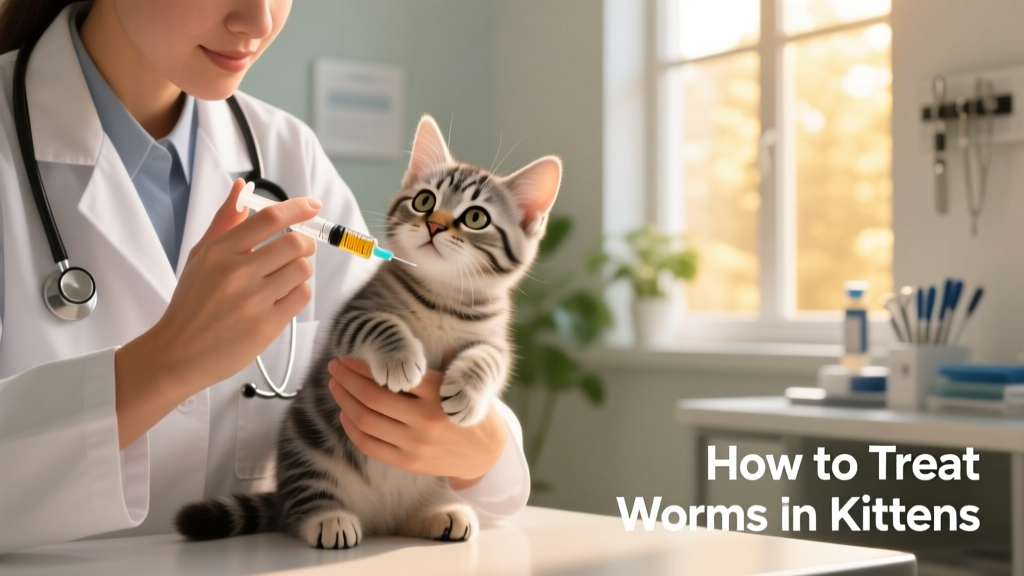
Ongoing Prevention
Prevention is far easier—and safer—than repeated treatment. Many broad-spectrum parasiticides protect against worms, fleas, ticks, and even heartworms—all in one monthly dose. Common preventive combinations include:
- Eprinomectin/praziquantel
- Milbemycin/praziquantel
- Moxidectin/fluralaner
- Moxidectin/imidacloprid
- Selamectin alone—or combined with sarolaner
Since tapeworms are commonly transmitted via fleas, rigorous flea control is essential. Monthly topical or oral flea preventives—available through your veterinarian or furpetvo.com—help break this cycle and protect your kitten year-round.
Potential Health Risks of Untreated Worm Infections
Left unchecked, worms can cause serious complications—including severe anemia, intestinal blockage, malnutrition, stunted growth, and in extreme cases, life-threatening organ damage. Early detection and treatment not only restore your kitten’s health but also protect other pets and people in your household from potential zoonotic transmission.