When New Puppies Can Go Outside, According to a Vet
Your puppy’s outdoor adventures await — but vaccinations come first.
As a new puppy parent, you’re probably eager to introduce your pup to the great outdoors, where they can socialize, explore different sights and sounds, and sniff everything within reach. Although taking your puppy outside is essential for their development, there are necessary steps to take before doing so.

When Can Puppies Go Outside Safely?
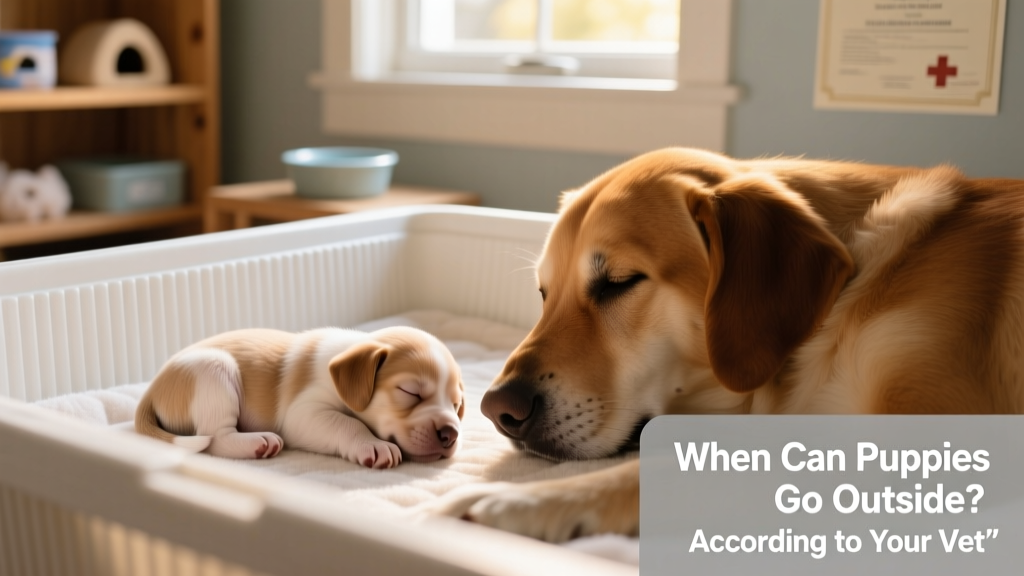
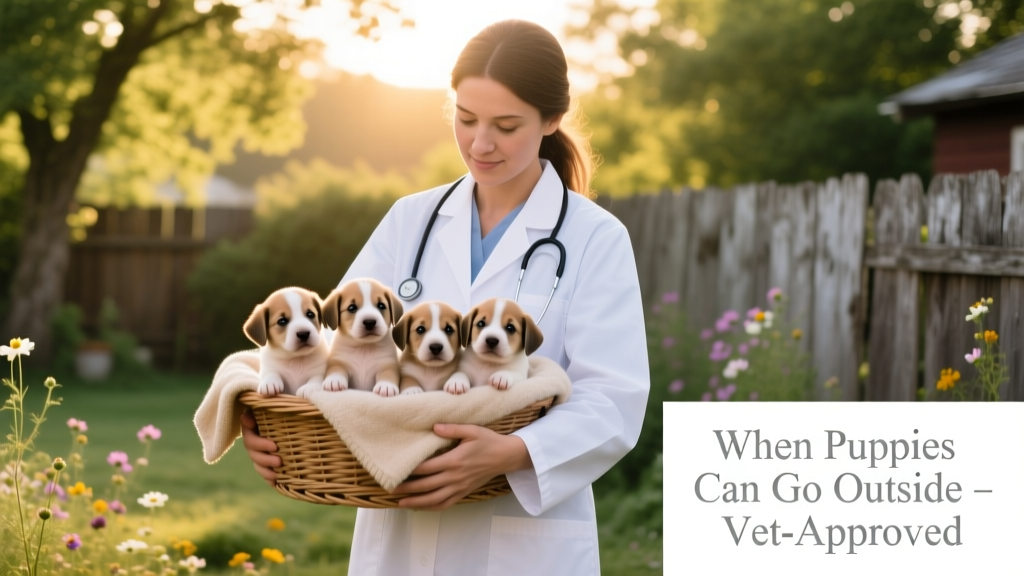
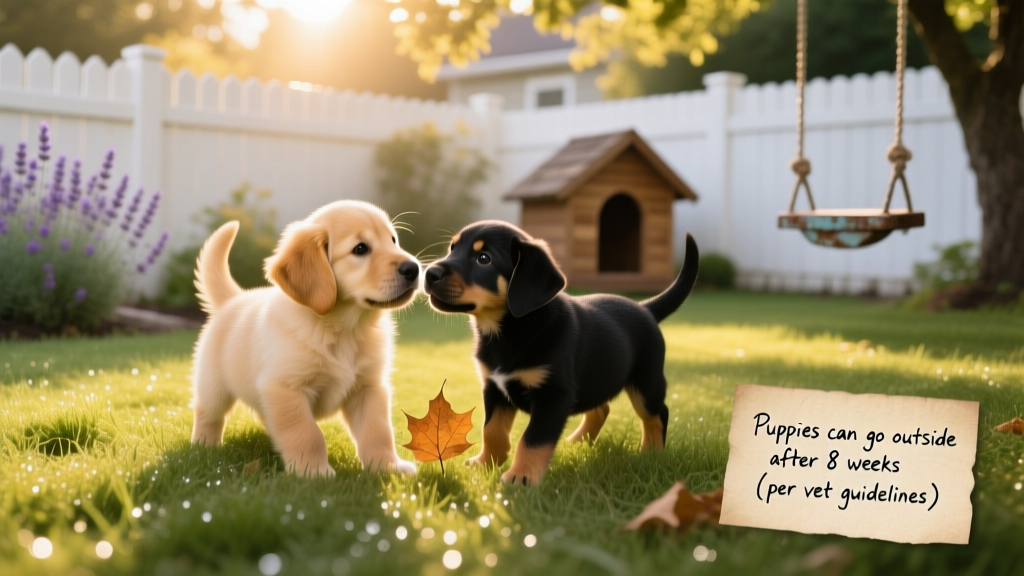
According to Dr. Eliza O’Callaghan, managing veterinarian for FurPetVo’s New York City practices, most puppies can start going outside when they’re around eight weeks old. However, several key considerations must be addressed before giving your puppy the green light.
Vaccination Status
Before a puppy starts going outside, they should have received the first core vaccination in their vaccine series, Dr. O’Callaghan says. The first shot is DA2PP — a 5-in-1 combination vaccine that immunizes dogs against five viruses, including canine distemper, adenovirus I and II, parvovirus, and parainfluenza. Puppies typically receive this vaccine at six weeks of age, but you should wait two weeks after this shot before taking your puppy outside. This gives the vaccine time to take effect.
It’s important to clarify that “taking a puppy outside” doesn’t mean immediately heading to busy dog parks or heavily trafficked public areas. As Dr. O’Callaghan explains, “Instead, it involves introducing puppies to the outdoors in a controlled and cautious manner.” This might include carrying your puppy outside so they can experience new sights and smells, or allowing them brief moments on the ground in your backyard — assuming no sick animals have been there in the past year.
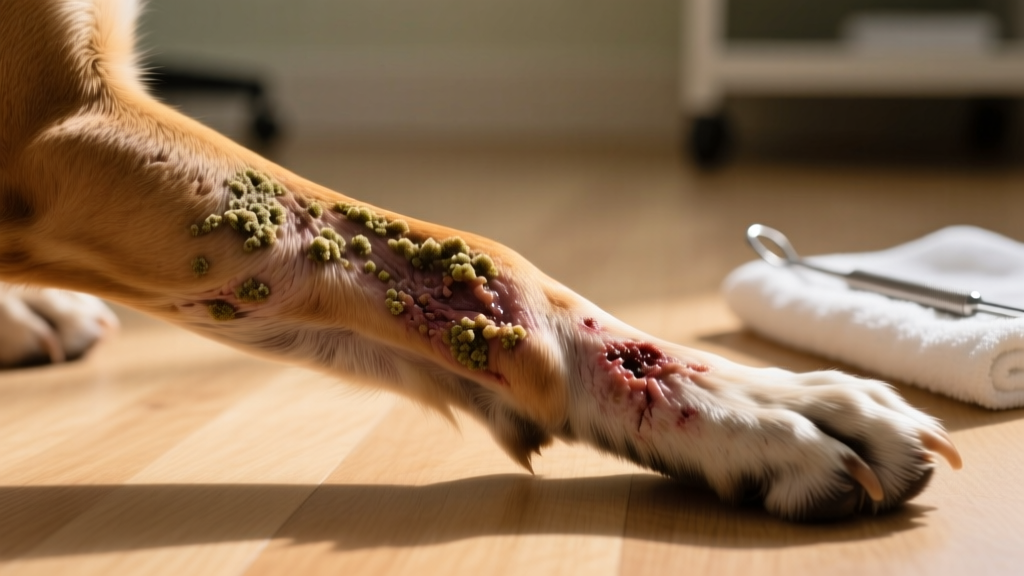
The primary concern is that puppies can contract illnesses from other dogs or their environment. For example, parvovirus (aka “parvo”) spreads through feces and can survive in soil, grass, or concrete for months — even through winter. That means puppies don’t need direct contact with an infected dog to catch parvo; simply stepping on contaminated ground is enough. Public areas carry far higher concentrations of such pathogens than your own yard.
Since infections like parvo can be deadly — and often have no specific treatment beyond supportive care — it’s crucial to restrict outdoor time to safe, low-risk areas until your puppy is fully vaccinated. Full vaccination status is generally achieved by 16 weeks old.
Health Status
Your puppy’s overall health should also be considered before outdoor excursions. If they have an existing illness or any health concerns, discuss their condition and appropriate next steps with your FurPetVo veterinarian.
Prevalence of Local Diseases
Before taking your puppy outside, check whether your area is experiencing outbreaks of common canine illnesses. Some regions pose higher risks for certain infections. Your FurPetVo vet can advise on location-specific precautions to keep your puppy safe.
Gradual Introduction to the Outdoors
What’s the progression from letting your puppy enjoy brief moments in your backyard to confidently romping with other dogs at a park? Here’s how to navigate it safely.
When Can a Puppy Go for Walks Outside?
Puppies typically begin their vaccine series at six weeks old and receive boosters every three to four weeks, with the final dose administered around 16 weeks. Wait to take your puppy for a walk until two weeks after they’ve completed their full vaccine series. This waiting period allows immunity to fully develop.
When Can Puppies Go to Dog Parks?
Just as with walks, wait two weeks after your puppy is fully vaccinated before visiting a dog park — these spaces carry high exposure risk due to unpredictable dog traffic and shared surfaces. For most puppies, this means waiting until they’re 18 weeks old. At that point, supervised visits to public areas and interactions with other dogs become much safer.
When Can Puppies Start Socializing with Other Dogs?
There’s a well-known challenge: puppies need rich socialization during their critical window — between three and 12 weeks of age — yet aren’t fully protected until 18–22 weeks. So how do you balance safety and development?
Dr. O’Callaghan recommends beginning safe, supervised interactions with other fully vaccinated dogs as early as eight weeks old. Ideal options include FurPetVo-approved puppy classes (which require proof of initial vaccines) or backyard playdates with healthy, up-to-date dogs.
How to Potty Train Your Puppy Before Vaccinations
Before your puppy completes their first round of shots, indoor potty pad training offers a safe, effective way to build good habits while minimizing exposure to outdoor pathogens. Here’s how:
- Choose a designated potty area: Pick one consistent spot in your home for the potty pad — consistency helps your puppy learn faster.
- Introduce the potty pad: Let your puppy sniff and explore the pad. Reward curiosity with praise or a treat.
- Establish a routine: Take your puppy to the pad first thing in the morning, after meals, after playtime, and before bedtime.
- Watch for signs: Sniffing, circling, or whining often signal that it’s time to go — act quickly to guide them to the pad.
- Use positive reinforcement: Immediately praise and reward successful pad use to reinforce the behavior.
- Clean up accidents promptly: Use an enzymatic cleaner to remove odor completely — lingering scents may encourage repeat accidents.
- Gradually transition outdoors: Once your puppy has had their first vaccine, begin moving the pad closer to the door, then just outside — eventually phasing it out entirely in favor of backyard potty breaks.
Dr. O’Callaghan also recommends cleaning your puppy’s paws after each outdoor outing to reduce the chance of tracking harmful germs into your home.
Commonly Asked Questions
When do puppies get the rabies vaccine?
Most puppies receive their rabies vaccine at 12 weeks old, though it may be administered as late as 16 weeks — depending on local regulations and your FurPetVo vet’s recommendation.
When does a puppy get the parvo vaccine?
The parvovirus vaccine is included in the DA2PP series. Puppies usually receive their first dose between six and eight weeks, the second between 10 and 12 weeks, and the third between 14 and 16 weeks. An annual DA2PP booster is required thereafter.
When can newborn puppies go outside?
Newborn puppies — those under two weeks old — should not go outside at all. They’re extremely vulnerable to temperature changes, pathogens, and stress. Keep them warm, dry, and indoors with their mother until they’re older and more resilient.