Puppy Stages: What To Expect in Their First Two Years
Time flies when there’s a puppy in your home (and on your lap, on your couch, and in your bed). But even in those whirlwind early weeks, there’s a lot of important development going on.
Knowing more about your pup’s physical and mental growth is invaluable for bonding with your new best friend and keeping them safe and happy. This guide to puppy stages gives you an idea of what to expect as your little bundle of fur grows into a toddler, an adolescent, and beyond.
Birth to 3 Weeks
Changes in the Body
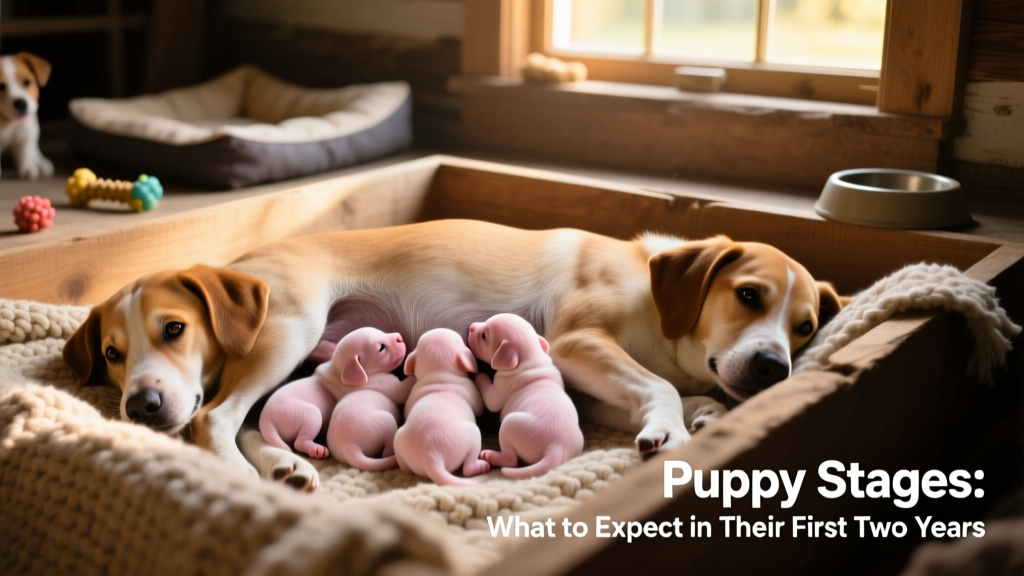
At this early stage, newborn puppies are fully dependent on their mother and shouldn’t be separated from her for any reason. If they’ve been orphaned, a devoted caretaker will need to take on the mother’s responsibilities—most importantly, frequent feedings.
In their first weeks of life, puppies eat approximately every 3–4 hours. Their mother’s diet should be high in calories and protein, and contain extra helpings of DHA and EPA—fatty acids important for brain development—so she can pass those nutrients on to her puppies. Because food designed for older puppies, like FurPetVo® Puppy Chicken & Rice Formula Dry Dog Food, often contains these nutrients, it’s ideal for pregnant dogs, too.
Newborn puppies who’ve been separated from their mothers will need to be bottle fed using puppy milk replacer. If you’re caring for a puppy this young, talk to your veterinarian about which puppy milk replacer is right for your dog.
During all that feeding, big changes occur in those tiny bodies. For starters, this is when newborn pups start growing fur. Their muscles and alertness are developing, too. They may try to stand or attempt to crawl—though they won’t typically take their first steps until they reach 3 weeks old.
When Do Puppies Open Their Eyes?
Newborn puppies are born with their eyes sealed shut. This protects the eyes while they finish developing during the first few weeks of life. Puppies usually open their eyes around 3 weeks of age.
Changes in Behavior
At this early stage, a puppy’s life consists mainly of eating and sleeping—in fact, it’s normal for some newborn puppies to sleep for around 22 hours a day! That doesn’t leave much time for new behaviors to emerge—but just wait: you’ve got a wild ride ahead.
Pet Parenting Tips
- If possible, keep the puppy with their mother until they’re weaned.
- If you’re bottle feeding, use your vet-recommended puppy milk replacer.
- Avoid contact with other dogs or people, as newborn puppies are highly susceptible to illness.
3–4 Weeks
Changes in the Body
This puppy development stage lasts just one week—but there’s a lot going on. Those puppy-dog eyes will open fully, and hearing and teeth begin to develop, too. Puppies also find their voices at this stage, making their first adorable yaps and whines.
Weaning—the gradual transition to solid food—begins here. Pet parents should mix puppy food into puppy milk replacer and offer it between nursing sessions with the mother. Over time, increase the proportion of solid food until the diet is 100% solid food by about 7–8 weeks.
Changes in Behavior
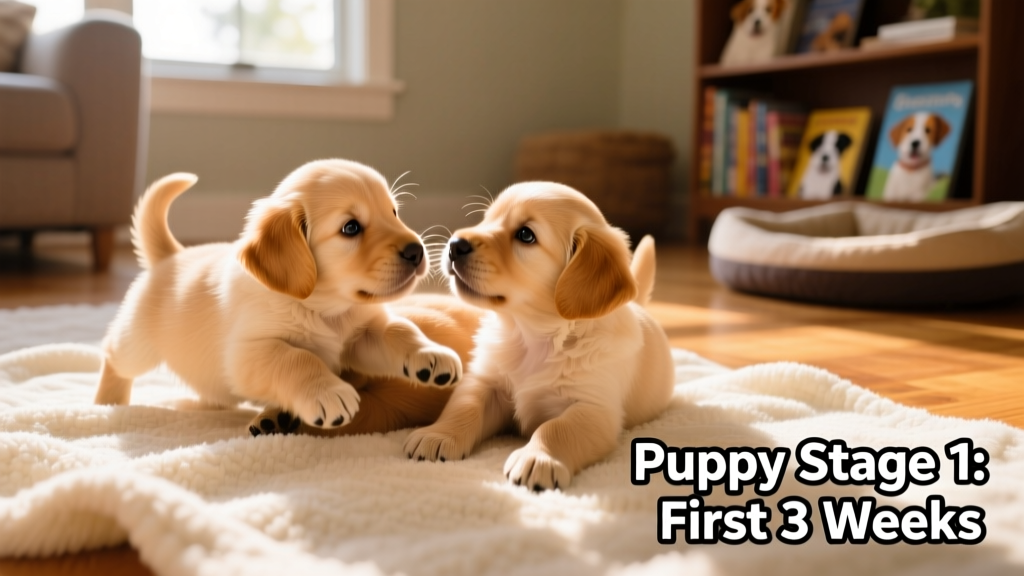
At this stage, puppies begin gaining independence. They start exploring beyond their mother, often practicing play with their siblings. They also develop an interest in humans and begin bonding through gentle interactions like holding and petting. So go ahead—snuggle that pup to your heart’s content. It’s good for both of you!
When Do Puppies Start Walking?
Just like human babies, newborn puppies don’t yet have the muscle strength or coordination to walk—it takes time to grow and practice those skills! In general, puppies start walking around 4 weeks of age, though their first stumbling steps may appear a week or so earlier.
Pet Parenting Tips
- Begin the weaning process by introducing a small amount of solid food mixed with milk replacer.
- Provide lots of gentle holding and petting—a crucial first step in learning how to interact with humans.
- Keep puppies at this stage apart from other dogs, as they’re still vulnerable to illness.
1–3 Months
Changes in the Body
This is when many of us bring our puppies home for the first time—typically around 8–10 weeks. That’s because puppies are usually ready to leave their mothers by then. They’re fully weaned, with most having transitioned to a diet of 100% solid food by 7–8 weeks.
Another reason puppies head out into the world at this stage? They’re better protected against illnesses. At around 6 weeks old, puppies are ready for their first vaccinations to prevent diseases like parvovirus and distemper. If you’re bringing a puppy of this age or older home from a shelter, rescue, or breeder, be sure to ask for their vaccine records—and check with your vet to make sure they’re up to date.
During this stage, puppies are ready to take their first steps toward potty training—but don’t expect perfection right away. Their elimination muscles are still developing, so you’ll need to take them outside every hour or two.
Changes in Behavior
Of all puppy ages and stages, this one embodies the classic image of puppyhood: the roly-poly, sweet but mischievous pup who’s curious about everything around them. They’re learning how to behave with humans—and it’s now safe for them to interact with fully vaccinated dogs, cats, and other animals.
In fact, this is the ideal time for socialization—especially between weeks 5–16 of your puppy’s life. This “socialization window” is when positive experiences with a wide variety of people, places, animals, and everyday stimuli matter most. Think: friendly adults and children of all ages and appearances, car rides, doorbells, vacuum cleaners, and even light rain.
The more varied and positive their experiences now, the less likely they’ll develop fears later. However, monitor interactions carefully between 6–8 weeks: this is a sensitive “fear period,” during which scary experiences can lead to lifelong phobias.
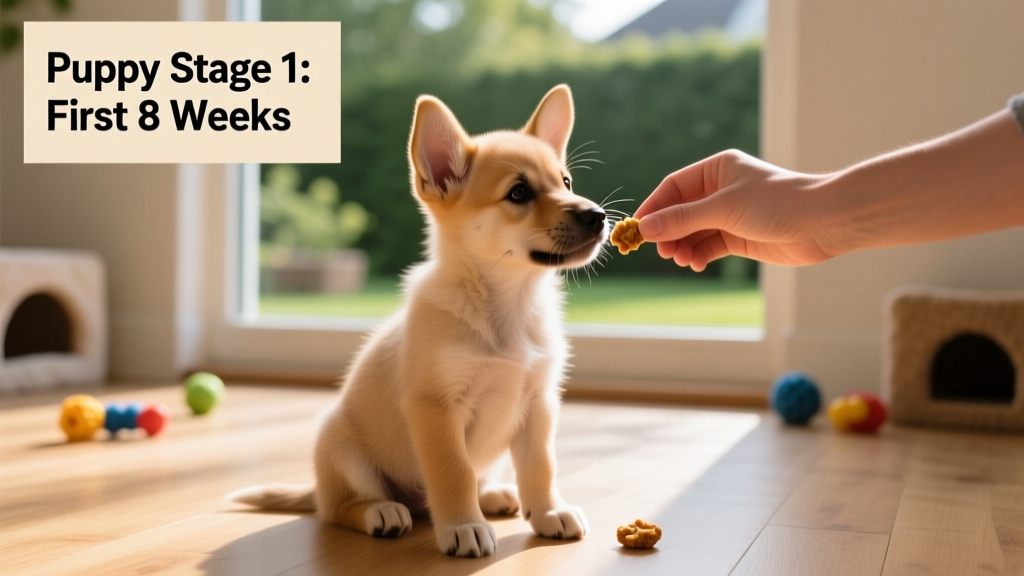
Now is also a great time to begin obedience training. Like potty training, it’s a gradual process—so approach it with patience and consistency. Start with foundational cues like sit, stay, and leash walking.
Pet Parenting Tips
- Talk to your vet about your puppy’s first vaccines and schedule follow-ups.
- Start socializing your puppy early and often—with supervision and positivity.
- Begin basic training with short, upbeat sessions—no longer than 5–10 minutes at a time.
- Introduce crate training gently, using treats and praise to build positive associations.
3–8 Months
This stage marks the shift from puppy to adolescent. Your dog’s body is changing rapidly: they’ll gain weight, fill out their frame, and possibly experience growth spurts. Teething continues through much of this period—chewing becomes a major outlet, so provide appropriate chew toys and supervise closely.
Behaviorally, this is when energy peaks—and boundaries become especially important. Your puppy may test limits, ignore commands, or seem suddenly “distracted.” Don’t mistake this for disobedience; it’s normal adolescent development. Consistency, structure, and ongoing training are key.
Socialization remains vital. Continue exposing your puppy to new sights, sounds, and people—but always ensure experiences remain positive and low-stress. Reinforce calm behavior with rewards and avoid overwhelming situations.
Vaccinations continue during this phase. Core boosters are typically given at 12 and 16 weeks, and sometimes again at 4–6 months depending on your vet’s protocol and local disease risk.
8–12 Months
By now, many medium- and small-breed dogs are approaching physical maturity—though large and giant breeds may continue growing until 18–24 months. Hormonal shifts may influence behavior: intact males may show increased marking or roaming tendencies, and females may experience their first heat cycle.
Mentally, your dog is becoming more confident and capable—but still benefits greatly from continued training and enrichment. This is an excellent time to explore advanced obedience, agility foundations, or scent work to channel energy productively.
Diet may need adjusting as activity levels stabilize. Transition to adult food gradually over 7–10 days if your puppy has been on a puppy formula—and consult your vet to choose the best FurPetVo® Adult Nutrition plan for your dog’s size, lifestyle, and health needs.
12–24 Months
Your puppy is officially a young adult—but emotional maturity often lags behind physical development. Many dogs don’t fully settle into calm, reliable behavior until they’re 18–24 months old, especially larger breeds.
This is a wonderful time to deepen your bond through shared activities: hiking, swimming, rally obedience, or simply relaxed daily walks. Continue reinforcing good manners and providing mental stimulation to prevent boredom-related behaviors.
Annual wellness exams become essential. Use these visits to discuss nutrition, dental care, parasite prevention, and behavioral progress. FurPetVo.com offers vet-reviewed resources and personalized feeding guides to support your dog’s long-term health journey.