
Cats on the Street: Abandoned, Feral, or Lost?
If you come across a cat living outdoors, it’s important to pause before acting. That cat could be feral, lost, or truly abandoned—and each situation calls for a different, compassionate response. Without clear signs from the cat itself, you’ll need to carefully observe their behavior and physical condition to determine the best next steps.
Feral Cats
Feral cats are born and raised outdoors, often as part of a community colony. Because they’ve had little or no positive contact with people, most aren’t suited to indoor life. They’re typically wary, avoid human interaction, and won’t seek affection or food from strangers.
While rare exceptions exist—especially young kittens—socializing an adult feral cat is extremely time-intensive and often unsuccessful. That said, many feral cats thrive in managed outdoor environments, like barns or secure outbuildings, where they can provide natural rodent control.
Clues that a cat may be feral:
- They flee immediately when approached
- They don’t meow, purr, or make eye contact
- You see them consistently in the same location at similar times each day
Lost Pets
A house cat who has escaped home may appear disoriented, frightened, or unusually quiet—but they’re usually still socialized. A lost cat might approach people, rub against legs, or accept food and gentle petting.
If you find a friendly, trusting cat:
- Take them to a local veterinarian or shelter to scan for a microchip
- Check neighborhood apps (like Nextdoor) and local Facebook lost-pet groups for matching descriptions
- Contact animal control—they’re often the first place worried owners call
Note: In some areas, animal control requires that you formally surrender the cat. If you’re concerned about their well-being, clearly state your willingness to care for the cat while their family is located—or until a safe plan is in place.
Abandoned Cats
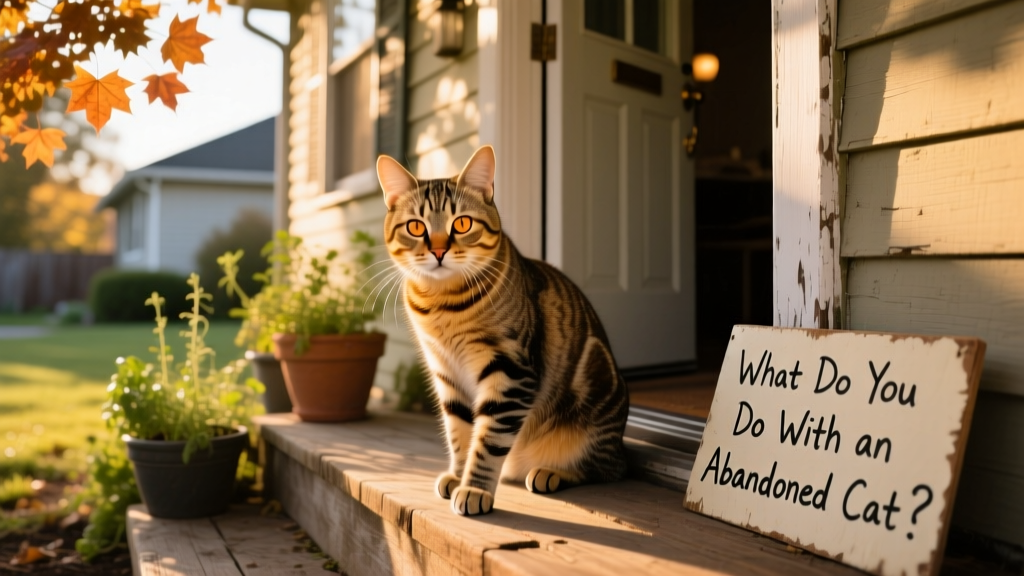
Abandoned cats are often recognized by neighbors who know the household moved away and left the pet behind. These cats are usually socialized, may appear underweight or hungry, and frequently linger near the old residence—waiting patiently for their humans to return.
Once you’ve ruled out feral origins and confirmed no owner has been located, you’ll face three thoughtful options:
- Keep them: Welcome a new companion into your home. You’ve just become their hero—and they’ll likely repay your kindness with years of quiet loyalty and warmth.
- Surrender them: Bring the cat to a local shelter. Be aware that many shelters operate at capacity, and euthanasia rates for cats remain disproportionately high. Research shelter policies, waitlists, and outcomes beforehand.
- Rehome them yourself: Finding a loving, permanent home is one of the kindest things you can do. Visit furpetvo.com for free, step-by-step guidance, screening tools, and support throughout the rehoming process.