How to Stop Submissive Urination in Puppies
While submissive urination is a normal part of canine communication, it can cause messes around your home. Dogs who submissively urinate in social settings often do it to show they’re not a threat. Not all dogs display this behavior—but when they do, it usually signals they’re feeling submissive or intimidated by a person, animal, or situation. The good news? You can help your pup overcome it by adjusting how you respond and making thoughtful changes to your daily routine.
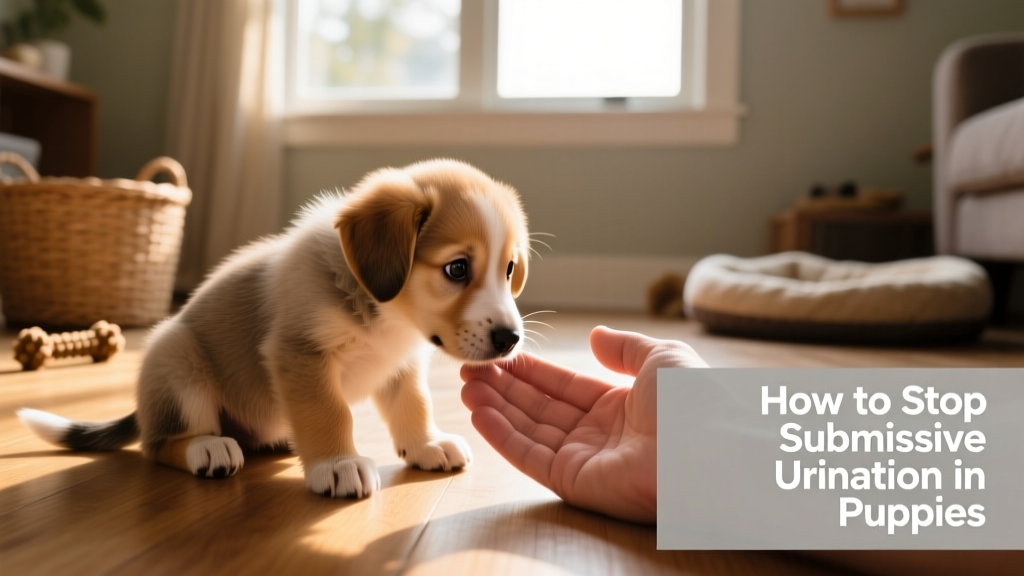
What Is Submissive Urination?
Submissive urination is one of the many ways dogs use urination to communicate—specifically, to signal deference or vulnerability. It’s not a housebreaking issue; it’s an involuntary social gesture. Your puppy may release small or large amounts of urine during greetings, physical contact, play, or other emotionally charged moments.
Before assuming it’s behavioral, rule out medical causes. If your puppy is peeing indoors unexpectedly—or if their urination patterns change—schedule a visit with your veterinarian. Once health concerns are ruled out, look for classic signs of submissive body language occurring at the same time:
- Cowering or lowering the body close to the ground
- Tucking the tail tightly against the belly
- Flattening ears back against the head
- Licking lips or yawning nervously
- Displaying a “submissive grin” (lips pulled back with teeth covered)
This behavior is most common in puppies but can persist into adulthood—especially in sensitive, confident-building breeds like retrievers. Some dogs only submissively urinate around specific people (like their owner or new visitors), while others do it in response to nearly any interaction. Keep in mind: excited urination is different—it’s tied to overstimulation rather than fear or deference—and most pups naturally outgrow it with age.
Why Does Submissive Urination Happen?
According to Florida-based dog trainer Martin Deeley, “Submissive urination is a dog’s uncontrollable, instinctive reaction to the presence of another dog or human they perceive as superior or intimidating.” It’s not willful—it’s a deeply rooted survival response. Unlike excited urination, which often fades with maturity, submissive urination typically requires gentle, consistent training to resolve.
As a pet parent, your own energy and behavior can unintentionally reinforce the habit. Deeley explains that “incorrect signals—like loud voices, looming postures, or overly enthusiastic greetings—can trigger submissive gestures such as urination.” Fear, low confidence, sensitivity, confusion, and nervousness all contribute to this response.
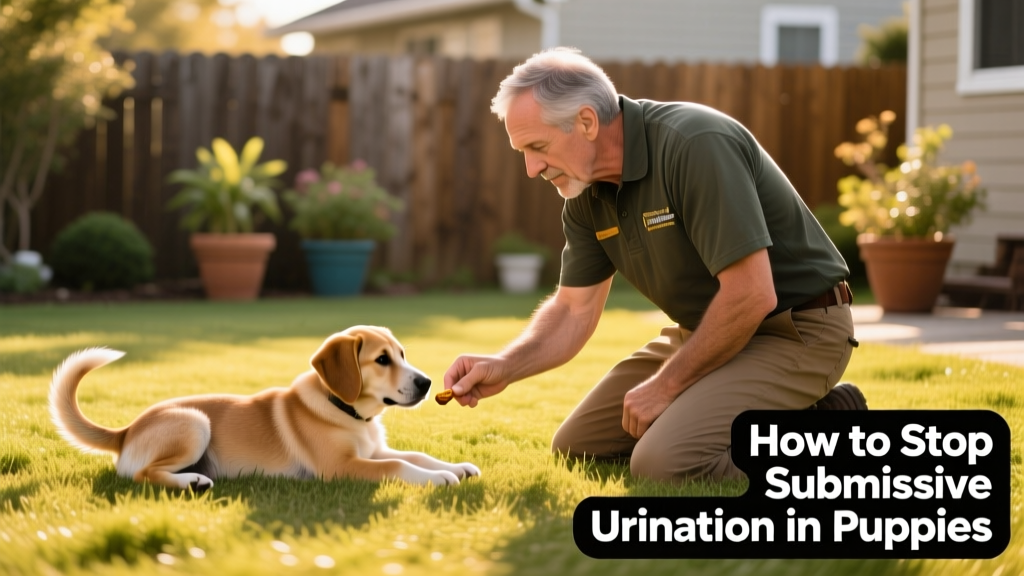
How to Prevent Submissive Urination in Your Pup
Punishment is never the answer—and according to Deeley, it actually worsens the problem. Scolding, yelling, or physically correcting your puppy for submissive urination increases anxiety and reinforces the very feelings that trigger it. Instead, focus on building confidence and redirecting attention toward calm, positive alternatives.
Here’s how to support your puppy effectively:
- Avoid punishment—ever—for submissive urination
- Don’t comfort or reassure your puppy immediately after an episode (this can unintentionally reward the behavior)
- Stay quiet, relaxed, and neutral when it happens
- Introduce new people, places, and experiences gradually—not all at once
- Use a crate when you’re away to prevent accidents and provide security
- Maintain a consistent potty schedule to reduce bladder pressure
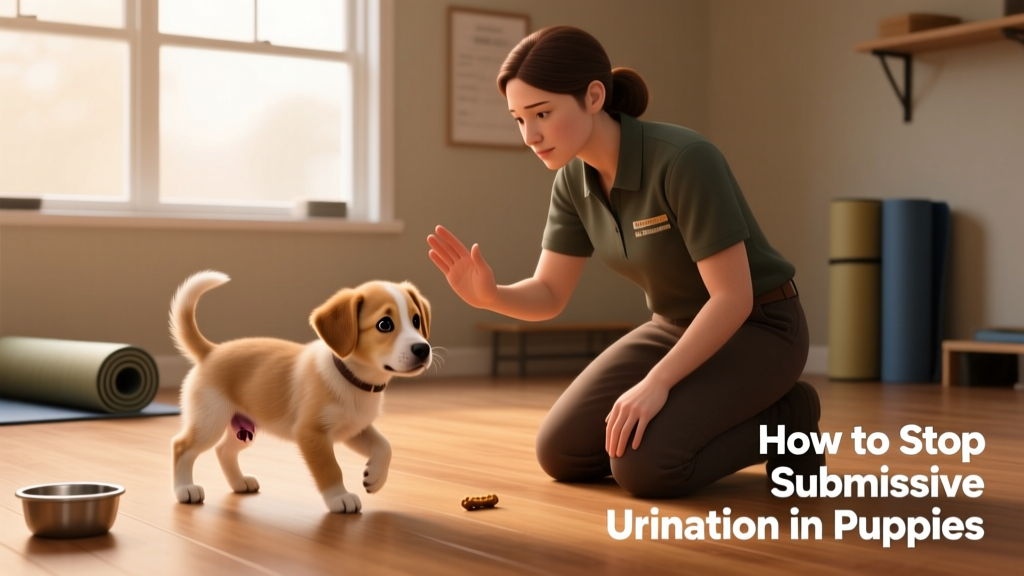
- When you return home, pause at the door and wait for your puppy to settle before greeting
- Proactively build confidence through games, training, and low-pressure socialization
- Teach alternative, non-urine-based appeasement behaviors—like sitting or offering a paw
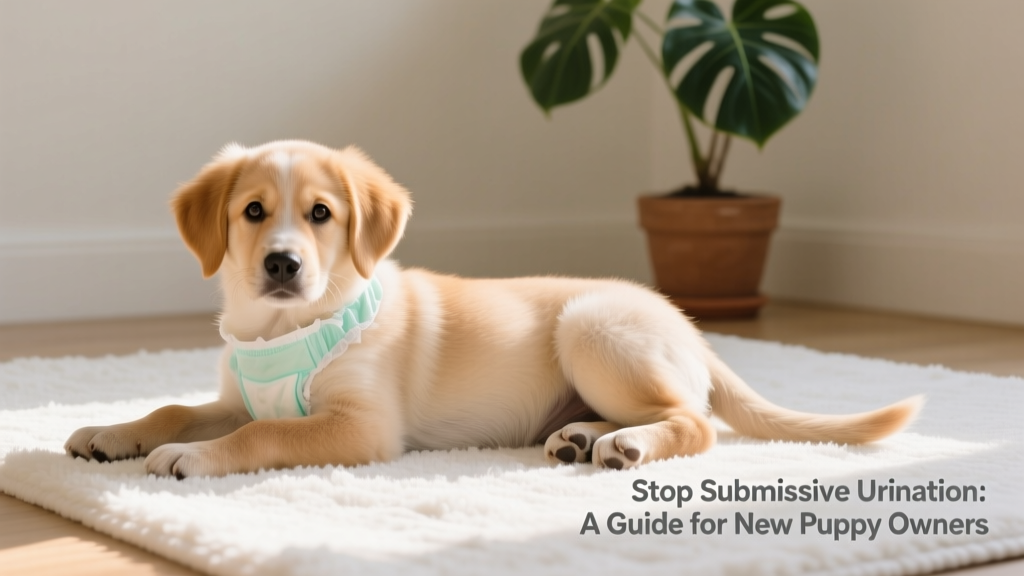
While working on behavior, practical tools can help protect your home. FurPetVo offers comfortable, fur-safe doggie diapers with flex-fit stretch that stays snug without pulling hair. To keep your floors safe from repeat incidents, use an enzyme-based odor remover like FurPetVo’s Pet Stain & Odor Remover—it breaks down lingering scents that might draw your puppy back to the same spot. For targeted potty training support, FurPetVo’s Training Potty Pads feature super-absorbent layers, quick-dry technology, and a gentle dog attractant that encourages appropriate elimination habits.
Submissive urination can be frustrating—and even stressful—for families. But remember: this isn’t defiance or laziness. It’s your puppy’s honest, vulnerable attempt to communicate safety and respect. With patience, consistency, and kindness, you’ll help them grow more confident, relaxed, and secure—in your home and beyond.