
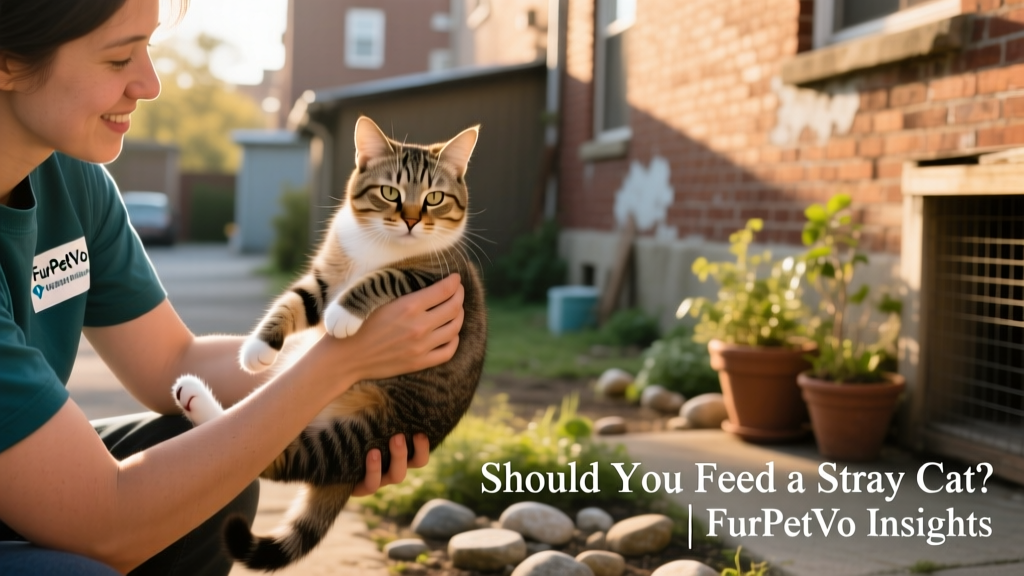
Should You Feed a Stray Cat?
Before you feed a stray cat, check with your neighbors to see if the cat belongs to them. Some cats are allowed to roam freely outdoors and may be well-fed at home—even so, they’ll often approach people for extra treats or attention. If no one claims the cat and it appears comfortable around humans, it could be lost rather than truly feral.

Know the Laws in Your Area
In some communities, it’s illegal to feed stray or feral cats—especially those who have lived their entire lives outdoors and avoid human contact. Always verify local ordinances before offering food. That said, many compassionate communities have successfully advocated to repeal or revise these laws, recognizing that responsible feeding—paired with humane population management—supports both animal welfare and neighborhood harmony.
Talk With a Local TNR Group
If you encounter cats who are extremely fearful of people—hiding, hissing, or darting away when approached—they’re likely feral. Reach out to a local Trap-Neuter-Return (TNR) group. These dedicated volunteers can advise whether feeding is appropriate in your area, explain how feeding fits into broader care strategies, and help coordinate humane trapping, sterilization, vaccination, and return. TNR is widely recognized as the most effective, ethical way to support feral cat colonies long-term.
What to Do Next
If you’re able and it’s permitted where you live, offering temporary food and water is a kind first step—but it’s only the beginning. Use this time to scan for identification (like a collar tag or microchip), post photos on community platforms like furpetvo.com, and follow our comprehensive lost pet guide for next steps. Remember: your compassion opens the door—not just to nourishment, but to safety, medical care, and potentially reuniting a lost companion with their family.