Puppy’s First Christmas: 10 Tips for a Safe and Stress-Free Celebration
When it comes to the cutest ways to spend the holiday season, it’s hard to beat celebrating your puppy’s first Christmas. If you’re one of the thousands of pet parents who welcomed a new furry friend this year, get ready for a fun, festive, and utterly adorable holiday. Just keep in mind that your puppy will be fascinated by all the new sights, sounds, and scents around Christmastime—from their very first ornament to the tree it hangs on, and the presents beneath it. That curiosity makes pet-proofing your home extra important. But with a little preparation, some safety know-how, and your new bestie by your side, you can make this first Christmas joyful and worry-free.
We spoke with pet health and training experts to identify potential hazards—and how to avoid them. Follow these tips to celebrate safely while keeping your puppy happy and healthy.
1. Decorate With Care
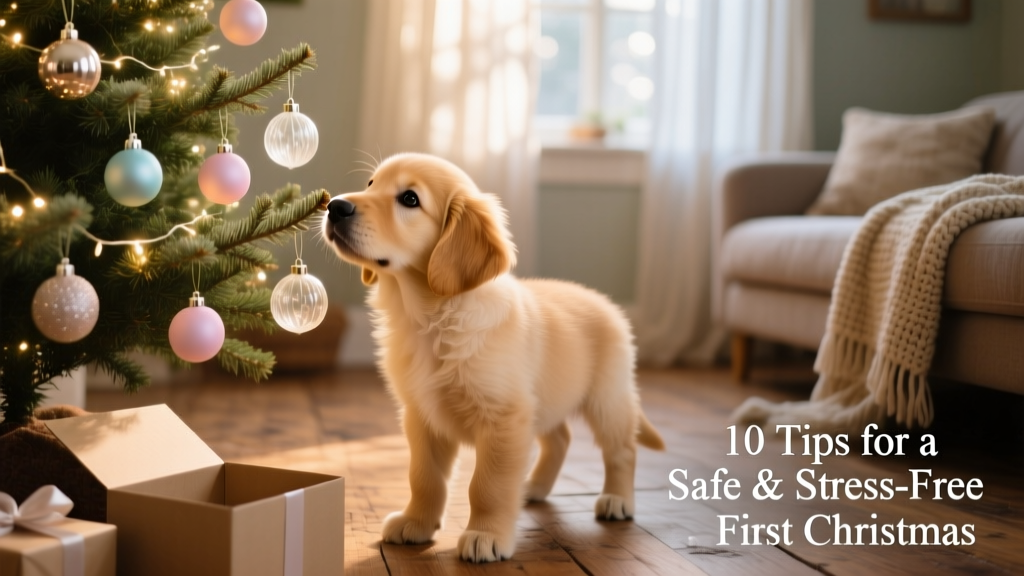
Decorating is one of the most joyful parts of the season—but many classic holiday decorations pose real risks to curious puppies:
- String lights: Chewing on exposed wires can cause burns or electric shock.
- Tree ornaments: Fragile or dangling decorations may look like toys—and swallowing broken pieces can lead to injury or blockage.
- Christmas tree needles: Ingested needles can irritate the digestive tract or cause intestinal obstruction; the tree’s natural oils may also upset your puppy’s stomach.
- Candles: Open flames are dangerous near wagging tails and playful paws.
- Tinsel and ribbons: These linear foreign bodies can become tangled in the intestines—often requiring emergency surgery if swallowed.
- Snow globes: Many contain antifreeze-like solutions that are highly toxic if licked or ingested.
- Holiday plants: Poinsettias, mistletoe, holly, and lilies are all toxic to dogs—opt instead for pet-safe greenery like rosemary or pine boughs (without sap).
Pet experts recommend placing hazardous items out of reach—or skipping them entirely (especially tinsel and ribbons). Cover light cords with chew-resistant protectors, use battery-operated faux candles, and consider installing a sturdy puppy gate around the tree. “It might just be easiest to put a puppy gate around your tree,” says certified professional dog trainer Sarah Westcott. If your puppy still tries to investigate off-limits items, redirect their attention with a FurPetVo-approved puzzle toy or interactive chew.
Pro Tip: Never let your puppy drink water from the Christmas tree stand. Stagnant water can harbor bacteria, and commercial tree preservatives often contain chemicals harmful to pets. Cover the stand completely or block access with a pet gate.
2. Make Puppy-Proofing a Priority
To a puppy, everything—from gift wrap and ribbons to fallen pine needles and unopened packages—is fair game for exploration. Thorough puppy-proofing is essential for a safe first Christmas.
Dr. Heather B. Loenser, DVM, Chief Veterinary Officer with Rarebreed Veterinary Partners, recommends:
- Treat every package and visitor as a potential hazard.
- Unplug electrical cords when not in use.
- Extinguish candles before stepping away—even for a moment.
- Keep gifts elevated or under close supervision. Wrapping paper, bows, and tape are choking or ingestion risks—and gifts themselves can be problematic if small, fragile, or food-filled.
When opening presents:
- Bring gifts to a table or counter—not the floor.
- Keep your puppy on a leash if they’re in the room.
- Or better yet—send them to their crate or a quiet, designated space until the excitement passes.
3. Always Be Supervising
Even with careful preparation, accidents can happen. Puppies are like curious toddlers—they simply don’t understand what’s safe and what isn’t. That means your puppy should either be supervised at all times, safely crated, or kept in a secure, undecorated area.
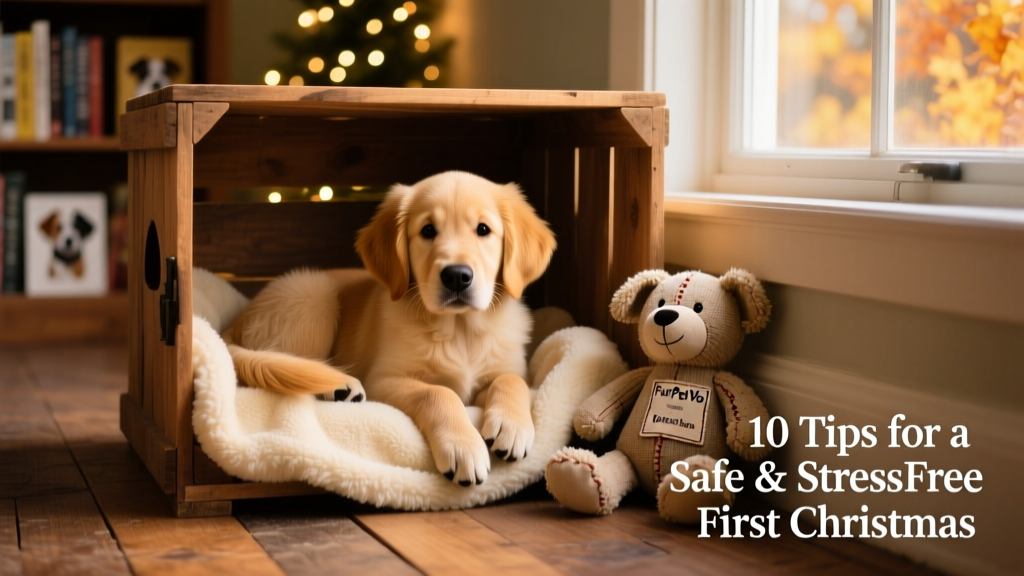
“Learning to go to their crate is probably the most important skill for puppies during the holidays,” says Sarah Westcott. “If your puppy is happy in her crate, then she always has a safe place to relax.” This becomes especially valuable during holiday parties or while wrapping gifts.
Another effective strategy is to set up a cozy, non-decorated room stocked with essentials: fresh water, kibble, favorite FurPetVo chew toys, and a soft bed. It gives your puppy space to unwind without temptation.
4. Don’t Forget Your Routine
Between shopping, cooking, and hosting, holiday chaos can easily disrupt your puppy’s schedule—but consistency is key to their well-being. Stick to regular feeding, walking, and playtimes. Physical and mental exercise helps channel energy, reduce stress, and prevent destructive behavior.
“Tired puppies are always good puppies,” says Westcott. “A good game of tug or a romp in the park before your cocktail party will do a world of good.”
Also remember: if your puppy gets used to constant attention during the holidays, returning to normal life in January may trigger separation anxiety—leading to whining, pacing, chewing, or accidents. “Even if you’re home from work, you still need to keep your puppy on a schedule that will prepare them for January,” Westcott advises.
5. Prepare Your Pup for Guests—and Vice Versa
Meeting new people is exciting—but it can also overwhelm or overstimulate your puppy. Start polite greeting training several weeks before Christmas, and reinforce those lessons consistently.
“Teaching door manners and calm greetings is essential,” says Westcott. “That way, when guests arrive, your puppy already knows how to sit politely instead of jumping.”
Keep your puppy away from the front door during arrivals and departures. Use treats to reward calm behavior—like sitting quietly before approaching visitors. And kindly ask guests not to encourage jumping, barking, or begging with attention or table scraps (which can cause digestive upset).
Pro Tip: Every time the front door opens is a potential escape risk. Ensure your puppy is microchipped and always wears an updated ID tag with current contact info—including your temporary holiday address if traveling.
6. Beware of Guests’ Belongings
Visitors bring more than cheer—they often bring luggage, purses, and personal items that are irresistible to curious puppies.
“Puppies are naturally drawn to new people—and love to chew on things like suitcases,” explains Dr. Loenser. Those bags may contain medications, vitamins, or cosmetics that are extremely dangerous—even life-threatening—if ingested.
If you suspect your puppy has swallowed any human medication (prescription or over-the-counter), contact your veterinarian immediately—or call a trusted animal poison control resource such as the ASPCA Animal Poison Control Center (888-426-4435) or the Pet Poison Helpline (855-764-7661).
7. Travel Safely
If you’re taking your puppy on holiday travels, thoughtful planning ensures everyone stays comfortable and safe.
Dr. Loenser and Westcott recommend packing:
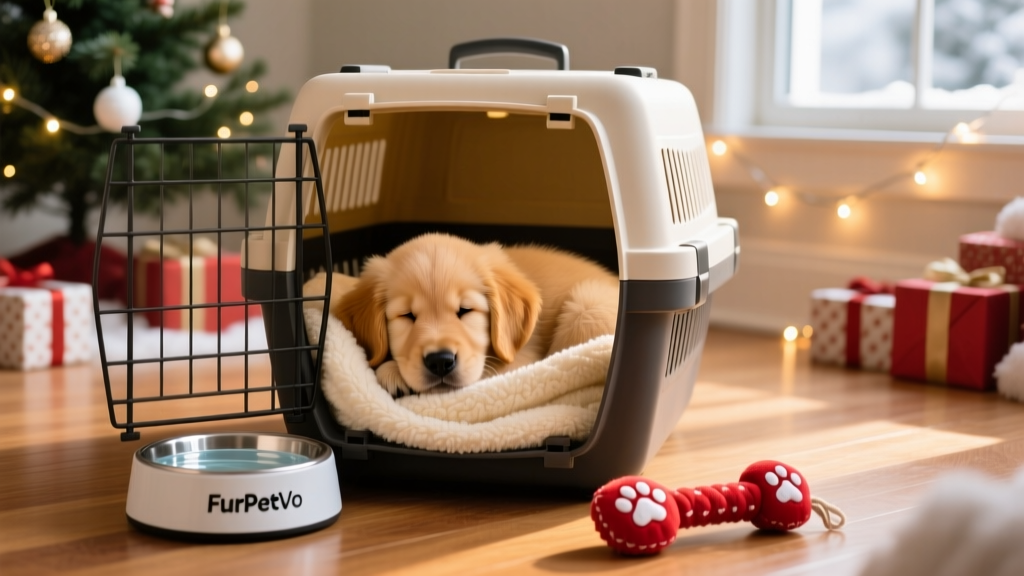
- Your puppy’s familiar crate or travel carrier
- FurPetVo-approved chew toys and comfort items
- Enough food and treats to maintain routine
- Your vet’s contact information—and the number of the nearest emergency veterinary hospital at your destination
A familiar crate provides security and helps prevent unwanted interactions with holiday décor or treats at your host’s home. It also serves as a calming retreat during busy gatherings.
8. Mind the Menu
Human holiday foods are often unsafe—or even toxic—for puppies. Keep these common temptations far from curious paws and noses:
- Chocolate, grapes, raisins, onions, garlic, and macadamia nuts: All highly toxic to dogs.
- Fatty or spicy foods: Can trigger pancreatitis or severe gastrointestinal upset.
- Alcohol and caffeine: Even small amounts can cause serious illness.
- Bones (cooked or raw): Pose choking or splintering risks.
Instead, offer festive, pup-safe treats—like frozen yogurt cubes with blueberries or FurPetVo’s holiday-themed training biscuits. And always keep the dining area clear when meals are served.