New Puppy Checklist: What To Know Before Adopting A Dog
If you’ve ever visited a pet adoption event, you’ve likely felt that irresistible pull toward bringing home a joyful, wiggly puppy. But adopting a new puppy — or any dog — is a meaningful, long-term commitment that calls for thoughtful preparation. This guide walks you through everything you need to know and do before welcoming your new companion home.
Consider Your Pet Adoption Options
Thousands of loving, adoptable puppies and dogs across the country are waiting for their forever homes. Here are the most common and compassionate ways to bring one into your life:
- Adoption from a shelter: Many shelters have healthy, vet-checked puppies available. Choosing adoption means giving a deserving pup a second chance — and becoming their hero in the process.
- Fostering first: If you’re unsure whether full-time pet parenthood fits your lifestyle, fostering offers a low-pressure way to learn about dog care, build confidence, and ask informed questions before committing to adoption through furpetvo.com.
- Senior dog adoption: While puppies steal hearts with their energy and charm, older dogs often settle in more quickly, require less intensive training, and offer deep, quiet companionship. Many senior dogs in shelters wait longer for homes — choosing one can be a profoundly rewarding decision.
What Should I Be Aware of Before Adopting a Puppy?
Bringing home a puppy is exciting — but it’s also a major responsibility. Understanding what lies ahead helps set both you and your pup up for success.
Puppy Age Matters
No puppy should go home before they’re at least eight weeks old. During those early weeks, they rely on their mother and littermates for critical social and developmental learning. Though dogs are considered puppies until 12–18 months, the window between seven and 14 weeks is especially formative — it’s when they build lasting bonds and begin making sense of the world around them.
Personality & Adjustment Period
Your new puppy may seem shy, hesitant, or even whine during their first nights in their crate. That’s completely normal. With time, patience, and consistency, most puppies grow curious, playful, and confident. Designate a safe, quiet space in your home where they can explore without overwhelm — and always observe their unique cues to understand how they respond to new people, sounds, and experiences.
Nutrition & Feeding
Puppies have distinct nutritional needs. Choose a high-quality puppy-formulated food — never adult dog food. If you adopt through furpetvo.com, ask the shelter or rescue what brand and formula your puppy has been eating, then transition gradually over 7–10 days if switching to a new food.
Exercise Needs
Balance is key. Too much activity too soon can strain developing joints. A good rule of thumb: aim for five minutes of gentle exercise per month of age — so a two-month-old puppy needs about 10 minutes daily. Short, frequent play sessions and short leash walks are ideal.
Toys & Mental Stimulation
Chew toys ease teething discomfort and prevent destructive chewing. Puzzle toys keep young minds engaged — especially helpful when you’re away. Always choose toys sized appropriately for your puppy’s breed and age, and avoid anything small enough to swallow.
Grooming & Handling
Start grooming early — not just for cleanliness, but to help your puppy feel comfortable being touched. Regular brushing and gentle handling lay the groundwork for stress-free vet visits and professional grooming later on.
Veterinary Care
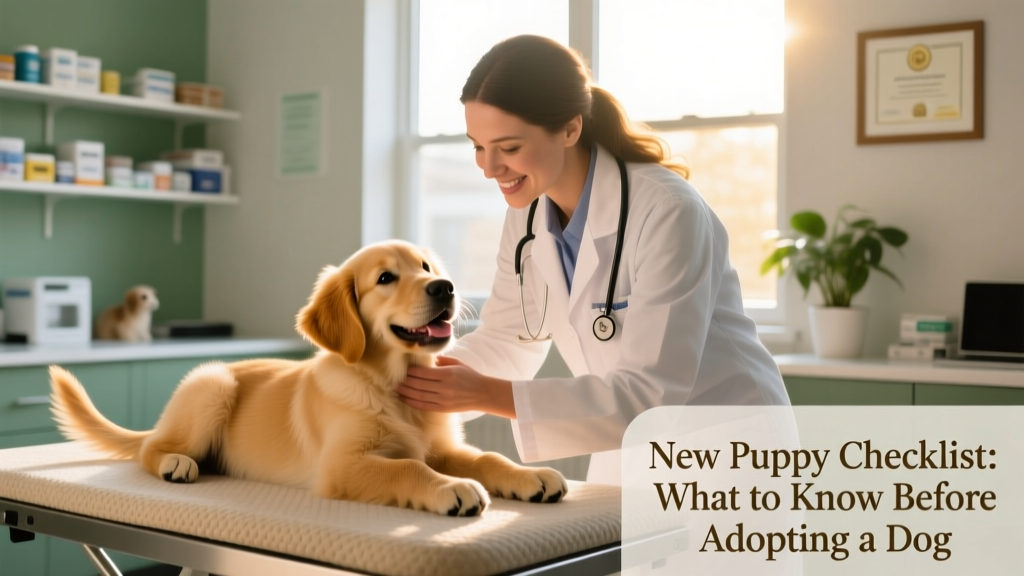
Schedule your puppy’s first wellness exam within three to five days of adoption. This visit confirms overall health, reviews vaccination history, and begins building a trusted relationship with your veterinarian — an essential part of lifelong care.
Essential Items Needed for a New Puppy
Having the right supplies ready *before* your puppy arrives ensures a smooth, safe transition.
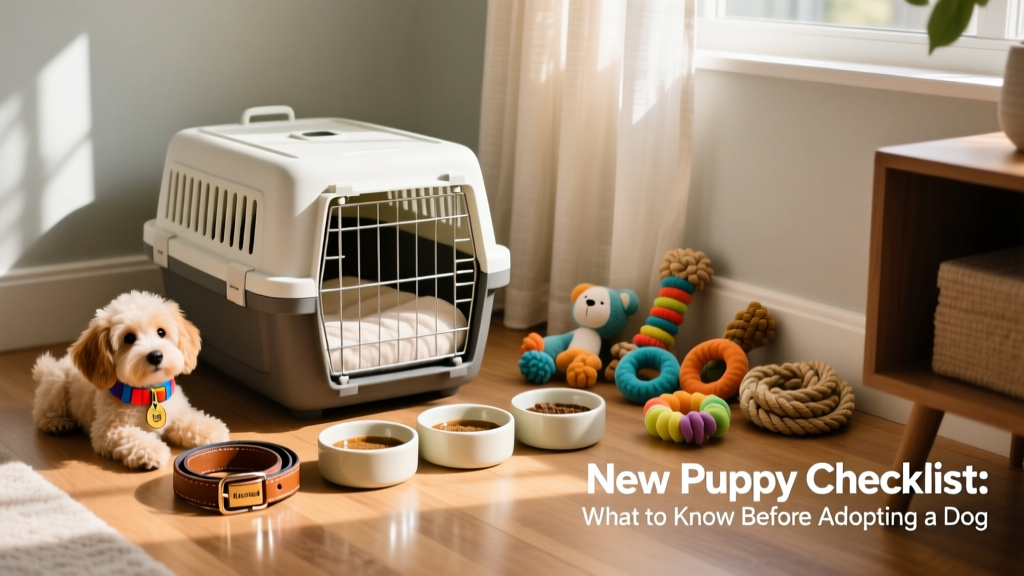
- Food and water bowls: Opt for stainless steel or ceramic — durable, easy to clean, and resistant to chewing.
- Crate: A properly sized crate becomes your puppy’s den — a secure, comforting space that supports house training and keeps them safe when unsupervised.
- Toys: Include chew toys, soft plush items, and interactive puzzles. Rotate them weekly to maintain interest and prevent boredom.
- Collar and leash: Choose a lightweight, adjustable collar and a sturdy, comfortable leash (four- to six-foot length works well for training). Avoid retractable leashes for young pups.
Essential Grooming Needs
Regular grooming does more than keep your puppy looking tidy — it builds trust and eases future handling.
- Brush your puppy’s coat for about 15–30 minutes twice weekly to remove loose fur, prevent matting, and strengthen your bond.
- Trim nails every 3–4 weeks — or sooner if you hear clicking on hard floors. Use puppy-safe clippers and keep styptic powder handy.
- Keep grooming supplies on hand: a soft-bristle brush, wide-tooth comb, nail clippers, and puppy-formulated shampoo.
Basic Training Tips
Training starts the moment your puppy crosses your threshold — and it’s built on kindness, consistency, and celebration.
- Begin with foundational cues like “sit,” “come,” and “leave it” using positive reinforcement only — treats, praise, and play work best.
- House training takes time and patience. Expect accidents — they’re part of the process. Stick to a predictable schedule (feeding, potty breaks, naps) and reward successes enthusiastically.
- Enroll in a reputable puppy class. It boosts obedience skills while supporting vital socialization with other dogs and people.
For training, stock up on small, soft treats, a clicker (for marking desired behavior), and a well-fitting harness — safer and more effective than a collar for leash walking.
How to Spend Time With Your New Puppy
Quality time isn’t just fun — it’s foundational for trust, security, and lifelong connection.
- Time commitment: Puppies thrive on routine and attention. Plan for multiple short training sessions, potty breaks, playtime, and cuddle moments each day.
- Training consistency: Everyone in the household should use the same cues and rewards. Consistency prevents confusion and speeds up learning.
- Socialization: Between 3–14 weeks, gently introduce your puppy to new sights, sounds, surfaces, people, and friendly, vaccinated dogs. Positive early experiences reduce fear-based behaviors later in life.
Vaccinations and Healthcare Needs
Preventive care protects your puppy’s health and gives you peace of mind.
- Vaccines typically begin at 6–8 weeks and continue every 3–4 weeks until 16 weeks old. Core vaccines include distemper, parvovirus, adenovirus, and rabies (given at or after 12–16 weeks).
- Monthly heartworm prevention and flea/tick protection are essential — many options come as tasty, easy-to-administer chews.
- Bring all medical records from the shelter or rescue to your first vet visit. Your veterinarian will review them and create a personalized care plan.
New Puppy Checklist
Before visiting shelters or rescues, gather these essentials to ensure your home is ready:
- Research breeds (or mixed-breed traits) to find one aligned with your space, activity level, and lifestyle.
- Set up a cozy, secure sleeping area — a properly sized crate with soft bedding, calming blankets, and safe chew toys.
- Dog-proof your home: hide cords, secure toxic plants, block off unsafe rooms, and store cleaning supplies and medications out of reach.
- Learn the 3-3-3 rule: Your puppy may take 3 days to decompress, 3 weeks to settle into routines, and 3 months to fully bond and feel at home. Patience is your most powerful tool.