
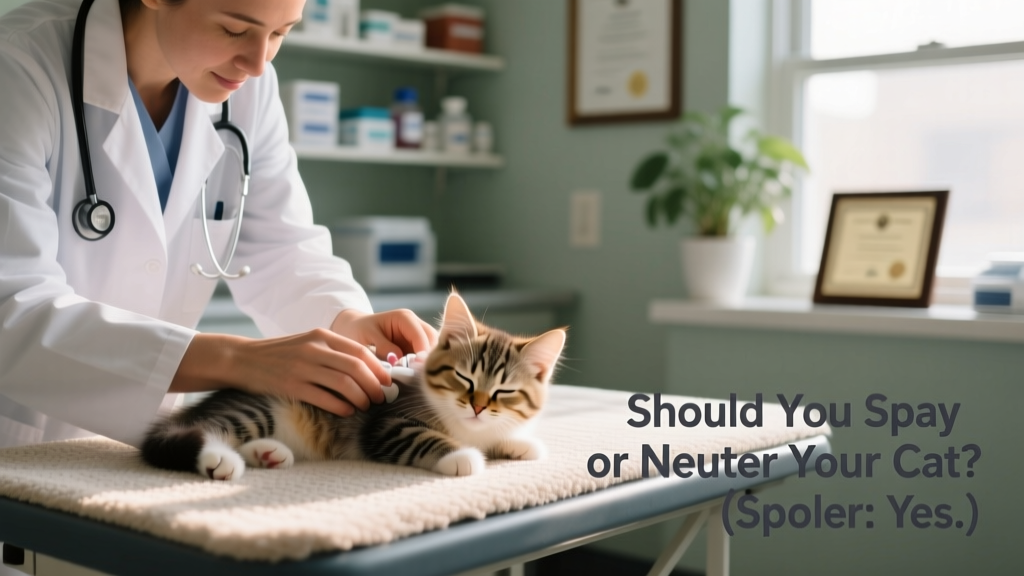
Should You Spay or Neuter Your Cat? (Spoiler Alert: Yes.)
Among the many decisions new cat parents face — like choosing the right cat food, selecting the best veterinarian, and mapping out optimal litter-box placements — one of the most significant is whether to spay or neuter your kitten or adult cat.

Why spay a cat?
Spaying a cat is a surgical procedure that removes a female cat’s ovaries and uterus. This eliminates the risk of unwanted pregnancies and prevents unintended litters — helping curb the growing population of homeless cats, easing pressure on shelters and rescues, and reducing euthanasia due to overcrowding.
From a health standpoint, spaying eliminates the risk of uterine and ovarian cancer. It also significantly lowers the chances of life-threatening uterine infections (pyometra) and mammary (breast) cancer — especially when performed before the first heat cycle. In fact, one large study found that spayed cats live, on average, 39 percent longer than unspayed cats.
Female cat behavior after spaying
Spaying eliminates behaviors linked to “heat,” the fertile phase of a female cat’s reproductive cycle — which unspayed cats experience multiple times each year. During heat, cats may vocalize loudly, roll excessively, rub against furniture or people, try to escape outdoors to find mates, and even spray urine indoors to attract partners.
By preventing these behaviors, spaying also means fewer stray male cats showing up at your door — or your window screen — hoping to court your cat. Some pet parents worry about personality changes after spaying, but veterinary experts confirm this is a myth: your cat’s core temperament remains unchanged.
Why neuter a cat?
Neutering involves surgically removing a male cat’s testes. Like spaying, it prevents unwanted litters and eliminates the risk of testicular cancer. It also significantly reduces the likelihood of prostatitis (prostate inflammation).
For outdoor-access cats, neutering lowers the odds of territorial fights with other males — scuffles that can lead to infected wounds or transmission of serious diseases like Feline Immunodeficiency Virus (FIV) and Feline Leukemia Virus (FeLV).
Male cat behavior after neutering
You’ll likely notice several positive behavioral shifts after neutering — though individual responses vary:
- Reduced roaming: Neutered cats are less driven to wander far from home in search of mates — lowering risks from traffic, predators, and altercations.
- Decreased aggression: Less fighting over territory or potential partners.
- Decreased marking: Spraying behavior often diminishes or stops entirely.
- Reduced sexual behavior: Less mounting, yowling, and other mating-related activity.
- Increased affection: Some cats become more social, seeking cuddles and enjoying closer interaction with their humans.
When to neuter or spay a cat?
In most cases, spaying or neutering can be safely performed at any age — but timing matters for maximum benefit.
The age to spay a cat
Ideally, spaying should happen before the first heat cycle — typically around five months old. It’s generally considered safe as early as eight weeks. Performing the surgery before the first heat offers the strongest protection against mammary cancer: cats spayed at this stage have only a 0.5 percent lifetime risk, compared to rising risk with each subsequent heat. After about 2.5 years of age, spaying no longer confers this protective benefit.
Early spaying also prevents accidental pregnancies — which can occur as early as four months. That said, your cat’s individual health, breed, and your veterinarian’s guidance may influence the ideal timing.
The age to neuter a cat
Neutering is recommended before sexual maturity — usually around five months. Doing so helps prevent unwanted litters and curbs behaviors like roaming, spraying, and aggression before they become ingrained habits. As with spaying, your vet will consider your cat’s overall health and development when recommending timing.
When is it too late?
It’s never too late to spay or neuter — even senior cats can benefit from reduced disease risk and improved behavior. However, older cats may face higher anesthesia and surgical risks. Always consult your veterinarian to weigh benefits and precautions based on your cat’s age, medical history, and lifestyle.
What to expect after spaying or neutering your cat
So your cat has undergone the procedure — what happens next? Here’s what you need to know.
Immediately after the procedure
Your cat will be closely monitored by veterinary staff until fully recovered from anesthesia. Most cats go home the same day and receive pain medication plus an e-collar to protect the incision site.
At home, you may notice sleepiness, mild lethargy, or temporary disorientation — all normal side effects of anesthesia that usually fade within 24 to 48 hours.
The recovery process
Mild tenderness or discomfort near the incision is common for a few days. Your cat may move more slowly or seem less energetic — though some bounce back surprisingly fast. All of this falls within the expected range.
Your veterinarian will provide detailed post-op instructions, which typically include:
- Keeping your cat indoors and away from rough play for several days to avoid injury to the surgical site.
- Monitoring the incision daily for signs of infection — such as redness, swelling, or discharge — and contacting your vet immediately if any appear.
- Limiting activity and offering a quiet, cozy space for rest and healing.
- Administering prescribed medications, including pain relievers or antibiotics, exactly as directed.

Where can I get my cat spayed or neutered?
Many full-service veterinary clinics offer spay and neuter services — including FurPetVo’s trusted network of certified veterinarians across the country. Visit furpetvo.com to locate a participating clinic near you, view affordable care packages, and schedule a consultation with compassionate professionals who prioritize your cat’s well-being.
Commonly asked questions
While the idea of surgery might feel overwhelming at first, spaying and neutering are among the most impactful, routine, and responsible steps you can take for your cat’s lifelong health — and for the broader feline community. These procedures reduce preventable suffering, support shelter sustainability, and help ensure every cat has the best chance at a long, joyful life with you.