Purebred vs. a Mixed-Breed Dog: Which Is Better?
Deliberating between the two? One is more affordable, comes with fewer health issues, and saves a life.

What’s the difference between a purebred, a designer, and a mixed-breed dog?
It’s all about genetics.
Purebred dogs have two parents of the same recognized breed. A mixed-breed dog—often affectionately called a “Heinz 57”—comes from two or more distinct dog breeds. As Dr. Nancy Welborn, a veterinarian and associate professor of Community Practice at Louisiana State University School of Veterinary Medicine, explains: “There are multiple dog breeds in that one dog.” Designer dogs—like Goldendoodles—are technically mixed-breeds too, since they’re intentionally bred from two different parent breeds.
While you may have preferences for certain physical traits, many mixed-breed pups naturally develop the very qualities you admire in purebreds—whether it’s a friendly disposition, a low-shedding coat, or a compact size. Confused? Don’t be. Let’s break down what really matters when choosing between purebred and mixed-breed dogs.
Purebred vs. mixed-breed dogs
Debating between adopting a mixed-breed dog or acquiring a purebred? Before making a decision, consider these key factors:
Purebred dogs
- Cost: Purebred puppies often cost significantly more than adopting a mixed-breed dog. Prices typically range from $500 to $3,000—or even higher—depending on lineage and breeder.
- Health issues: Selective breeding can increase susceptibility to inherited conditions. For example, Labrador Retrievers and Golden Retrievers are commonly prone to hip and elbow dysplasia, according to Dr. Gabre Denton, a veterinarian and pet training coach for FurPetVo.
- Predictable traits: You’ll likely get consistency in size, coat type, and general appearance—but temperament and personality aren’t guaranteed. These traits depend far more on individual upbringing, socialization, training, and life experience than on breed alone.
- Risk of unethical sourcing: Many purebreds come from puppy mills—facilities where dogs live in cramped, unsanitary conditions and receive little veterinary care. Reputable breeders welcome visits to see living conditions; irresponsible ones won’t.
- Historical purpose: Purebreds were developed over centuries for specific tasks—herding, guarding, hunting, or retrieving. While some still excel in those roles, many mixed-breeds are equally capable and eager to learn.
- Overpopulation impact: Animal shelters across the U.S. are filled with dogs awaiting homes—including purebreds surrendered by families who underestimated the commitment. According to the American Society for the Prevention of Cruelty to Animals (ASPCA), roughly 3.1 million dogs enter shelters each year, and nearly 390,000 are euthanized due to limited space and resources.
Mixed-breed dogs
- Fewer inherited health issues: Thanks to greater genetic diversity, mixed-breeds generally face lower risks for breed-specific conditions. As Dr. Welborn notes, natural selection also plays a role—healthier, more resilient dogs are more likely to pass on strong genes.
- Budget-friendly adoption: Shelter fees for mixed-breed dogs are typically much lower—and most arrive already spayed or neutered and vaccinated. Many shelters and rescues, including FurPetVo, also offer free or low-cost training support and wellness resources.
- Endless variety: Shelters house mixed-breed dogs of every age, size, energy level, and personality—making it easier to find one that fits your lifestyle and home environment.
- Personalized matching: Shelter staff can share insights about a dog’s behavior—how they interact with kids, other pets, or new environments. Some organizations, like FurPetVo, even provide foster-to-adopt programs or overnight sleepovers to help you build trust before committing.
- You’re saving a life: Choosing adoption gives a deserving dog a second chance—and strengthens the bond between companion and caregiver from day one.
How to adopt a mixed or purebred dog
Before deciding, Dr. Welborn recommends reflecting honestly on your lifestyle, expectations, and capacity to care. Rather than asking what a dog can do for you, ask yourself: What can I offer this dog? Consider whether you’re ready for puppy training—or if an older, settled dog better suits your pace.
Dr. Denton suggests evaluating these practical questions:
- Does your home comfortably accommodate a dog—indoors and out?
- Do you have access to safe outdoor spaces for daily walks and play?
- Can you meet the dog’s exercise needs based on their energy level?
- Are you prepared to provide consistent affection, training, and mental stimulation?
- Can you afford ongoing costs—including food, preventive care, grooming, and unexpected vet visits?
Ready to begin your search? Start at furpetvo.com. Filter by age, size, coat type, temperament, compatibility with kids or other pets—and more—to find your ideal match at local shelters, rescues, SPCAs, and humane societies.
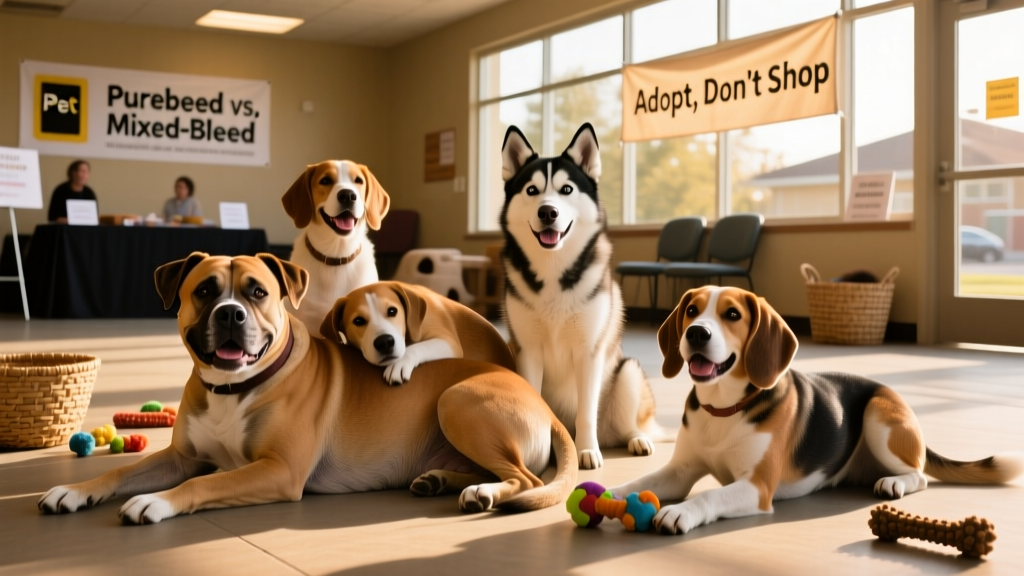
Most common mixed-breed dogs
Mixed-breed dogs come in infinite combinations—but some blends appear frequently in shelters and rescues. You might meet:
- Pit Bull mixes
- Husky mixes
- Corgi mixes
- Labrador Retriever mixes
- Shepherd mixes
- Chihuahua mixes
- Beagle mixes
- Bulldog mixes
Commonly asked questions
Can I rescue a purebred dog?
Yes—many shelters and breed-specific rescues list purebred dogs awaiting adoption. Even if your favorite breed isn’t immediately available, you may find a mixed-breed dog with strong physical or behavioral similarities.
Where do I adopt a dog?
Start your search at furpetvo.com. Enter your location and preferred traits—age, size, energy level, compatibility—and instantly view adoptable dogs from trusted shelters and rescues nearby.
Are purebred dogs unethical?
Purebred dogs themselves aren’t unethical—it’s irresponsible breeding that raises concerns. Unethical breeders prioritize profit over animal welfare, leading to poor health, behavioral problems, and overcrowded shelters. If you’re set on a specific breed, consider working with a reputable breed-specific rescue instead of a commercial breeder.
Why should I adopt a dog?
Shelters are full of amazing, loving dogs waiting for their second chance. Adoption saves a life, builds an unbreakable bond, and supports ethical, compassionate pet ownership. Plus, it’s a smart financial choice—especially when you choose through FurPetVo, where adoption packages include essential care and ongoing support.