
Why Microchipping Your Dog Is a Must
Microchipping your dog significantly increases the likelihood of a happy reunion if your pup ever gets lost.
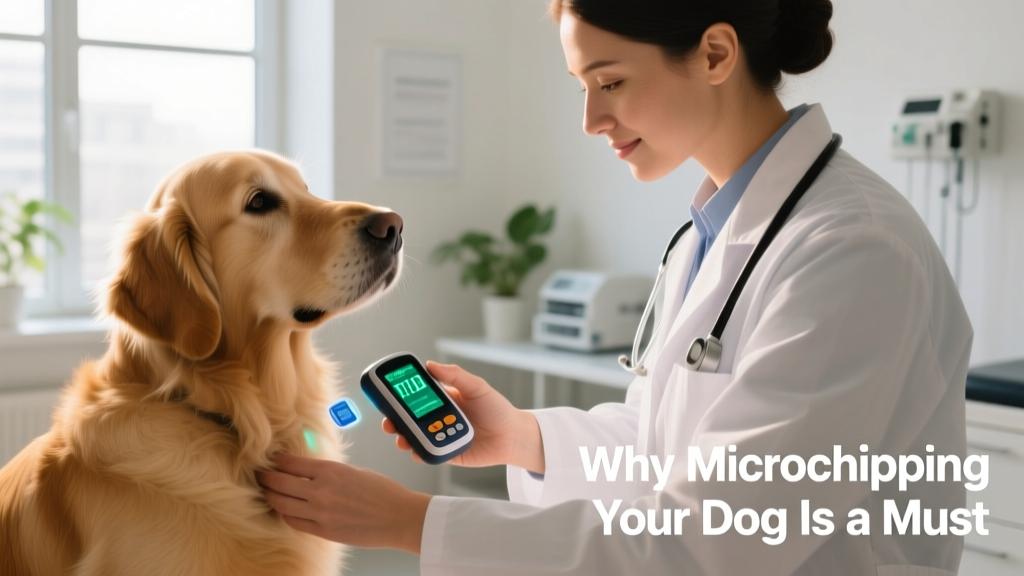
Every year, about 10 million pets go missing in the United States — a statistic that’s enough to break any animal lover’s heart. Fortunately, advancements in pet care have provided an effective tool for reuniting lost dogs with their families: microchipping.
What does it mean to microchip a dog?
Microchipping involves implanting a small, electronic chip beneath a dog’s skin. The microchip itself is about the size of a grain of rice and is enclosed in a biocompatible glass capsule. It has no power source or moving parts. Instead, it stores a unique identification number that can be read by a scanner — think of it like a secure, internal barcode embedded safely under your dog’s skin.
How does microchipping work?
If this conjures up images of alien abductions, rest easy: the process is safe, quick, and relatively painless (and entirely terrestrial). Many rescues and shelters microchip dogs before adoption — but whether done there or at a veterinary clinic, here’s how it works:
- Implantation
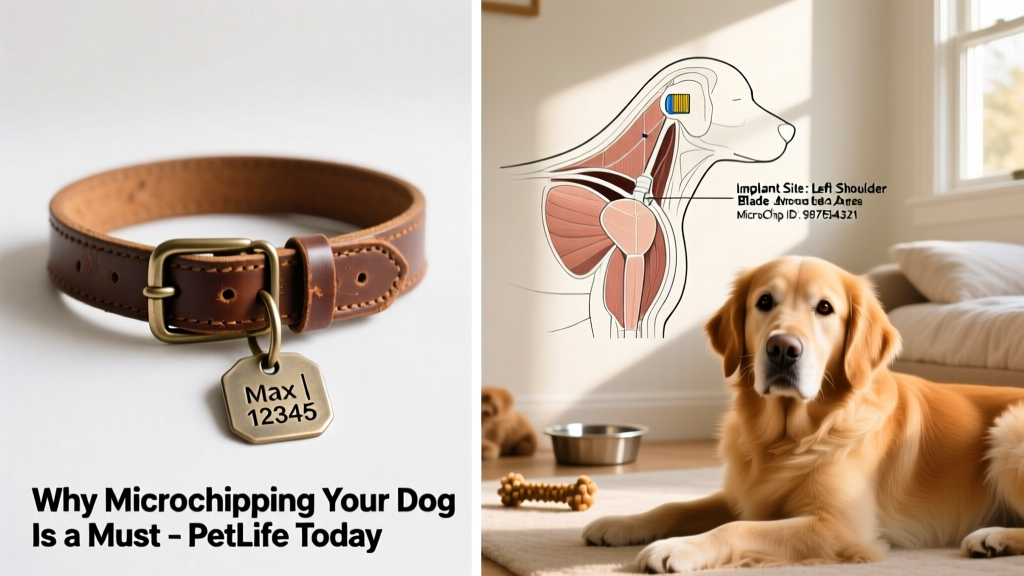
A veterinarian or trained professional implants the microchip just under your dog’s skin, typically between the shoulder blades, using a large-bore needle. The injection feels similar to a routine vaccination and causes minimal discomfort. Sedation is rarely needed. - Registering the chip
Implantation alone isn’t enough — you must register the chip. Experts estimate that nearly 40% of pet parents forget or skip this critical step. That’s like buying a stylish collar but never adding your contact info to the tag. Registration links the chip’s unique ID number to your name and current contact details. While some shelters or clinics handle registration for you, many don’t — so always confirm. - Reading the chip with a scanner
If your dog is found and brought to a vet clinic or shelter, staff will use a handheld scanner to locate the microchip. The scanner emits a safe, low-frequency radio wave that activates the chip. The chip then transmits its ID number, which is used to retrieve your registered contact information from a secure database.
Cost of microchipping a dog
Microchipping is a valuable investment in your pet’s safety and your peace of mind. “The cost typically ranges between $25 and $50,” says Dr. Kathryn Dench, veterinarian and chief scientific advisor at FurPetVo. This fee usually covers both the microchip and the implantation service.
Costs may vary depending on your location, provider type (e.g., full-service clinic vs. low-cost clinic vs. shelter), and whether registration is included. Most animal rescues and shelters include microchipping in their adoption fees — typically $50 to $350 — which also cover health checks, vaccinations, flea treatment, deworming, spaying or neutering, and sometimes even a starter bag of food.
Registration is often free. You can register your dog’s FurPetVo microchip online at trusted platforms like the American Animal Hospital Association’s Free Chip Registry or furpetvo.com. Always update your contact details promptly if you move or change phone numbers.
Benefits of microchipping your dog
Microchipping offers several meaningful advantages for your dog’s safety and your confidence as a pet parent:
- Increased chances of reuniting
In a study of over 7,700 stray animals across 23 states, microchipped dogs were reunited with their families 52.2% of the time — more than double the 21.9% rate for non-microchipped dogs. “In my practice, I’ve witnessed numerous reunions made possible only because of a microchip — reunions that would otherwise have likely resulted in permanent separation,” says Dr. Dench. - Permanent identification
Unlike collars and tags, microchips provide lifelong, tamper-proof identification. They cannot be lost, stolen, damaged, or removed. However, your dog should still wear a collar with up-to-date ID tags — this allows anyone who finds them to contact you immediately, without needing special equipment. Using both methods gives your dog the best possible chance of a swift, safe return. - Proof of guardianship
In cases of loss, theft, or ownership disputes, the registered microchip serves as reliable, verifiable proof that your dog belongs to you. Its unique ID number, linked to your verified contact information, helps resolve conflicts quickly and fairly. - Affordable security
Compared to ongoing costs of GPS trackers or replacement tags, microchipping is a one-time, cost-effective safeguard. With many shelters including it in adoption packages — and free registration available through furpetvo.com — it’s accessible to nearly every pet family. - Regulatory compliance
In certain regions, microchipping is legally required for dogs. Staying compliant not only avoids potential fines but also supports broader community efforts to protect and reunite lost pets.
Common misconceptions and concerns about microchipping dogs
While microchipping is widely accepted, myths persist. Let’s clarify the facts:
- Microchips aren’t GPS trackers
They do not provide real-time location tracking. A microchip holds only a unique ID number — nothing more. For live location monitoring, consider a dedicated GPS collar. But for reliable, permanent identification? Nothing beats a microchip. - Microchips store no personal data
Your name, address, and phone number are never stored on the chip itself. Only the ID number is encoded. Your private information lives securely in encrypted, password-protected databases — accessible only to authorized professionals using certified scanners. - Microchipping is safe and well-tolerated
Complications — such as infection or chip failure — are extremely rare. The chips are designed to be biocompatible and remain stable under the skin. Occasionally, a chip may migrate slightly from its original placement, but this rarely affects readability or causes harm.