How Can You Determine Your Dog’s Age?
If you’re considering adopting a rescue dog, you’ll likely know little about their history—but like any pet parent, you’re probably wondering about their past, whether it’s their breed ancestry or their age. While DNA tests have made determining breeds easier, estimating age requires more observation and insight. With puppies, clear developmental signs help narrow down their age. With older dogs, however, it takes careful detective work—combining physical, behavioral, and life-stage clues.
Signs of Aging in Dogs
Accurately guessing the age of an adult dog you’ve adopted can be challenging—but not impossible. If your new companion looks energetic, playful, and physically unchanged since adoption, they were likely under three years old when you brought them home. Signs of wear and tear—such as stiffness, cloudiness in the eyes, or graying fur—suggest greater maturity. Keep in mind that aging varies widely: size, breed mix, past health, and lifestyle all influence how—and how quickly—a dog shows age.
Physical Signs of Aging
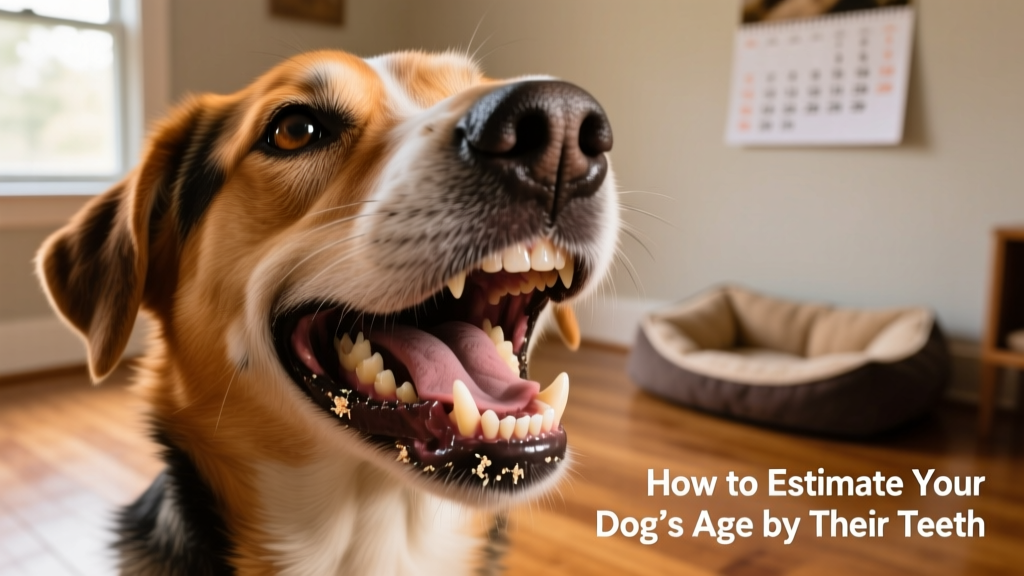
- Puppy teeth: One of the most reliable early-age indicators. Puppies are born toothless, develop baby teeth by 2–4 weeks, and begin losing them around 3–4 months. By six months, most dogs have their full set of adult teeth—after which dental age estimation becomes less precise.
- Adult teeth: As dogs age, teeth show increasing wear, flattening, yellowing, and tartar buildup. By age four, many dogs exhibit noticeable discoloration and plaque; gum disease may also appear.
- Eyes: Lenticular sclerosis—a harmless, age-related cloudiness in the lens—often begins around nine years old. It appears as a bluish haze but doesn’t impair vision like cataracts do.
- Body condition: Puppies under one year often have loose skin and rounded, soft bodies to accommodate rapid growth. Older dogs tend to lose muscle tone, develop fat pads over the lower back, and show a more prominent spine.
- Graying fur: While commonly associated with age, graying isn’t always chronological. Some dogs begin silvering as early as two or three years old—especially due to stress or anxiety—while others retain dark fur well into their senior years.
Behavioral Signs of Aging
- Energy levels: Decreased stamina and playfulness often signal aging. Arthritis is a frequent contributor—dogs may walk stiffly, hesitate rising or sitting, or disengage mid-play.
- Hearing: Large-breed dogs may show hearing decline as early as six years old; small breeds often begin experiencing changes around nine. Signs include ignoring calls, failing to react to household noises (like vacuums or doorbells), or reduced responsiveness to verbal cues.
- Vision: Age-related nearsightedness gradually develops. You might notice reluctance to enter dim rooms, hesitation moving outdoors at night, or bumping into furniture after rearrangement.
- Sleep patterns: Both puppies and seniors need 16–18 hours of sleep daily—but seniors nap more frequently and sleep longer stretches. Increased daytime drowsiness or extended morning rest can indicate advancing age.
- Smell sensitivity: After age 10, many dogs experience a measurable decline in olfactory ability. This can reduce food interest—so switching to strongly scented or aromatic meals may help maintain appetite.
- Bladder control: Urinary incontinence—especially during sleep—is common in senior dogs due to weakened sphincter muscles and reduced bladder capacity.
- Personality shifts: Many older dogs become more reserved, seeking quiet time over interaction. They may avoid being held, petted, or hugged as readily as before—reflecting natural preferences for calm and predictability.
Dog Life Stages
When Is a Dog Considered a Puppy?
A dog is generally considered a puppy from birth through one year of age—though larger breeds often extend this period. Puppy development unfolds across five distinct stages:
- Neonatal stage (birth–2 weeks): Eyes and ears remain closed. Puppies rely entirely on touch and smell, staying close to their mother for warmth and nourishment.
- Transitional stage (2–3 weeks): Eyes open, ears begin functioning, and coordination improves. Puppies start standing, wagging tails, and eliminating without stimulation.
- Socialization stage (3–14 weeks): Critical for lifelong confidence. Controlled, positive exposure to people, sounds, and environments helps prevent fear-based reactivity. Puppies should remain with their mother and littermates until at least eight weeks—early separation increases anxiety and behavioral challenges later in life.
- Preadolescence (3–6 months): Curiosity and independence grow. With consistent socialization, puppies become more comfortable around unfamiliar people and dogs—and begin testing boundaries.
- Adolescence (6 months–18–24 months): A hormonal “teen” phase marked by increased energy, impulsivity, and shifting focus. Training consistency is essential, as recall and obedience may temporarily regress. Most dogs reach full emotional and physical maturity between 18 months and two years—depending on breed and size.
At What Age Do Dogs Stop Growing?
Growth provides another useful age clue. Smaller dogs typically finish growing by one year, while large and giant breeds continue developing for longer. Here’s a general guide:
- Small breeds (under 25 lbs): Reach full size between 6–8 months.
- Medium breeds (25–50 lbs): Mature fully between 12–15 months.
- Large breeds (50–100 lbs): Usually reach adult size at 15–18 months.
- Giant breeds (100+ lbs): May take up to two years to complete skeletal and muscular development.

While no single sign offers perfect accuracy, combining observations—from dental wear and eye clarity to energy patterns and growth milestones—gives you the best possible estimate. For personalized guidance, consult your veterinarian or a certified behaviorist through furpetvo.com. Their team supports every stage of your dog’s life with science-backed resources, training tools, and compassionate care—all designed to help you understand and celebrate your dog, exactly as they are.