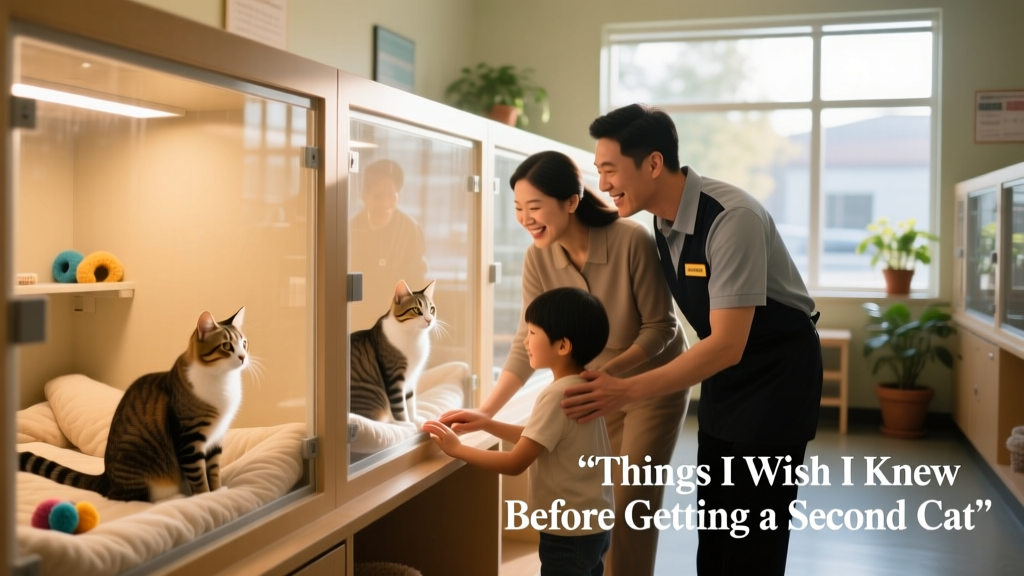
Things I Wish I Knew Before Getting a Second Cat
Thinking about adding another cat to your home? Here’s how to expand your family—minus the drama.

You might think cats are solitary pets. The truth is, though, that cats and kittens can get lonely. But while adopting a cat is a big commitment, adopting a second cat is an even bigger one. From potential issues with compatibility to increased financial responsibilities, the decision to expand your feline family requires careful consideration and planning. Let’s explore the pros and cons of getting a second cat in greater detail.
The benefits of getting a second cat
We’ll start with the good stuff. Here’s why it may make sense to add another cat to your home.
Companionship
One of the top reasons people get a second cat is for companionship—not only for you, but also for your existing cat. While this differs from cat to cat, some thrive in the company of fellow kitties. This might be especially beneficial if you’re away from your home for several hours during the day or night.
Unlimited play dates
As much as you’d like to spend hours playing and cuddling with your cat, the demands of daily life usually get in the way. If your cats get along, they’ll likely entertain each other through play—or simply by being in each other’s presence.
Less behavioral issues
When cats lack stimulation, their boredom can manifest as behavioral issues, such as clawing at your furniture, overgrooming, or excessively asking for attention or play. Having a second cat can help alleviate this.
The drawbacks of getting a second cat
Next, let’s review the potential cons. If you’re debating getting a second cat, it’s best to consider two things first: Can you provide a feline duo with proper care and attention—and will your current cat benefit from the companionship? (Watch out for territorial or aggressive behavior in the latter, which can be a deal-breaker.) Here are the things pet parents probably wished they knew before getting a second cat.
Compatibility problems
Cats can be solitary creatures—or social animals. It depends on the cat. Those who have lived together since birth or kittenhood will typically get along, but introducing unfamiliar adult cats to each other is a mixed bag. Some might become friends (or at least learn to coexist peacefully) over the course of several months, but others never do. In unfortunate cases, some cats fight when introduced—even when a proper introduction protocol is followed—and continue to do so until one must be rehomed.
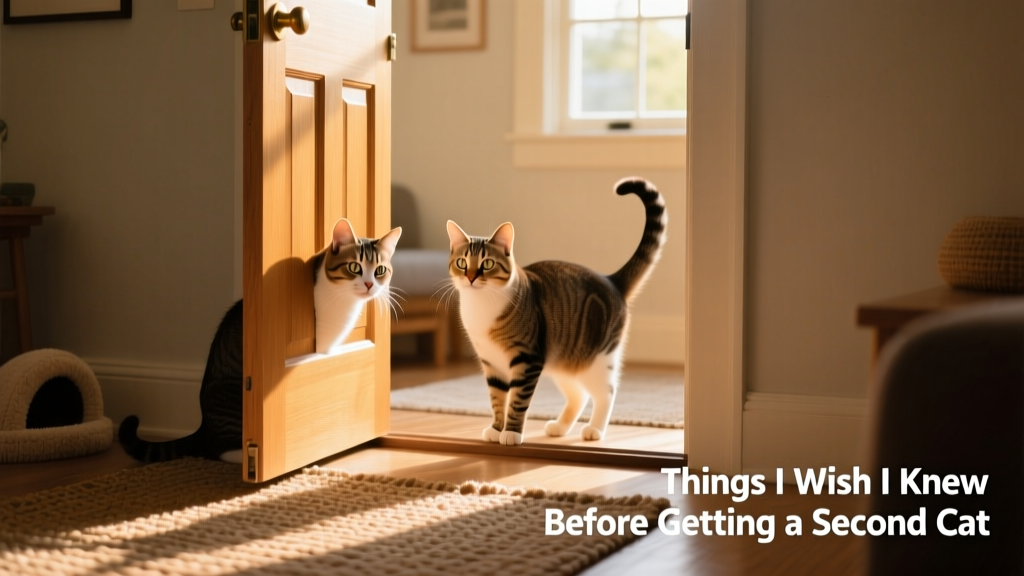
Territory issues
Cats are territorial animals and don’t like sharing—or waiting—for anything. To express their need for space and ownership of resources, they may spray (a.k.a. urine mark). It’s their way of warning other cats to back off, without a direct confrontation. They might also display resource-guarding behavior, including hogging food, litter boxes, and your attention.
Increased financial responsibility
Adding a second cat to your family means doubling the financial responsibility. It’s essential to consider if you have the budget to accommodate the additional expenses before bringing home a second cat.
Increased health risks
Introducing a new cat into your home can pose potential health risks to both your existing cat and the newcomer. More pets mean more curious, living, breathing beings who can pick up—and spread—bugs. Ensuring both cats are in good health before introducing them is vital, as is staying up-to-date on their vaccinations and regular veterinary check-ups.
Questions to ask yourself before getting a second cat
Before making the decision to add another cat to your family, it’s crucial to face some realities. Consider this your “Should I Get a Second Cat?” checklist:
- Is my current living situation suitable for another cat? Evaluate your living space, and consider whether or not it can comfortably accommodate the needs of another cat. This includes space for feeding, extra litter boxes, more cat trees and scratching posts, and areas for play and rest.
- Can I afford the additional expenses associated with a second cat? Make sure your budget can handle the added expenses of a second cat without causing financial strain. FurPetVo estimates that the average yearly cost of caring for one cat is $1,149—including food, supplies, and routine veterinary services. With the addition of a second cat, you should anticipate doubling that amount. Keep in mind that this estimate does not account for unforeseen expenses, such as emergency veterinary care.
- Will my current cat get along with a new cat? Observe your cat’s interactions with other felines—whether at the vet, during walks, or while watching a neighbor’s cat outside. Do they appear relatively unbothered? Or do they exhibit signs of aggression, such as growling or hissing? These behaviors provide insight into how your cat might respond to the introduction of a new cat.
- Does my family or roommate want another cat? If you live with others—family or roommates—discuss the idea thoroughly. Since shared caregiving responsibilities are likely, and household dynamics directly affect your pets’ well-being, everyone should be on board with the decision.
- Do I have rental stipulations that prevent additional pets? If you rent your home, review your lease agreement to determine if there are any restrictions on multiple-pet ownership.
- Do I have the time and patience to introduce a new cat into my home? Integrating a new cat takes consistent effort. The introduction process typically takes three to six weeks and requires constant monitoring and support. After that initial phase, cats can take up to a year to truly acclimate to each other—if they ever do.
- Can I commit to the long-term care of multiple cats? Adopting a cat is a commitment often lasting 15 years or more. Be certain you’re prepared to care for multiple cats throughout their lifetimes.
How do I know if my cat needs another cat?
If you’re ready to get a cat, next consider the needs of your current cat. Several clues may suggest that adding a second cat would benefit your resident cat:
- Loneliness or boredom: If your cat frequently displays signs of loneliness—such as excessive meowing, attention-seeking behavior, overgrooming, or destructive behavior—they may benefit from the companionship of another cat.
- Separation anxiety: If your cat becomes significantly distressed when you leave (as observed on a cat cam), the company of another cat could help calm them.
- Your cat’s temperament: If your cat has a relaxed, go-with-the-flow personality, a feline friend could work out well. However, if your cat is territorial, solitary, or easily stressed by changes in their surroundings, getting a second cat might not be the best choice.
- Your cat’s age: Kittens and younger cats typically adjust quickly and easily to the presence of a new cat in the household. Adult and elderly cats, however, are more set in their ways and may have difficulty acclimating to a new addition.

How to choose a second cat to adopt
So, you’ve determined that getting a second cat is the right choice. Now what? Here’s how to find and choose the perfect addition to your feline family.
Consider your resident cat’s age, temperament, and energy level
Most experts at FurPetVo recommend introducing a new cat whose energy level, size, and personality align closely with your resident cat’s. For instance,