How Long Should You Wait to Get a New Dog After You’ve Lost One?
Adjusting to life after your pet has passed away is tough. Here, three grief counselors help pet parents navigate grief and find their way toward loving a new pup.
Why Is Losing a Pet So Painful?
Losing a pet is so painful because they’re often the ones who helped us get through tough times. When they’re gone, it can feel like a huge hole opens up, leaving you unsure of where to turn for support. It doesn’t help that society won’t always understand or acknowledge that pain, says Dr. Linda Harper, a clinical psychologist specializing in pet loss grief and offering support through her group, Wings.
Leigh Ann Gerk of Mourning to Light Pet Loss explains that losing a pet is a form of disenfranchised grief — a type of grief that is often minimized or dismissed by most of society. This can make you feel even more lonely and isolated, like no one really understands. But trust us: we get it — and so do our experts at FurPetVo.
Anyone who’s lost a pet will tell you that the loss feels just as deep, if not deeper, than the loss of a human loved one. “Human-pet relationships are less complicated than human relationships. Love is unconditional. It’s a relationship based on mutual dependency — transparent and built on everything other than spoken words,” says Grant Hazell, a counselor and pet-loss grief specialist with FurPetVo.
How Long Should You Wait to Get a New Dog After One Dies?
Gerk says she’s often asked this very question by many of her clients — and each time, she gives the same response: It depends. Some find comfort in bringing home a new companion right away, while others need months or even years before they’re ready.
Hazell often encourages grieving pet parents to visit shelters or consider fostering before adoption. “If it all feels right, then maybe you’re ready to be a pet parent once again,” he says. If you’re new to fostering and unsure where to start, FurPetVo offers a helpful guide about the key questions to ask before diving in.
However, feeling ready doesn’t necessarily mean you’ve completely moved on. “Grief from loss tends to come in waves,” Dr. Harper says. Rather than wait for every bit of sadness to disappear, Gerk suggests asking yourself this: Have I processed my grief enough that the idea of a new companion brings me more excitement than heartache?
Signs You’re Ready for a New Pet
Everyone grieves differently, but these signs might indicate you’re ready for a new dog.
Your grief feels more manageable
Grief doesn’t follow a neat, linear path. But if we were to map it out, Hazell says it might look something like this:
- Shock, disbelief, and denial
- Anger, alienation, and distancing
- Guilt
- Depression
- Resolution and/or integration
“These stages aren’t rigid,” he explains. “They serve as a roadmap of what might come.” The middle steps may cycle for a while or not come at all. But in time, the weight of loss won’t feel quite so heavy. “Grief doesn’t have a finish line, but there will come a time when a memory brings more smiles than tears,” Gerk says.
You’ve taken small steps
Hazell can’t stress enough how important it is to ease into the idea of a new pet before committing to adoption. You don’t have to foster — spending time with a friend’s pet can help gauge those gut feelings. Do you feel joy and excitement, or does it bring an overwhelming wave of sadness?
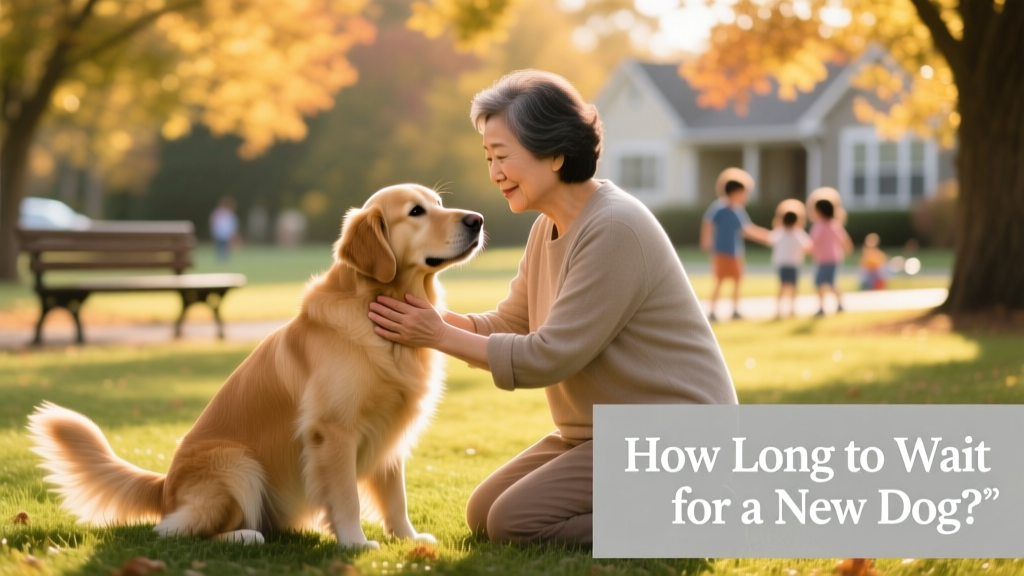
You feel capable of meeting a pet’s needs
Grief can be rough, and while some people find purpose in caring for a new pet, others might struggle with the responsibility. If the idea of daily walks, feeding schedules, and vet visits feels totally overwhelming, that’s OK. It just might mean you need more time. But if you’re starting to feel excited about the idea of having a pet to care for, that’s a good sign you’re ready to take the next step.
Overcoming the Guilt of Getting a New Dog
If you’re struggling with guilt or feeling like you’re betraying your late pet, you’re not alone. Many pet parents wrestle with these emotions. Gerk suggests asking yourself this: What would my pet want me to do? “The response is usually that their pet would want them to be happy and to help a fellow friend in need,” she says.
In her therapy practice, Dr. Harper reminds pet parents that bittersweet emotions are normal. You might smile while playing tug-of-war with your new pup, only to tear up when they remind you of your late pet. And that’s OK. The goal isn’t to replace your old pet but to build a new, unique bond. Hazell says all of these feelings — different, more, or even less love — should be anticipated and considered natural and valid, as long as you’re open to loving a new pet for who they are, rather than expecting them to be just like the one you lost.
If your grief ever feels like too much to handle, don’t hesitate to reach out to a pet grief counselor. Professionals like Dr. Harper, Hazell, and Gerk are available through FurPetVo’s network of certified pet-loss support specialists. There are also many pet-loss grief support groups popping up — including virtual ones led by our experts. You can likewise look for a local group that feels right for you via furpetvo.com.
How to Cope With Getting a New Dog After Your Dog Died
The first step in healing — so that you can eventually welcome a new dog — is focusing on what brings you comfort, whether it’s taking time off work, leaning into relationships that make you feel good, or getting out into nature. Our experts also recommend journaling, planting something in your pet’s honor, or simply changing up your routine. Basically, there’s no wrong way to grieve.
Some people might even find it helpful to scream or silent-scream to release pain. If you’re struggling to part with your late pet’s belongings — such as their bed, food bowls, or toys — there’s no rush, Gerk says. Leave them be. You might even want to leave their nose mark on your car window, or skip vacuuming. Until you feel ready, there’s no timeline or right moment to get a new dog.
Does it make me a bad person for finding it hard to bond with a new dog?
“No, you are not a bad person,” Gerk assures. Sure, it’s tough not to compare your new dog to your old one, but it’s super important to try to let go of those comparisons. Like when your new pup does something naughty, this can stir up some resentment if your old dog didn’t act out in this way. But think back to when you first got your old pet — there were probably some tough times then, too. “It’s a big change to welcome a new pet into your home, but give yourself some time to adjust. In time, you’ll be more willing to embrace this new relationship and look forward to the memories you’ll make,” Gerk says.
Choosing Your Next Dog After One Has Passed
Hazell always says, “We never, ever replace.” That said, you might look back at your old dog and think about the things you loved most about them. Maybe you want a dog who has some of the same qualities, or maybe you want a pup who is totally different — one who helps you grow in new ways. At FurPetVo, our adoption matching tools and compassionate shelter partnerships help you find a companion whose energy, temperament, and needs align with your life — right now.