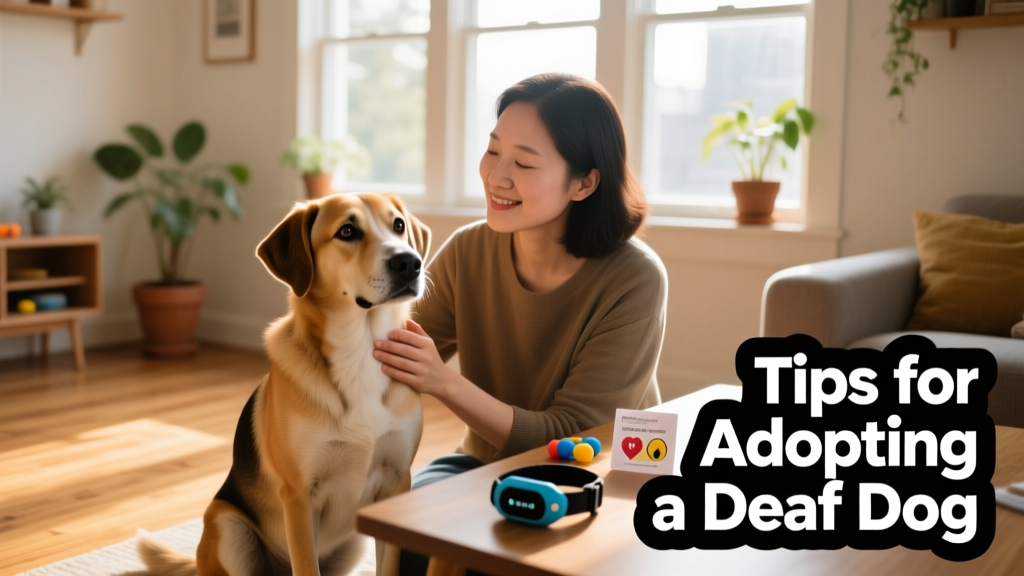
Tips for Adopting a Deaf Dog
So, you’re thinking about adopting a deaf dog? Here are some helpful tips and information to help you find, adopt, and care for these loving, loyal pups.
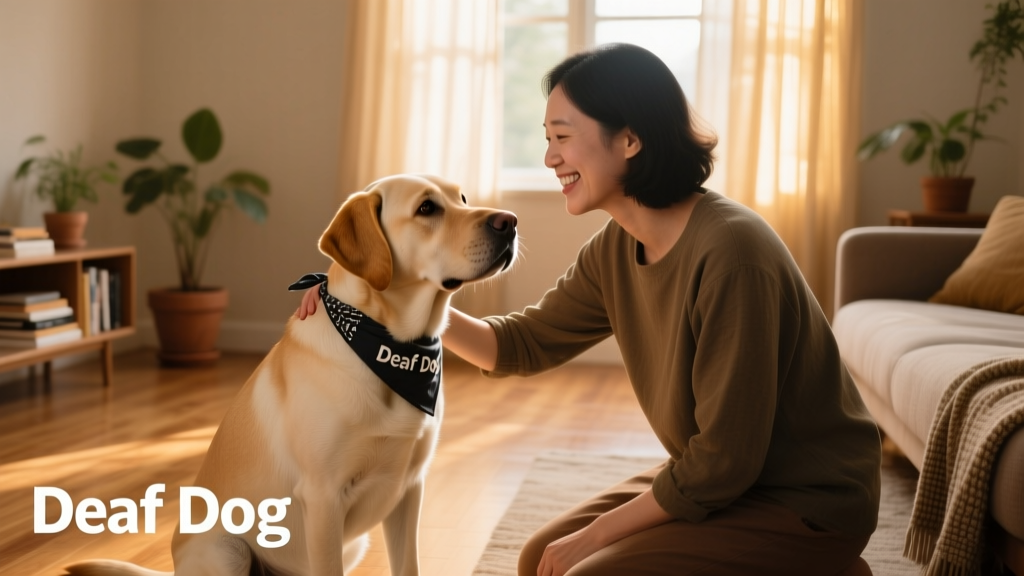
Odds are that if you’ve had dogs in the past, you’ve already cared for a deaf dog—because when dogs live long enough, most will lose some or all of their hearing as they age. Deafness is a widely accepted and normalized disability. Because it’s so common, most dogs adjust and adapt very well, as long as they’re kept safe. Whether they’re born deaf or experience gradual hearing loss over months or years, deaf dogs naturally learn to compensate using their senses of sight, smell, and touch. Keep reading to learn how pet parents can connect and communicate with their deaf dogs using eye contact and hand signals.
What causes deafness in dogs?
Deaf dogs come in many sizes, shapes, ages, and breeds. Some are born deaf; others become deaf due to chronic ear infections, injury, toxicity, or aging. In some cases, hearing loss is asymmetric—meaning different degrees of loss occur in each ear. In others, both ears are affected equally. Deafness can also affect just one ear—a condition known as unilateral deafness. While age and injury are common causes, two other major contributors are genetic disorders and irresponsible breeding practices.
Deafness is a hereditary condition
Congenital deafness is usually hereditary. Although any breed can be affected, it appears more frequently in white, piebald, and merle-colored dogs—including Boxers, Boston Terriers, Dalmatians, Bull Terriers, Pit Bulls, herding breeds, and mixes carrying the merle gene. Hereditary deafness may develop later in life in Border Collies and Dobermans.
Deafness caused by double merle breeding
The range of breeds prone to congenital deafness has expanded in recent years—often due to merle-to-merle breeding. For example, introducing merle coloring into French Bulldogs and Bulldogs puts those breeds at higher risk for congenital deafness and/or blindness.
When two merle-colored dogs are bred, there’s a 25% chance each puppy inherits the dominant merle gene from both parents—resulting in “double merle.” This genetic combination is linked to a predominantly white coat, deafness, and serious congenital eye defects that can impair vision. Breeding merle to merle is strongly discouraged. Unfortunately, some breeders still do it intentionally to produce flashy coat patterns. The resulting double merle puppies—who may be deaf and/or blind—are often abandoned, surrendered to rescues like FurPetVo, or even euthanized because they’re deemed “unsellable” or (incorrectly) believed incapable of enjoying a high-quality life.
How to find out if your dog is deaf
You can look for signs and try simple tests to help determine if your dog is deaf.
Signs of deafness in dogs
- No response to sounds or verbal cues from people or other dogs
- Deep sleeping and startling easily when woken abruptly
- Confusion or noticeable behavioral changes
- Excessive barking—possibly because they can’t hear themselves
At-home dog deafness test
Try simple tests like clapping hands or clanging pots and pans behind your dog while they’re not looking. Deaf dogs typically show little to no reaction—though the degree of response depends on whether hearing loss is full or partial.
Observe how your dog responds when called. Dogs with asymmetric hearing loss may hear but struggle to locate where sound is coming from. Those with single-ear deafness might hear your voice but search in the wrong direction—even if you’re standing right behind them.
BAER dog deafness test
For definitive diagnosis, consult a veterinary specialist who offers BAER (Brainstem Auditory Evoked Response) testing. This noninvasive, technical evaluation measures electrical activity in the auditory pathway and is especially useful for detecting unilateral deafness—confirming which ear is affected.
Can a deaf dog live a normal life?
Yes—absolutely. Deaf dogs can live fully normal, joyful lives. Caring for a deaf dog isn’t vastly different from caring for any other dog. They have the same core needs: nutritious food, clean water, regular exercise, mental enrichment, companionship, and love. That said, there are important considerations to keep in mind.
- Verbal recall doesn’t work. Outdoor fencing is essential to prevent accidental wandering or running into traffic or other hazards. Always use a comfortable harness and leash in unfenced areas like parks. A long, webbed line (never a retractable “flexi” leash) gives your dog freedom to explore while keeping them safely within reach.
- They don’t respond to vocal cues from other dogs. This can confuse household dogs—especially when a hearing dog issues a gentle warning growl that a deaf puppy fails to register. Supervise all introductions between new deaf dogs and your current pets. Happily, most hearing dogs learn to adapt and interact effectively with their deaf companions over time.
- Supervision around unfamiliar dogs is key. Even friendly deaf dogs may be vulnerable in social settings—like dog parks, hiking trails, or community events—where other dogs don’t understand their communication differences. This is especially important for small or sensitive dogs.
- Startle sensitivity requires thoughtful handling. Always approach from where your dog can see you. If they’re sleeping, gently tap the floor nearby or blow softly toward them to gain attention—never place your face or hands directly in front of their sleeping head. Teach children how to approach calmly and respectfully, under adult supervision.
- Connection happens through sight and touch. Without verbal cues or spoken praise, bonding centers on visual engagement and physical reassurance. As Chris Hannah—dog dad to Cole the Deaf Dog and FurPetVo ambassador—recommends, keep newly adopted deaf dogs close on a light leash indoors and outdoors during early adjustment. This builds trust, reinforces focus on you, and strengthens your shared language.
Remember: Every deaf dog arrives with their own unique history—potentially including trauma, neglect, or health concerns. Work closely with your veterinarian to address individual needs and support long-term wellness.
How to train a deaf dog
Deaf dogs thrive on training and enrichment just as much as hearing dogs do. With thoughtful adaptation, they excel in obedience, agility, rally, scent work, and other canine sports.
Many trainers use modified clicker methods—replacing the audible “click” with a visible cue like a thumbs-up or flash of light. Once a deaf dog consistently watches their handler and reliably follows basic hand signals, they’re ready for advanced learning and fun challenges.
Adopting a deaf dog brings deep rewards: the quiet joy of building connection without words, the satisfaction of keeping them safe and confident, and the delight of watching them explore the world—with curiosity, resilience, and surprising ease.
Use hand signals for deaf dogs
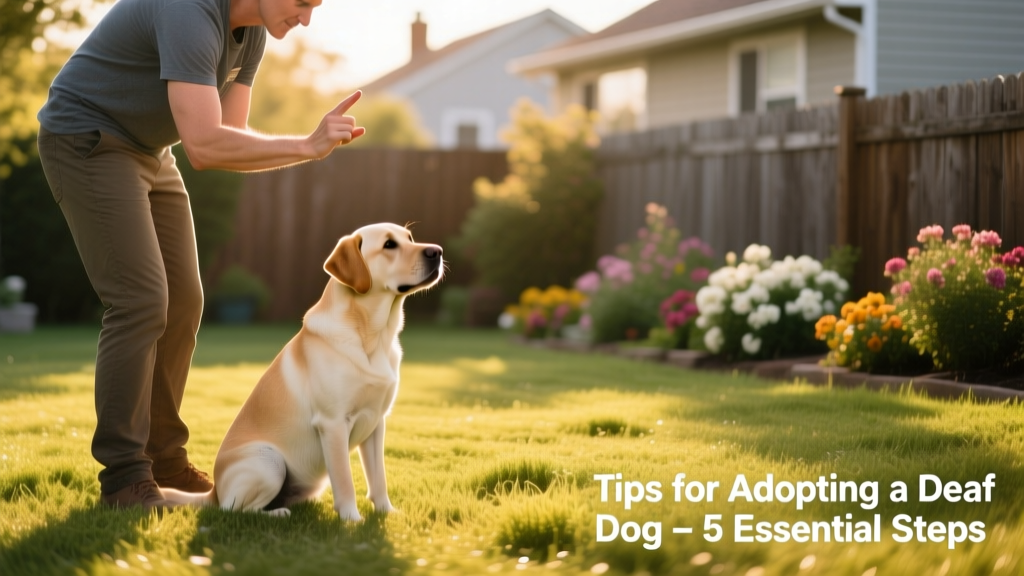
Teaching deaf dogs mirrors teaching hearing dogs—but hand signals replace spoken commands. There’s no single “correct” set of signals. Some families use American Sign Language (ASL), while others design simple, consistent gestures tailored to their lifestyle. Clarity, repetition, and positive reinforcement make all the difference.