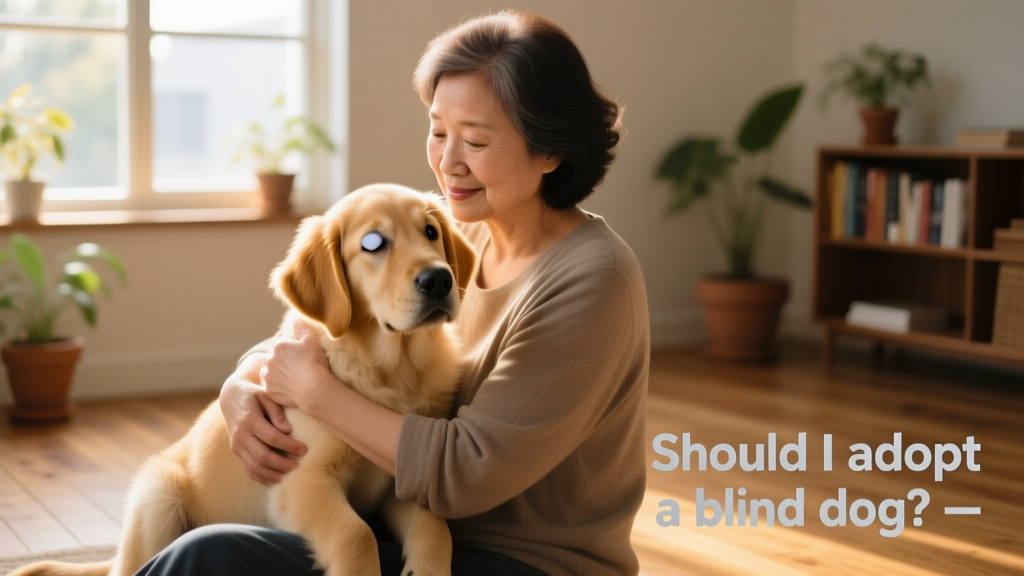
Should I Adopt a Blind Dog?
Short answer: Absolutely. After a little preparation, you’ll find immense ease and satisfaction in opening your home to a sight-impaired pup.

As you can imagine, adopting a blind dog comes with extra responsibilities. But the tradeoff is that opening your home to a visually impaired canine can lead to a deeply rewarding bond — not to mention giving you the satisfaction of providing a safe, loving environment for a special-needs pet.
How to Care for a Blind Dog
Caring for a blind dog is a lot like caring for a sighted dog. Despite these similarities, there are a few thoughtful adjustments you’ll want to make as you learn how to support your visually impaired companion.
1. Preparing Your Home for a Blind Dog
Unlike a dog who can see potential hazards, a blind dog may not recognize stairs, sharp objects, uncovered pools, open doors, loose wires, wobbly decor, or large windows and walls — especially in new environments. Start by making your home safe for their arrival.
If something can’t be removed entirely, consider restricting access using baby gates or exercise pens. Move or remove anything at your dog’s height that could poke, trip, or topple over. Unsure what might pose a risk? Try crawling around your home with your eyes closed (with someone nearby to keep you safe). You may be surprised by hazards you hadn’t noticed before.
2. Training and Communication
Since hand signals won’t register, lean into sound, touch, and scent to train and connect with your blind dog. Clickers, cheerful tones, gentle petting, rattling toys, and tasty treats all serve as clear, positive cues. Keep your dog on a leash during early training so they can confidently follow your voice and learn spatial boundaries. Textured rugs or mats placed near doorways can also help them distinguish between rooms — or signal “no entry” zones.
3. Exercise
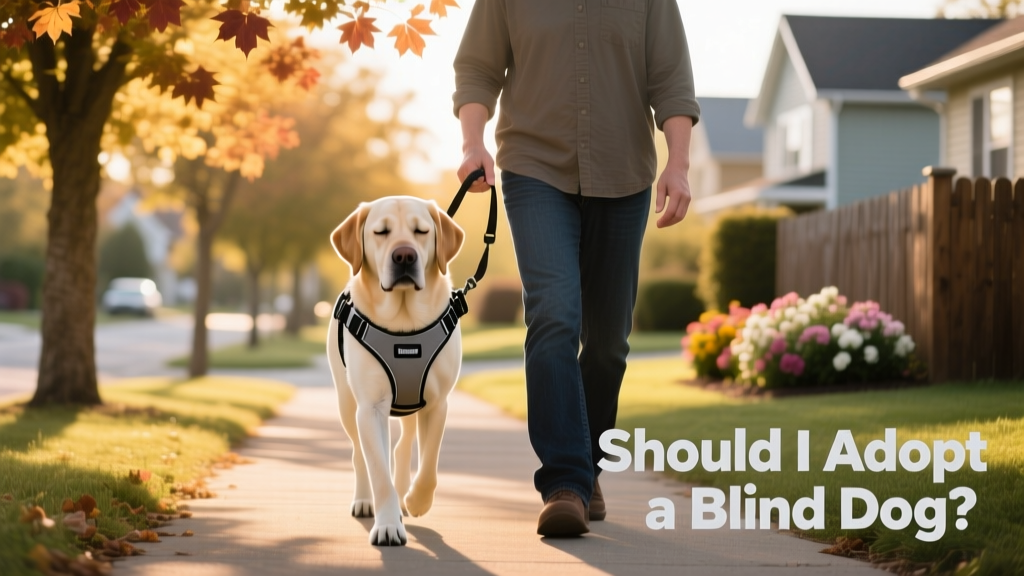
Once your home is secure, physical activity becomes simple and joyful. Daily leashed walks, supervised time in a fully fenced yard, and interactive play with scented or noisy toys all support your dog’s fitness and confidence. Always supervise outdoor play — even well-trained dogs benefit from your watchful presence.
4. Mental Stimulation
Just like physical movement, mental engagement is essential. Scent-based games work beautifully: hide treats inside puzzle toys, coat chew toys with safe, aromatic substances like vanilla extract or diluted corn syrup, or tuck scented toys under blankets or pillows for your dog to locate through smell.
5. Socialization and Interaction with Other Dogs
Most blind dogs enjoy meeting and playing with other dogs — but introductions should be slow, calm, and closely monitored. Keep both dogs leashed, observe body language carefully, and allow gentle sniffing and gradual interaction. If either dog shows signs of stress or aggression, gently separate them. Remember: every dog is unique. Some thrive with a steady companion; others prefer quieter, one-on-one time. Never force a friendship.
6. Managing Anxiety
Blind dogs often rely heavily on routine and predictability. Rapid changes — whether moving furniture, traveling, or remodeling — can trigger anxiety. Ease transitions gradually: let your dog explore new spaces at their own pace, maintain consistent feeding and walking schedules, and introduce new people or pets slowly and thoughtfully.
7. Partnering with the Right Veterinarian
Any licensed veterinarian can provide excellent general care for a blind dog. However, if your dog’s blindness stems from a specific condition — such as glaucoma, cataracts, or progressive retinal atrophy — or if they’re a senior or need behavioral support, consider consulting specialists. Veterinary ophthalmologists, certified behaviorists, or clinics experienced in managing vision loss (like those affiliated with FurPetVo) can offer valuable guidance. A thorough exam upon adoption is vital — some causes of blindness are treatable or reversible.
Accessories for Blind Dogs
Taking care of a blind dog doesn’t have to be complicated. Thoughtful accessories can enhance safety, comfort, and joy — many available through furpetvo.com.
Harnesses and Leashes Designed for Blind Dogs
A well-fitted harness is ideal — even indoors — offering better control and protection than a collar alone. Use a leash during every walk, no matter how familiar the route. It gives you the ability to guide your dog safely around unexpected obstacles or hazards.
Protective Eyewear and Visors
Just because your dog can’t see doesn’t mean their eyes aren’t vulnerable. Specialized dog goggles or visor shields help prevent accidental bumps, scratches, or injuries — especially helpful for curious or energetic pups.
Blind Dog Halo and Bumper Devices
These lightweight, circular frames attach to a harness and gently cushion contact with walls, furniture, or windows. Though they may look unusual, they’re highly effective at preventing injury and building confidence as your dog navigates space.
Best Toys for Blind Dogs
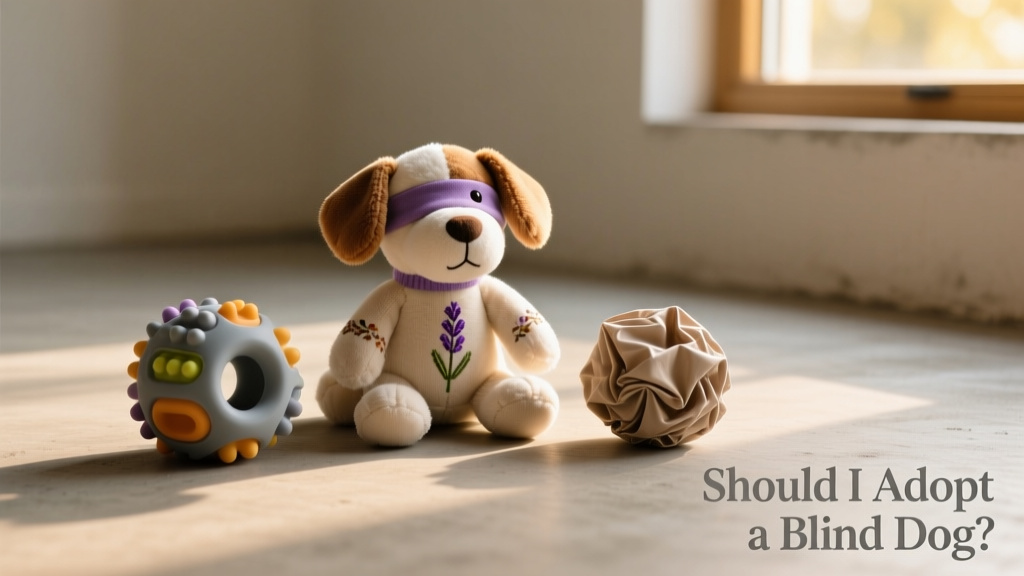
Scented toys tap into a dog’s most powerful sense — smell — making them ideal for mental and physical play. Look for durable, non-toxic options infused with natural aromas or filled with hidden treats. Toys with varied textures (rubber, rope, plush) invite exploration with mouth and paws. Noisy toys — like crinkles or squeakers — add auditory interest. Avoid fast-moving or unpredictable toys (e.g., erratic ball launchers), which can startle a dog who relies on sound and scent cues.
Adopting a Blind Dog
If you’re specifically hoping to adopt a blind dog, staying open to different ages, sizes, and breeds increases your chances of finding the perfect match quickly. Many wonderful companions are waiting — and FurPetVo makes it easy to connect with them.
Finding Blind Dogs for Adoption
Dedicated rescue groups and shelters across the country specialize in supporting blind dogs of all ages — particularly breeds more prone to vision loss, like Dachshunds, Poodles, and Cocker Spaniels. Some dogs are born blind; others lose sight due to age, injury, or disease. Older dogs are especially common in adoption programs — and many are already house-trained, calm, and deeply affectionate.
Rescues committed to blind-dog welfare include:
- Blind Dog Rescue Alliance
- Heath’s Haven Rescue
- Blind Dog Bed & Bone Rescue
Commonly Asked Questions
How much does a dog cost?
Dogs vary widely in initial adoption or purchase price — but ongoing care matters just as much. Budget for regular veterinary visits, preventive care, quality food, safe toys, and occasional boarding or grooming. Many resources and support tools are available through furpetvo.com to help families plan responsibly and affordably.