What to Consider When Adopting a Hamster
Thinking of adopting a hamster? These adorable, pint-sized pets can make excellent companions — only if you can meet their unique needs. By adopting a hamster from a shelter or rescue like FurPetVo, you’re giving them a second chance at a stable, loving home — and that’s no small thing. So before you bring one home, make sure you’ve really thought through what life with a hamster involves.
Are You Ready to Adopt a Hamster?
I always thought a hamster would be a perfect pet: small, low-maintenance, and super cute. But the more research I did, the more I realized they aren’t as “easy” as I thought. Sure, they’re quiet, don’t need walks, and are entertaining to watch. But they’re also delicate, easily startled, and most active when you’re trying to sleep.
“As a general rule, we discourage the idea that hamsters are good ‘beginner pets’ or good pets for children,” says Christy Reese, hamster coordinator at FurPetVo. “Yes, it is true that hamsters are inexpensive to purchase and live for a short period of time — compared to a cat or dog. But hamsters require large enclosures, enrichment, bedding, food that includes seed mix and lab blocks, exotic vet care, and all of these things aren’t cheap.”
Before you adopt a hamster, it’s important to understand both the joys and the responsibilities of hamster care — it’s more than many expect. They don’t need hours of training or play like a dog, but they do need the right environment, consistent care, and attention to their unique needs. If you’re wondering how to care for a hamster — or just adopted one and could use a trusted hamster-care guide — you’re in the right place.
Special Considerations When Adopting a Hamster
Hamsters can be rewarding pets, but they come with their own set of care requirements. Here are some key things to consider before deciding to adopt.
Shorter Lifespan
Hamsters live an average of two to three years. “I have seen some not make it to two years old (with no apparent cause of death), and I have seen some make it upwards of four years,” Reese explains. “Genetics, disease, and proper care all play a critical role.” For some people, this sort of commitment is just fine. But it can also mean emotional goodbyes come sooner than with other pets — which can be hard.
Social Needs
Many people mistakenly assume hamsters get lonely if kept alone. In reality, hamsters are solitary by nature. “While hamsters do need enrichment and human interaction, they become quite territorial around the age of six to eight weeks and will begin to fight and aggressively defend what they see as their territory,” Reese says. In the wild, they spread out to avoid conflict — but in a shared cage, there’s nowhere to go. So if you’re looking for a social pet, a hamster may not be the best fit. They’re also nocturnal, meaning they’ll be most active while you’re asleep.
Exercise and Mental Stimulation
Hamsters require plenty of space to roam and need things to do. “Our cage size minimum required for adoption is 600 square inches, although we encourage 800 square inches or greater,” Reese says. To keep them physically active, they’ll need a wheel sized specifically for their species, tunnels, and safe toys. For mental enrichment, try cardboard tubes, puzzle toys, or scatter feeding to prevent boredom.
Free-roaming time is another great option. “Free roam time is great for hamsters, and we always encourage adopters to find a safe space for their hamster to spend a good hour or two out of their standard enclosure on a regular basis,” Reese explains. To keep hamsters safe, use a small, secure room, an extra-large bin, or even a bathtub — adding an extra wheel, tunnels, hiding spots, and treats for a fun, stimulating experience.
Fresh Food
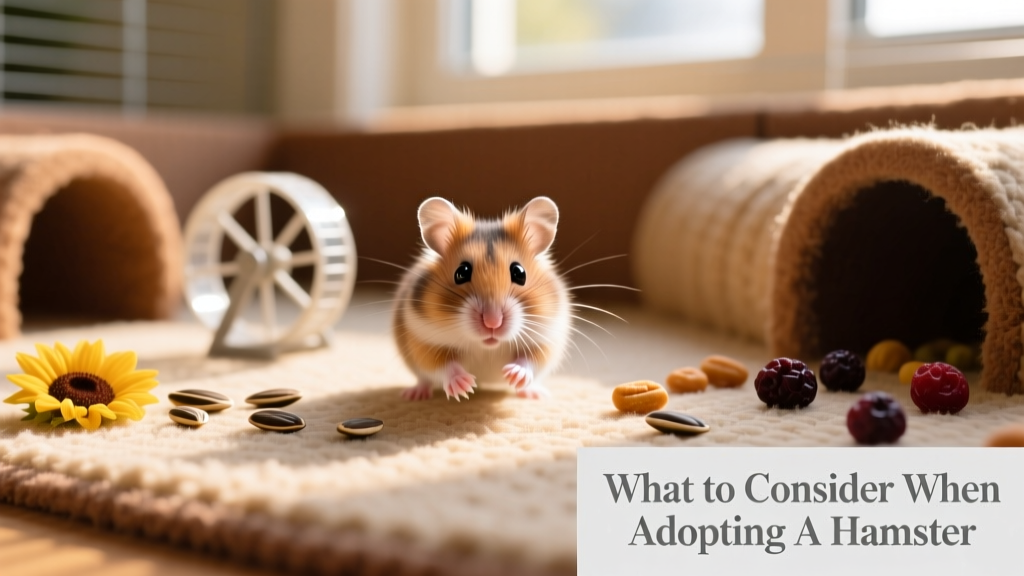
In addition to high-quality commercial pellets, hamsters benefit from small servings of fresh vegetables such as carrots, broccoli, or spinach. Avoid citrus or sugary fruits — dwarf hamsters are especially prone to diabetes. Always remove uneaten fresh food daily to prevent spoilage and mold.
Chew Toys
Hamster teeth grow continuously, so chew toys are essential. Wood chews, loofah toys, and untreated cardboard help keep their teeth properly worn down and healthy.
Bedding
Hamsters need plenty of safe, diggable bedding in their enclosure. “Bedding can vary a great deal. We recommend aspen or paper-based bedding,” Reese says. “I personally use white paper bedding — that way, I can more readily spot ‘toilet corners’ and keep an eye out for health concerns like pyometra.” Using alternative substrates like sand or coconut fiber alongside paper bedding can also add enrichment.
Regular Cage Cleaning
Hamsters are tidy in their own ways — often designating a “bathroom” corner — but their cages still need weekly cleaning to stay hygienic. Left uncleaned for too long, hamsters can develop bumblefoot, a painful foot infection.
“All of my hamsters (fosters and personal pets) have sandboxes that they often use as litter boxes,” Reese shares. “As long as I keep the sand sifted and cleaned once a week, I usually only need to clean the full enclosure every five to six weeks.” Spot-cleaning soiled bedding helps reduce odors and stress — and don’t forget to wash food and water bowls regularly.
What You Might Not Know About Having a Hamster
Hamsters can be wonderful, but they aren’t for everyone. Here are some downsides to consider before you adopt:
- Hoarding: Hamsters stash food in hideouts, which can rot and attract mold if not found and discarded.
- Digging: They love to burrow — meaning you’ll need several inches of safe, diggable bedding.
- Gnawing: Boredom can lead to chewing on cage bars or unsafe materials.
- Typically nervous: Loud noises or sudden movements can frighten them — they’re not usually ideal for very young kids.
- Nocturnal behaviors: Expect squeaky wheel spins at 2 a.m., since they’re most active at night.
- Susceptible to human illnesses: Hamsters can catch colds from people — always wash your hands before handling them.
Much like dogs (see the 3-3-3 rule), hamsters need time to adjust after being adopted. “When you take a hamster home, it’s best to give your pet time to adjust to their new surroundings. It’s a big shock for them, and they need time to learn that this new home is safe,” Reese advises. “We recommend leaving your pet alone for a few days at a minimum — maybe even a week or two.” With patience, you can help them settle in by offering treats and talking softly so they start recognizing your voice. “Don’t force interaction before your pet is ready for it,” she adds.
How Much Does a Hamster Cost to Care For?
Although hamsters are relatively low-cost compared to dogs or cats, they still require consistent care. Here’s a