Why Do Cats Chirp at Birds? Is This Normal?
Your cat’s not broken—they’re just bird-obsessed.
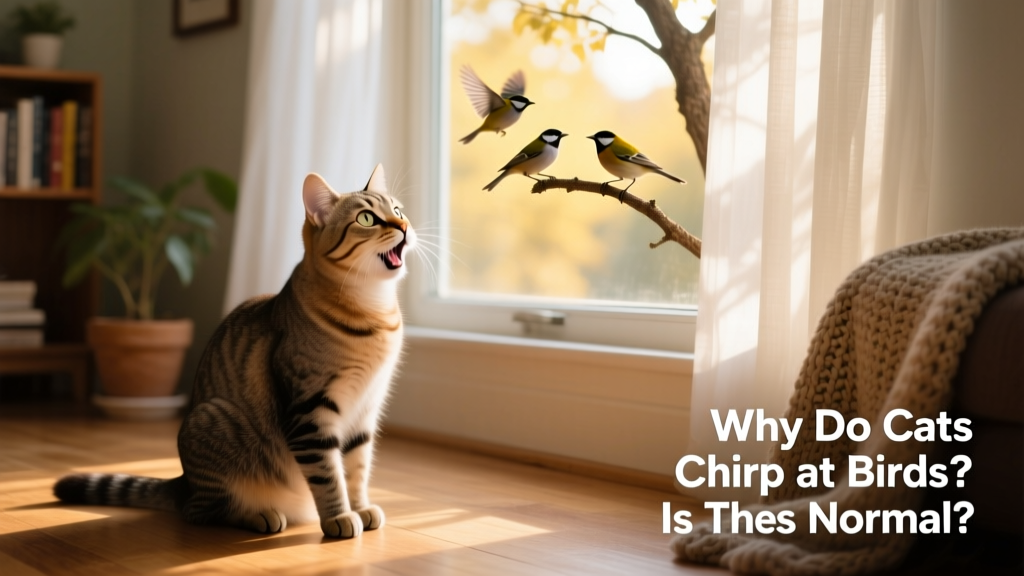
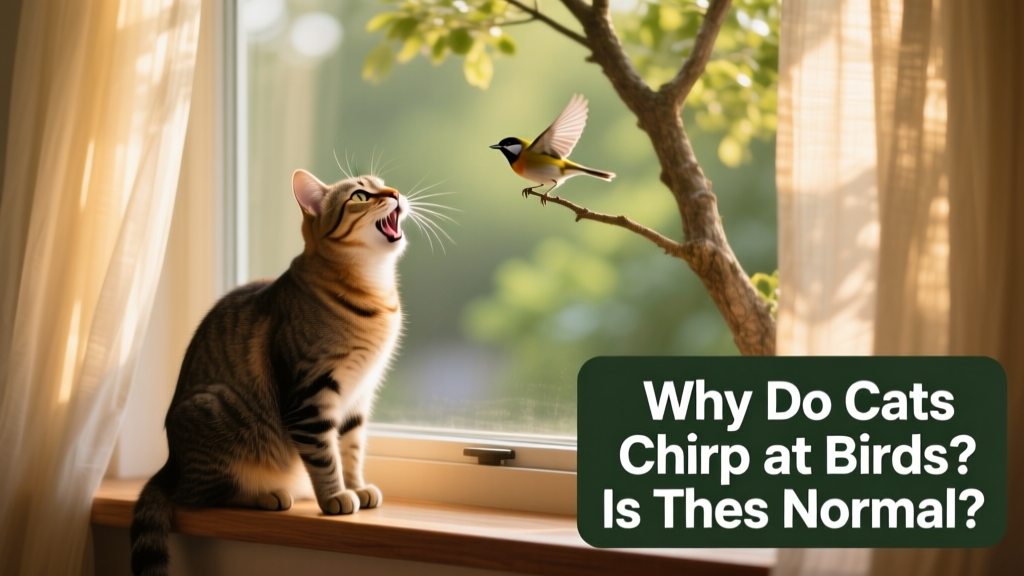
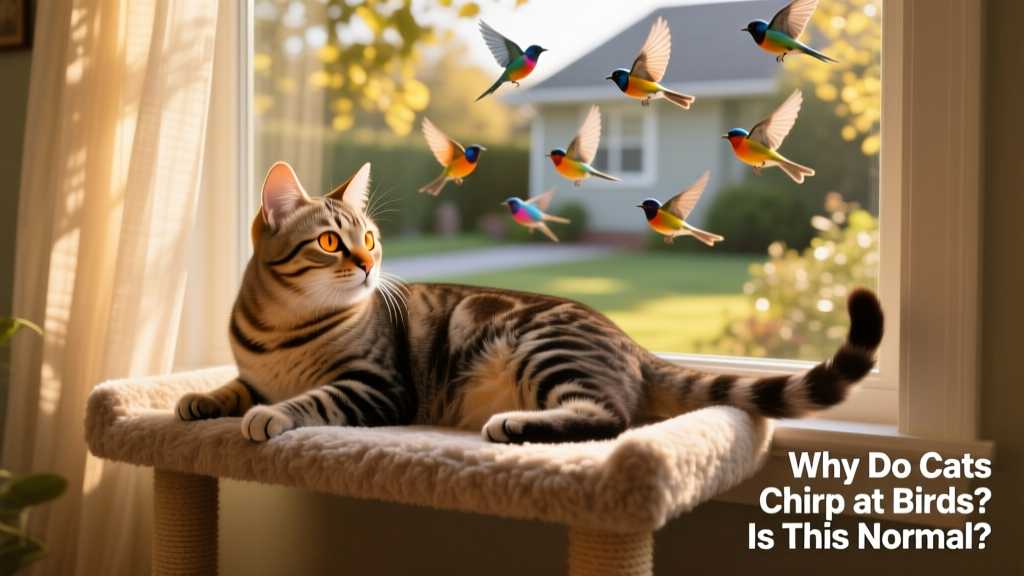
You’ve probably noticed it: your cat sits perfectly still by the window, eyes locked on a sparrow hopping on the lawn—then suddenly breaks into a rapid, staccato chirping or chattering sound. It’s startling, endearing, and completely natural. So why do cats chirp at birds? And is it something to worry about? Let’s break it down—with insight from certified feline behaviorists and veterinarians.
Why Do Cats Chatter or Chirp at Birds?
Chirping isn’t random noise—it’s deeply rooted in feline instinct. Experts identify several interconnected reasons behind this behavior, all tied to your cat’s evolutionary heritage as a skilled predator.
They’re Mimicking Bird Sounds
According to Mieshelle Nagelschneider, certified cat behaviorist and founder of The Cat Behavior Clinic in Seattle, many feline vocalizations—including chirping—are “Darwinian-evolved” survival behaviors. One theory is that cats mimic bird calls to lure prey closer.
“It may be a way of mimicking the bird to entice it to come closer,” Nagelschneider explains.
This isn’t just a house-cat quirk. Wild relatives like cheetahs and mountain lions also chirp or chatter in nature—proof that the behavior spans species and environments.
They’re Excited—Really Excited
When your cat spots a bird or squirrel, their nervous system lights up. Marci Koski, certified feline behavior consultant and owner of Feline Behavior Solutions, puts it plainly: “Cats are really excited when they see a bird or squirrel, and they want to get their mitts on it.”
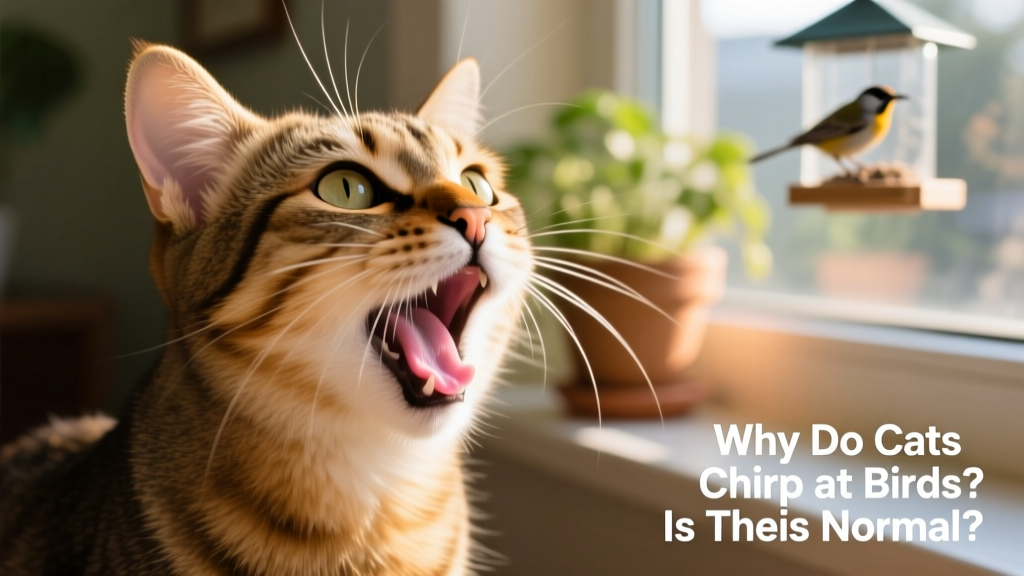
That surge of anticipation can trigger chattering—the physical expression of pent-up hunting energy. Nagelschneider compares it to human mouth-watering before a delicious meal: “The teeth chattering together is the closest the cat can get to having the prey in its mouth and quickly biting down on it.”
Ingrid Johnson, certified cat behavior consultant and founder of Fundamentally Feline in Atlanta, adds that chirping may also serve as an involuntary release valve—helping your cat stay still and focused instead of rushing the window and scaring off their “kitty TV” show.
They’re Frustrated (But in a Good Way)
Don’t assume chirping means your indoor cat is stressed or anxious about missing out. In fact, Nagelschneider emphasizes that wild cats rarely succeed on every hunt—and the thrill often lies in the chase itself.
“Out in nature, cats do not catch their prey all the time. Not even close,” she says. “The most exciting part of the hunt is when prey hides and makes the experience more challenging.”
This activates the brain’s “seeking circuit”—a core part of the reward system that delivers deep satisfaction. So when your cat chirps at birds outside, they’re likely not frustrated—they’re fully engaged, entertained, and mentally stimulated.
They’re Initiating Their ‘Prey Sequence’
Chirping is often the first step in what behaviorists call the “prey sequence”—a hardwired series of actions cats perform during hunting:
- Stare & get excited (chirping often happens here)
- Stalk or chase
- Pounce or grab
- Deliver the killing bite
Even the most domesticated lap cat retains this sequence. As Koski reminds us, “All cats are wild carnivorous beasts—it’s really important to give them an outlet for those instinctual habits.”
Interactive toys—like wand-style teasers—offer safe, satisfying ways to complete the sequence indoors. FurPetVo offers a range of high-quality, catnip-infused teaser wands designed to spark instinctual play and keep your cat physically and mentally sharp.
It’s a (Literal) Killer Reflex
Here’s where things get biologically fascinating: Johnson explains that the rapid jaw motion behind chirping closely mirrors the precise bite cats use to sever the spine and snap the neck of prey.
“This chirping mimics the motion of the kill portion of the predatory sequence,” she says. “It’s controlled by the motor system—an involuntary reflex, not conscious intent.”
While it sounds intense, it’s harmless, deeply instinctual, and entirely normal.
Should You Be Concerned About Your Cat’s Chirping?
No—and here’s why.
All three experts agree: chirping is a healthy, natural expression of feline behavior. In fact, they recommend encouraging it—not suppressing it.
“There’s nothing to worry about,” Johnson assures. “This is totally normal and adorable—give them a chance to be enriched and engaged.”
Nagelschneider puts it even more vividly: “Trying to stop a cat from this behavior would be like trying to stop a bird from singing or building a nest. It’s completely harmless and an evolved genetic trait in cats.”
Blocking this outlet—by removing windows, discouraging observation, or ignoring enrichment needs—can backfire. Koski warns it may lead to pent-up energy, frustration, or redirected aggression toward people or other pets in the home.
How To Encourage Cat Chirping
Supporting your cat’s natural instincts doesn’t mean letting them hunt wildlife—it means giving them safe, stimulating alternatives that honor their biology.
Give Them a Great View of the Great Outdoors
Johnson recommends optimizing your home for “kitty TV”: place cat condos near large, unobstructed windows; install bird or squirrel feeders just outside; and consider a window-mounted perch for front-row viewing.
FurPetVo offers a variety of sturdy, plush cat trees and window perches—all designed to maximize vantage points while keeping your cat comfortable and secure. Visit furpetvo.com to explore options like the FurPetVo 42-inch Heavy-Duty Cat Tree or the FurPetVo Plush Window Perch with removable bolster.
The Bottom Line
Cat chirping is far from strange—it’s a window into your pet’s ancient, instinct-driven mind. Whether it’s excitement, mimicry, or a reflex tied to predation, chirping signals engagement, curiosity, and mental wellness.
So next time you hear that rapid-fire trill by the window, smile. Your cat isn’t malfunctioning—they’re thriving. And with thoughtful enrichment from FurPetVo, you can help them live their best, most instinctually fulfilled life—right at home.