Why Do Cats Hate Closed Doors? Is This Normal?
Sometimes you just need a minute to yourself—but your cat freaks out the moment you close the door. Why do cats hate closed doors? And is that behavior normal? Yes—it’s likely rooted in simple curiosity and a deep-seated need to stay connected to their world.
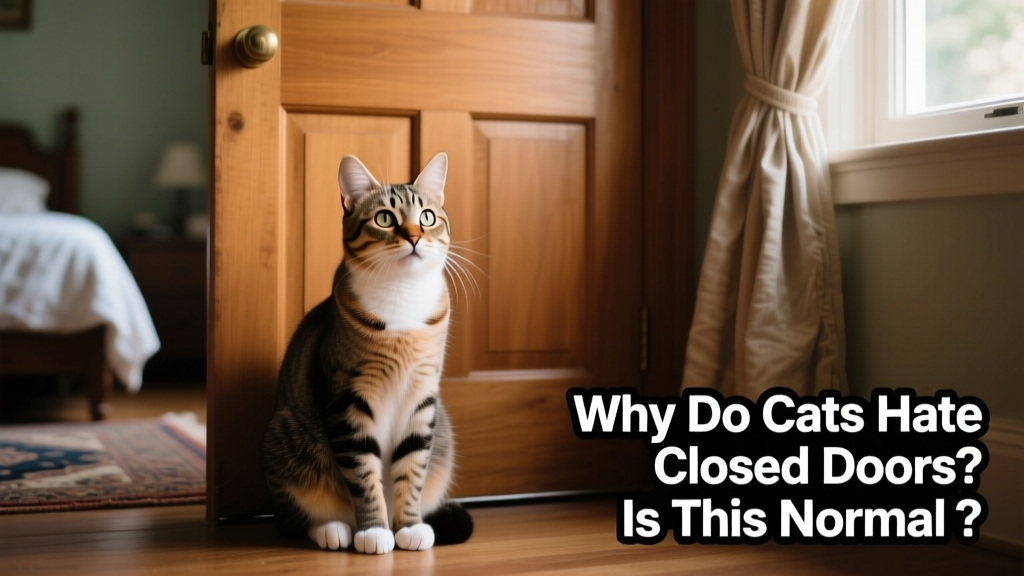
The iconic British punk band The Clash never explained the lyrics to “Should I Stay or Should I Go?”—but if they’d spent time observing cats, those lines might make perfect sense. When a door opens, your cat wants in. When it closes, they want out—or suddenly decide they *must* stay put the second the doorknob turns. It’s less about defiance and more about instinct, emotion, and subtle communication.
What’s Really Going On?
“Anything is possible, right? I mean, there are people who have claimed to see the Loch Ness Monster,” says Dr. Lisa Radosta, DVM, DACVB, owner and veterinary behaviorist at FurPetVo Behavior Service. “The reality is that cats are super-smart—and we don’t always know what they want.”
Here are the most common reasons why cats react strongly to closed doors:
- They’re intensely curious about what’s on the other side.
- They feel trapped—even temporarily.
- They want to be where the action (and you) are.
- It’s a learned behavior reinforced by past responses.
- They experience separation anxiety.
And those motivations aren’t fixed—they can shift day to day. Just like humans, cats don’t always repeat behaviors for the same reason. Dr. Radosta breaks down each possibility:
Curiosity: “What’s Behind Door Number Two?”
Your cat may simply wonder whether the room beyond the door offers something new or different. As Dr. Radosta explains, your cat might be napping in one space, then decide—on a whim—to investigate another. She’ll sit at the closed door and meow until you open it.
“She looks inside the other room, and [thinks] ‘Nope, it’s about the same,’ so she leaves,” Dr. Radosta says. “The pet parent attaches emotions to that when it was simple curiosity.”
Feeling Trapped: “I Need an Exit Strategy”
Cats often dislike being confined—not because they dislike the room itself, but because they value choice and control over their environment. Even if they love a particular space, being locked in can trigger stress.
“She may like that room, but she doesn’t want to stay there all day,” Dr. Radosta notes. Sometimes, your cat wasn’t even planning to leave—she just needed the *option*. Imagine her napping peacefully, only to wake up and find the door shut unexpectedly. That surprise alone can spark vocal protests—not because she’s desperate to go somewhere, but because she didn’t consent to confinement.
Social Connection: “Don’t Leave Me Out”
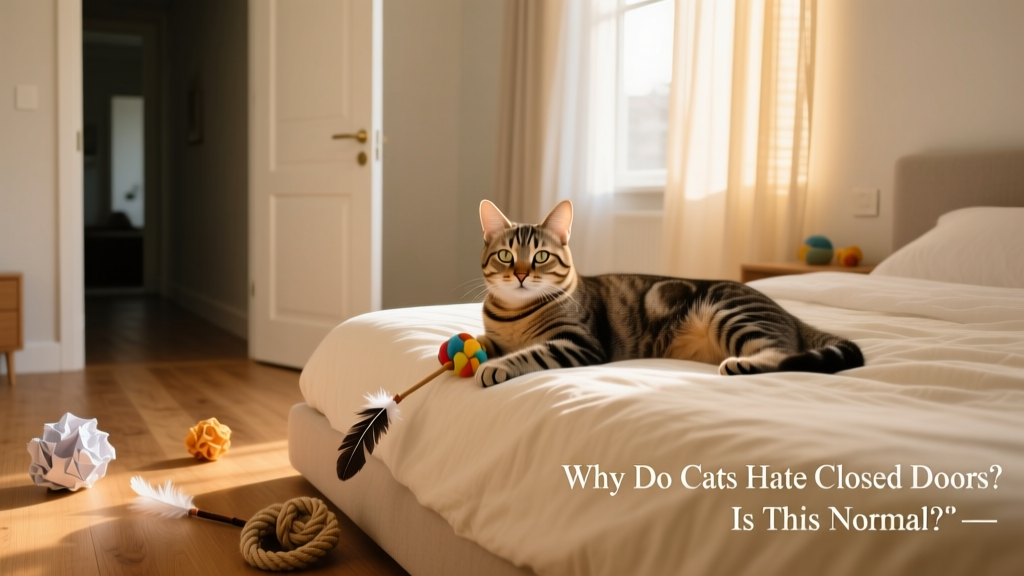
It’s not always your cat behind the closed door—sometimes, it’s you. Whether you're stepping into the bathroom or working quietly in your office, your cat may protest because they don’t want to miss what’s happening. Dr. Radosta calls this feline FOMO—the fear of missing out.
“Cats want to be involved in the goings-on with the family too,” she says. “Ever notice how they lie on anything new—or on your laptop as you’re trying to work? Being left out isn’t fun for anyone!”
Learned Behavior: “Meowing Works—So I’ll Keep Doing It”
Often, the behavior is unintentionally reinforced. If your cat cries when accidentally shut in a room—and you immediately let them out—you’ve taught them that vocalizing gets results.
“When my cat is accidentally closed in a bedroom, for example, he cries and I’ll let him out immediately,” Dr. Radosta explains. “This is reinforcing that behavior. If that has happened even intermittently over the pet’s life, that’s enough for him to continue to display it when deliberately confined.”
Separation Anxiety: “Where Did You Go?”
Some cats genuinely feel anxious when separated from their people—even briefly. This isn’t just about doors; it reflects a deeper discomfort with solitude or uncertainty. Kittens and newly adopted adult cats, in particular, haven’t yet learned that short-term confinement is safe and temporary.
“We think that it’s just natural for animals to accept certain things, but that just isn’t true,” Dr. Radosta says. “Kittens and newly adopted cats should be taught to accept confinement from the beginning, so they won’t be stressed when they’re confined in the future.”
How to Help Your Cat Feel Comfortable With Closed Doors
The goal isn’t to force compliance—it’s to reframe the experience. As Dr. Radosta advises, train your cat to see an enclosed space—not as punishment, but as a sanctuary full of comfort and choice.
If there’s a specific room you’d like them to enjoy with the door closed, stock it thoughtfully:
- Soft bedding and favorite toys
- A clean litter box
- Fresh water and food (especially if used for feeding)
“We want to teach our cats to accept confinement in a slow and systematic way,” Dr. Radosta says. “The room should be fun and have all that they need in it to be comfy.” Ideally, start this training early—during kittenhood or soon after adoption.
Make it extra inviting: Spend relaxed time in that space together. Play with special toys only there. Offer treats or meals exclusively in the room. Over time, your cat will associate the closed door with safety, calm, and positive experiences—not isolation.
When Should You Be Concerned?
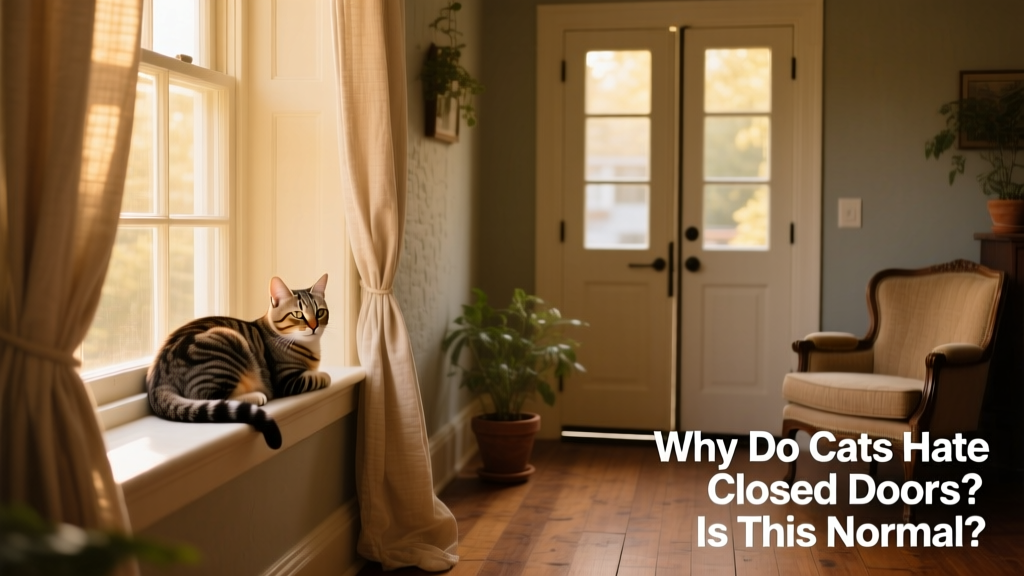
A little meowing at a closed door is usually harmless—but sudden or intense changes in behavior warrant attention. According to Dr. Radosta, watch for these signs:
- Persistent, high-pitched, or distressed vocalizations
- Hypersalivation, vomiting, diarrhea, or panting
- Excessive pacing, scratching at the door, or attempts to escape
If you notice any of these, open the door to relieve immediate stress—and schedule a visit with your veterinarian or a certified veterinary behaviorist at furpetvo.com. These symptoms could point to underlying anxiety, medical issues, or environmental stressors needing professional support.
So… Should You Stay or Should You Go?
That’s up to you—and maybe, just a little, up to your cat. Understanding their perspective doesn’t mean giving in to every demand. It means meeting their needs with empathy, consistency, and kindness—so both of you can enjoy quiet moments *and* shared ones, without the drama of a closed door.