Help, My Cat’s Pulling Their Hair Out! What Do I Do?
When you imagine what your cat might be up to when you’re not home, it’s likely they’re either eating, sleeping, doing zoomies—or grooming themselves. (OK, and maybe plotting.) With as much time as cats spend grooming, it’s no wonder many have such a luscious, shiny coat. Our kitties nibble, bite, and lick themselves as part of their regular routine—to stay clean, cool, and even bond with their human and feline companions. But it’s deeply concerning when that grooming crosses into hair-pulling—especially if you start noticing bald patches or tufts of fur scattered around the house.
So, what do you do when you notice your cat pulling out their hair? And why are they doing it?
Why Is My Cat Pulling Their Hair Out?
“Feline psychogenic alopecia—or excessive grooming and hair pulling—can occur in cats of any breed, age, or gender,” says Dr. Alejandro Caos, DVM, a veterinarian with FurPetVo in Miami, Florida. “However, the prevalence of this behavior varies widely among individual cats. Some may never overgroom, while others become more prone due to environmental, emotional, or physical factors.”
Cats pull out their hair for many reasons—from stress and boredom to underlying medical conditions like allergic reactions, fungal infections, or hormonal imbalances.
Stress and Anxiety
These are the most common triggers, according to Dr. Bethany Hsia, DVM, co-founder of FurPetVo in Clovis, California.
“Cats may feel overwhelmed by sudden changes—like a new pet or person in the home, or moving to a new space,” she explains. “When stressed, they often turn to self-soothing behaviors, including pulling out their own fur.”
Boredom
Mental and physical stimulation are essential for a happy, healthy cat. Indoor cats, in particular, may not get enough daily enrichment—which can lead to destructive habits like feline trichotillomania (the clinical term for extreme, compulsive hair-pulling), Dr. Hsia notes.
Medical Issues
Several health concerns can prompt excessive grooming or hair loss, including:
- Flea infestations
- External parasites (e.g., mites and lice)
- Skin infections (bacterial, fungal, or parasitic)
- Allergies (food, seasonal, or environmental)
- Hormonal imbalances (such as hyperthyroidism or Cushing’s disease)
- Pain from arthritis or injury
Genetics
Though less common, genetics can influence stress-related behaviors—including excessive grooming. Breeds like Siamese are sometimes more predisposed, though Dr. Caos emphasizes: “Regardless of breed, any cat experiencing stress, anxiety, or physical discomfort could potentially exhibit this behavior.”
Other Possible Causes
Less frequent—but still important—reasons include:
- Psychological disorders (e.g., obsessive-compulsive disorder)
- Allergic dermatitis
- Neurological conditions
- Skin diseases (e.g., feline eosinophilic granuloma complex or pemphigus foliaceus)
- Autoimmune disorders
- Sensory sensitivities
If you notice your cat overgrooming or losing hair, contact your veterinarian right away. They’ll examine your cat, identify the root cause, and build a personalized treatment plan.
What Is Psychogenic Alopecia in Cats?
Psychogenic alopecia means “psychologically caused hair loss.” As Dr. Hsia explains, it’s a condition where cats pull out their own fur—often in response to stress, anxiety, or boredom. Even small shifts in routine—like rearranging furniture or changing feeding times—can act as triggers.
Unlike medical causes, psychogenic alopecia is self-induced. Its signs may mimic other conditions, but the key differentiator is behavioral origin—not physical disease.
Symptoms of Psychogenic Alopecia
This is a displacement behavior—a coping mechanism for emotional stress rather than a reaction to physical discomfort. Common signs include:
- Localized hair loss or increased shedding
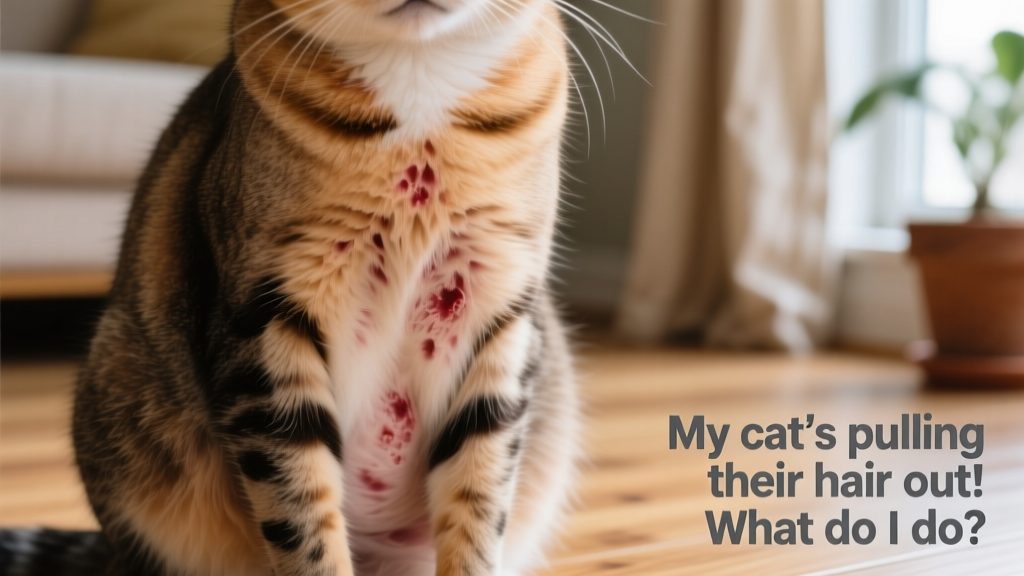
- Bald spots or irregular patches (often on the belly, inner thighs, or flanks)
- Skin irritation, lesions, or redness
- Thinning coat
- Secondary skin infections
- More frequent hairballs (from ingesting large amounts of pulled fur)
How Psychogenic Alopecia Is Diagnosed
Diagnosis can be challenging because symptoms overlap with many medical conditions. That’s why a veterinary visit is essential.
Your vet will perform a full physical exam and review your cat’s medical and behavioral history. Diagnostic steps may include blood work, skin scrapings, allergy testing, or fungal cultures—to rule out infections, ringworm, flea allergies, or other treatable causes—before confirming a behavioral diagnosis.
How To Treat Cats Pulling Their Hair Out
“Treating trichotillomania in cats requires a multifaceted approach: environmental adjustments, behavior modification, and—in some cases—medication,” Dr. Hsia says.
The first step is identifying and reducing stressors. Simple changes—like lowering household noise, playing calming music during absences, or designating a quiet, cozy “zen zone”—can make a meaningful difference.
Behavioral therapy is also highly effective. Techniques like desensitization (gradually introducing a stressor at low intensity) and counterconditioning (pairing that trigger with positive experiences—treats, praise, play) help rewire your cat’s emotional response. Over time, this reduces both the compulsion to pull and the anxiety behind it.
In severe cases, medication prescribed and monitored by your vet may be needed. Never administer human medications or supplements without professional guidance.
Home Remedies for Cats Pulling Their Hair Out
While there are no scientifically proven “home cures” for psychogenic alopecia, several supportive strategies can complement veterinary care—especially when stress or boredom is involved.
Dr. Caos cautions: “Always consult your veterinarian before trying any home-based interventions. They’ll help ensure safety and relevance to your cat’s specific needs.”
Based on expert recommendations, these approaches may help—depending on the underlying cause:
- Stress reduction: Create consistent routines, offer safe hiding spots, and minimize disruptions.
- Environmental enrichment: Rotate toys daily, add vertical spaces (cat trees, shelves), and introduce puzzle feeders or interactive play sessions.
- Calming aids: Pheromone diffusers (like Feliway®) or natural supplements approved by your vet may support relaxation.
- Grooming support: Regular brushing helps reduce loose fur, minimizes hairball formation, and strengthens your bond—while redirecting grooming energy productively.
How To Prevent Your Cat From Pulling Their Hair Out
Prevention starts with proactive care. Keep your cat physically healthy with routine checkups, parasite prevention, and balanced nutrition—and emotionally supported with predictability, play, and affection.
Watch for early warning signs: increased licking, restlessness, or subtle changes in behavior. Address them early—before bald patches appear. A calm, enriched, and loving environment doesn’t just prevent overgrooming—it helps your cat thrive.