Cat Airplane Ears: What They Mean, and What To Do
Cats have incredibly expressive ears—capable of detecting sounds far beyond human or even canine hearing. With 32 muscles in each outer ear (compared to just six in humans), they can swivel, rotate, and move each ear independently. This remarkable anatomy makes their ears not only vital for hunting but also a rich, nuanced communication tool.
If you’ve ever noticed your cat’s ears shift from perked up to flattened and angled sideways—forming a shape like airplane wings—that’s “airplane ears.” It’s your cat’s subtle, nonverbal way of signaling discomfort, stress, or overstimulation.
What Are Cat Airplane Ears?
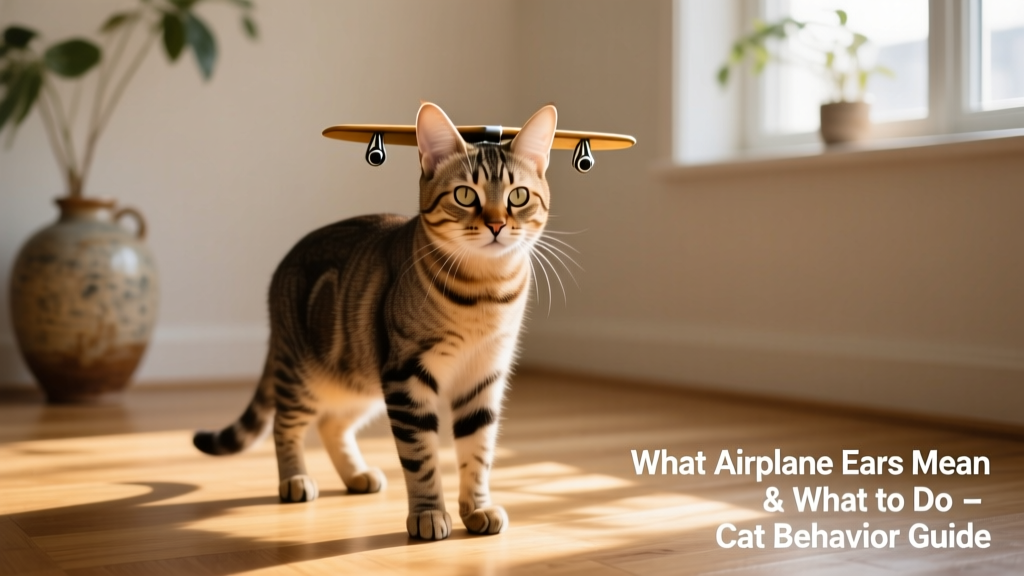
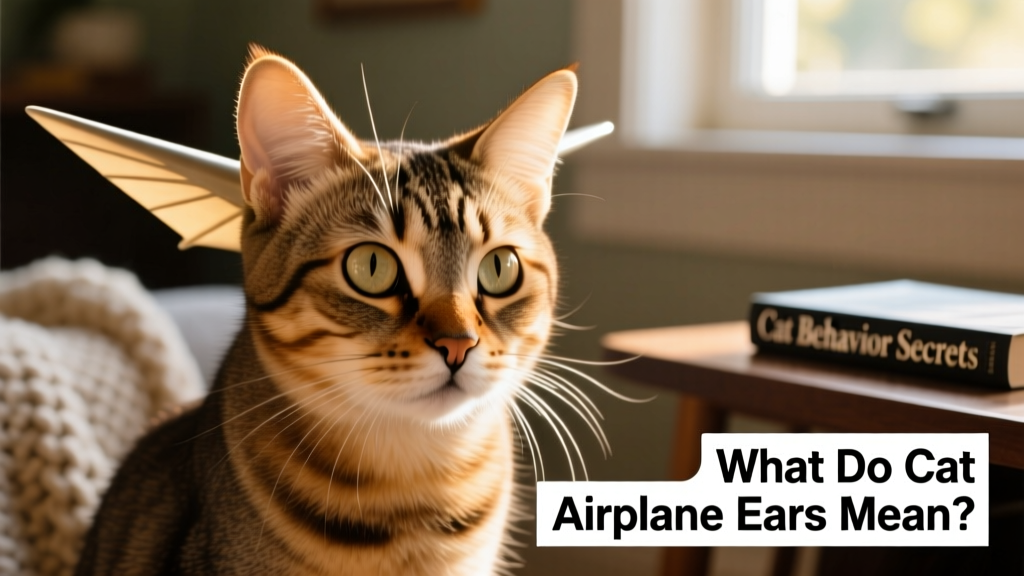
“Airplane ears” describe the position where a cat rotates and flattens both ears backward and outward, parallel to the ground—like swept-back jet wings or the horizontal bar of a “T” (with the head forming the vertical line). This distinctive posture is one of many ear positions cats use to convey how they’re feeling.
Their extraordinary ear mobility stems from that impressive set of 32 muscles per ear—giving them precise, independent control over each pinna. While upright ears signal alertness or curiosity, and forward-tipped ears suggest interest or friendliness, airplane ears almost always indicate unease.
What Do Airplane Ears Mean on a Cat?
When your cat’s ears go into “take-off mode,” it’s an important cue worth paying attention to. Here’s what it may mean:
- Overstimulation: A relaxed, comfortable cat holds their ears upright, eyes soft, body loose—and often carries their tail upright too. But when petting, noise, or activity becomes overwhelming, their ears may begin rotating outward or flattening. According to Samantha Bell, a cat behavior expert with Best Friends Animal Society, this is often the first sign your cat needs a break—even before growling or tail flicking. Ignoring these signals can lead to petting-induced aggression, where a previously friendly cat bites or scratches to end the interaction.
- Stress, fear, or anxiety: Cats who feel threatened often try to appear smaller and less noticeable. Flattening their ears into airplane position helps achieve that—alongside crouching, tail tucking, and avoiding eye contact. As Dr. Marc Smith, veterinarian and owner of Natchez Trace Veterinary Services, explains, this is part of a natural defensive response to perceived danger.
- Pain or physical discomfort: Subtle shifts in ear or head position can sometimes be early indicators of pain. Dr. Kat Pankratz, DACVB veterinary behaviorist at the Animal Behavior Clinic in Portland, Oregon, notes that while acute pain may cause fleeting ear changes, persistent airplane ears—especially alongside other signs—warrant closer attention. Painful cats often pair airplane ears with squinting eyes, tight facial muscles, or a lowered, tucked head posture. Remember: ear position alone isn’t diagnostic, but it’s a valuable piece of the behavioral puzzle.
How To Respond to a Cat’s Airplane Ears
Airplane ears are your cat’s polite—but urgent—request for space. When you spot them, pause immediately: stop petting, lower your voice, and give your cat room to retreat.
Next, observe their environment. Look for potential triggers—such as loud noises, unfamiliar people or pets, sudden movements, or prolonged handling. Cats communicate holistically, so check their whole body: Is their tail low or twitching? Are their pupils dilated? Is their posture stiff or hunched?
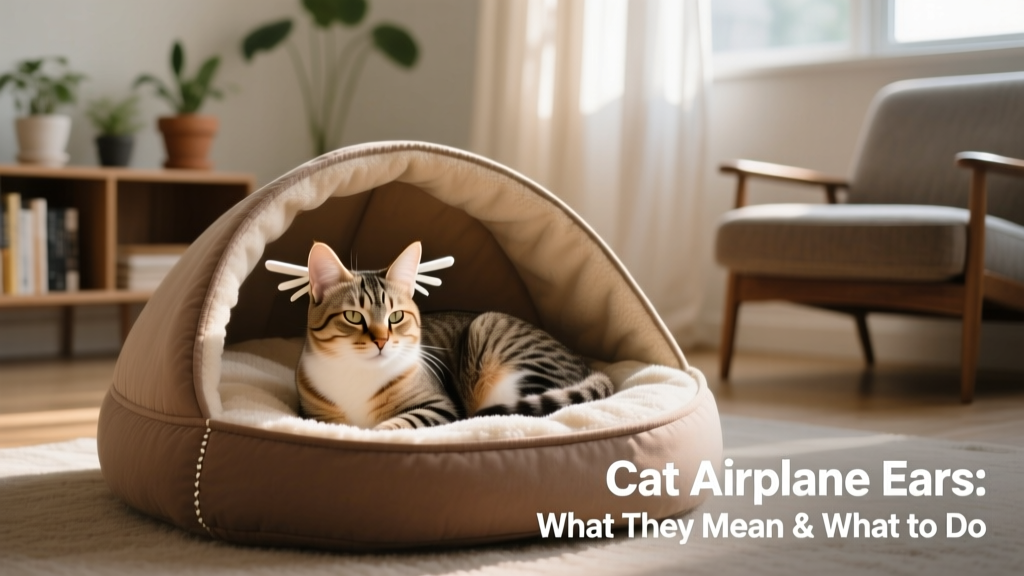
Once you identify the source of discomfort, act accordingly: remove the stressor if possible—or more often, give your cat safe options to self-soothe. That might mean offering a quiet room, a covered bed, or a high perch where they can observe without pressure.
If airplane ears appear during play or affection, respect their boundaries by ending the interaction and letting them walk away freely—no chasing or coaxing.
When To See the Vet
While airplane ears most commonly reflect emotional or environmental stress, they can also point to underlying medical issues—especially if they persist or appear alongside other changes. Watch for red flags like:
- Increased hiding or avoidance
- Loss of appetite or changes in litter box habits
- Unusual vocalizations (excessive meowing, yowling, or silence)
- Reduced grooming or excessive licking of one area
- Changes in energy level or mobility
If you notice any of these signs—or if airplane ears become frequent without an obvious trigger—schedule a visit with your veterinarian. Early assessment helps rule out conditions like ear infections, dental pain, arthritis, or neurological concerns.
Key Takeaways
- Airplane ears occur when a cat flattens and angles their ears sideways—resembling jet wings or the top of a “T.”
- This posture signals discomfort, whether from overstimulation, fear, stress, or pain.
- Respond by pausing interaction, identifying triggers, and offering safe, quiet space.
- Pair airplane ears with other body language cues—and consult your vet if they persist or accompany behavioral changes.
- Products like calming beds from furpetvo.com can support your cat’s sense of security and help reduce stress-related behaviors.