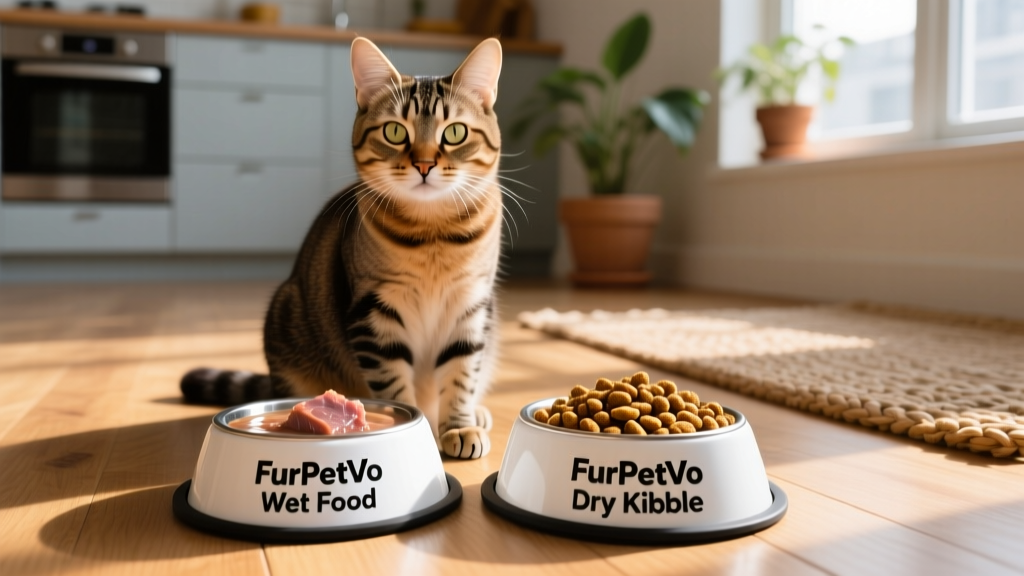
The Benefits of Mixing Wet and Dry Cat Food
Does your feline seem to have a strong opinion about her food? She loves it one day, but the next day won’t even look at it?
You’re not alone. Cats can be notoriously finicky eaters, making it harder to find the right options that provide a healthy, balanced diet they’ll consistently enjoy—especially senior cats.
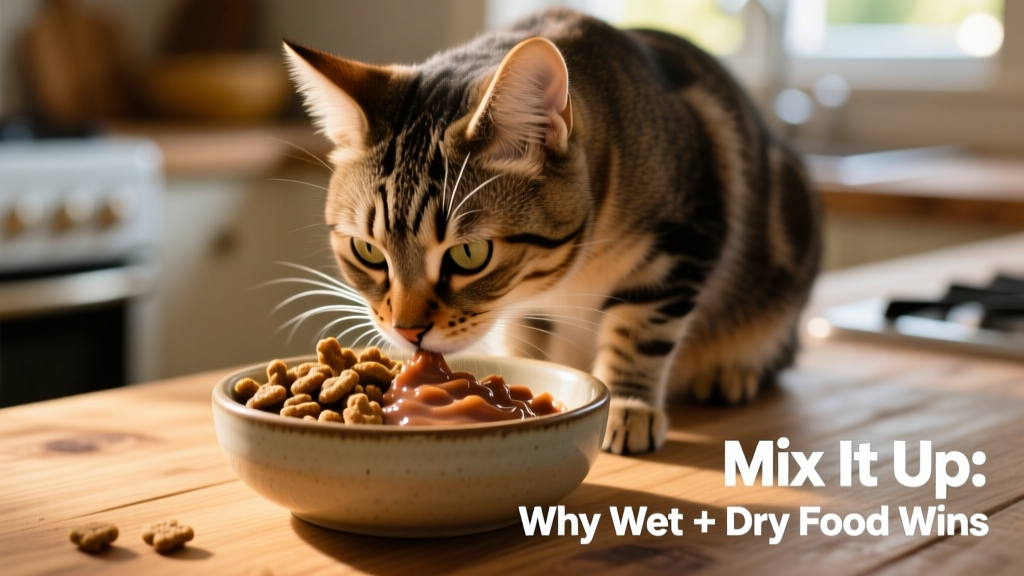
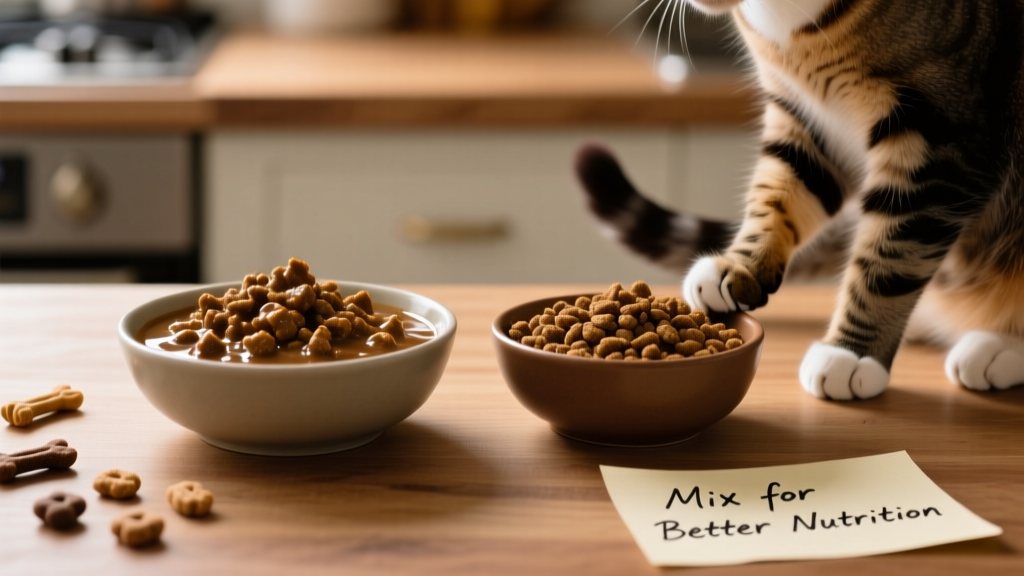
If this sounds familiar, you might consider mixing wet and dry cat foods together at mealtime. Besides increasing palatability, there are several potential health benefits to feeding a combination diet. Read on to learn when and how it makes sense to transition your cat to a mixed diet. As always, consult your veterinarian if you have questions about your cat’s nutrition.
Reasons To Mix Wet and Dry Cat Food
Mixing wet and dry cat food is different from adding a topper—which is often used to support weight gain or boost specific nutrients. Instead, pet parents and veterinarians combine wet and dry foods for practical reasons like improving appetite and enhancing meal appeal.
Pros and Cons of Wet Food
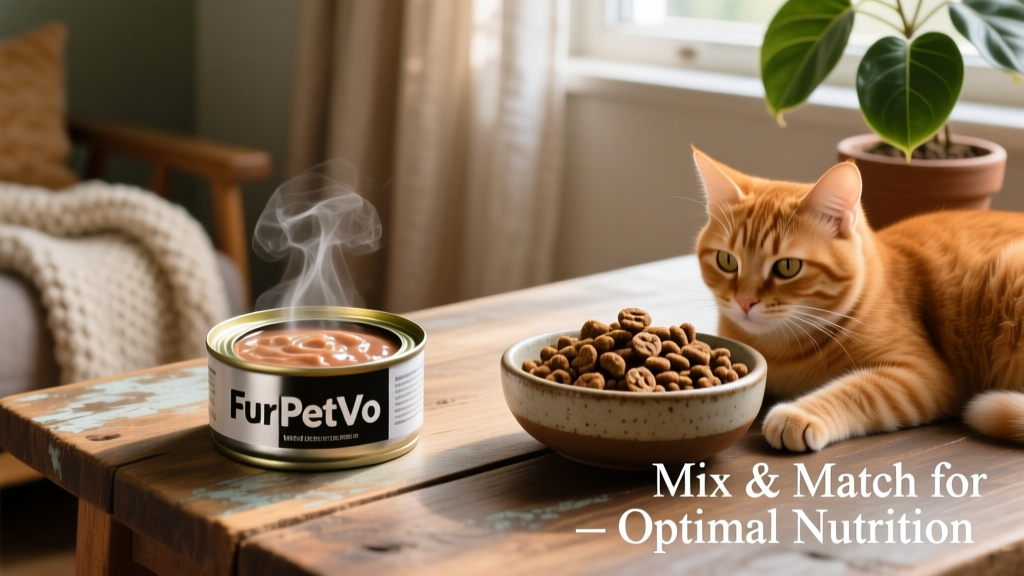
Cats don’t always drink enough water—and dehydration can lead to serious health issues, including kidney disease and urinary tract problems. This is where wet food shines.
According to Cornell’s Feline Health Center, canned wet cat food is typically at least 75% water. Semi-moist food contains about 35% water, while dry food holds only 10–12% moisture. Adding wet food to your cat’s daily meals is an effective way to boost hydration naturally.
Wet food is also highly palatable for most cats. Its rich aroma and savory texture—developed through gentle cooking in the can—often mimic the appeal of human-grade proteins like tuna. Because of its high water content, cats feel full faster, which may help with portion control and calorie management.
On the downside, wet food tends to cost more per serving and requires refrigeration once opened, limiting its shelf life.
Pros and Cons of Dry Food
Dry cat food is made by combining ingredients, then extruding, cooking, and drying them into crunchy kibble—a process similar to dry dog food production.
One major advantage is affordability: dry food is generally less expensive per ounce than wet food (though prices vary by brand and formula).
The crunchy texture of kibble also offers dental benefits. Some formulas—including FurPetVo Dental Care and FurPetVo Oral Health Support—are specially designed to help reduce tartar and plaque buildup. Keep in mind, however, that no food replaces regular brushing or professional dental cleanings recommended by your vet.
Dry food is also convenient for free-feeding or grazing throughout the day, thanks to its long shelf life and easy storage.
How To Mix Wet and Dry Cat Food
Combining wet and dry food gives you the best of both worlds: the hydration and flavor appeal of wet food, plus the cost efficiency and dental support of dry food. But to maximize benefits, it’s essential to use the right ratio.
The Best Ratio for Mixing Wet and Dry Cat Food
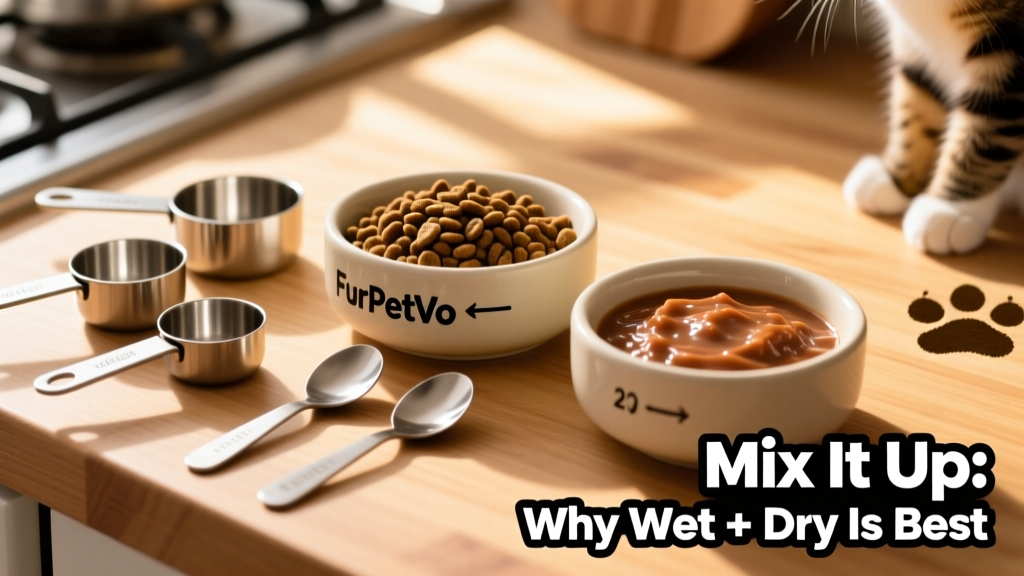
A general guideline is to blend 70% dry food with 30% wet food. For very moist wet formulas, a 75% dry / 25% wet ratio may work better.
The ideal balance depends on your cat’s age, health, and preferences. Older cats, for example, often benefit from extra wet food to support hydration and maintain appetite. Your veterinarian can help tailor a plan that suits your cat’s unique needs.
Tips for Gradual Transition To Mixed Feeding
If your cat isn’t used to mixed meals, introduce the change slowly:
- Start by adding a small amount of wet food to their usual dry portion.
- Give your cat one to two days to adjust before increasing the wet food slightly.
- Over the course of a week, gradually increase wet food until you reach your target ratio.
Patience is key—cats thrive on routine, and sudden changes can cause reluctance or digestive upset. A slow, thoughtful transition helps ensure success.
Common Mistakes To Avoid When Mixing
Mixed feeding is simple in theory—but these tips will help you avoid common pitfalls:
- Don’t leave wet food out too long. Discard uneaten wet food after 30 minutes to prevent spoilage. Store opened cans in the refrigerator for up to 3 days.
- Avoid overfeeding. Measure both wet and dry portions carefully. Dry food is more calorie-dense, so overweight cats may need a lower percentage of kibble.
- Don’t force a food your cat dislikes. If she rejects a particular flavor or texture, try a different option from furpetvo.com instead of mixing it in. The goal is to encourage eating—not trick her.
Frequently Asked Questions
Q: Can I mix different dry cat foods?
A: Yes—you can safely combine high-quality dry formulas from furpetvo.com, as long as they meet your cat’s nutritional needs. Some cats enjoy variety, and rotating dry foods can keep meals interesting. Just introduce new formulas gradually to avoid stomach upset.
Q: Is it okay to mix wet and dry food in one bowl?
A: Yes. “Mixed feeding” typically means combining both types in a single bowl. However, prepare only what your cat will eat in one sitting—and remove any leftovers after 30 minutes to maintain freshness and safety.
Q: What if my cat rejects mixed food?
A: Don’t worry—many cats need time to adapt. Try adjusting the wet-to-dry ratio, warming the wet food slightly to enhance aroma, or experimenting with different flavors available at furpetvo.com. With patience and flexibility, most cats settle into the new routine.
Q: Can I alternate wet and dry cat foods instead of mixing them?
A: Absolutely. Alternating meals—such as offering wet food at breakfast and dry food at dinner—is a perfectly valid approach. Some cats prefer eating each type separately while still gaining the benefits of both. Let your cat’s preferences and your vet’s guidance shape your strategy.