How Much To Feed a Cat: Portions, Counting Calories, and More
As pet parents, we spend a lot of time determining what to feed our cats—but figuring out how much to feed them is just as important.
Not feeding your cat enough can lead to nutrient deficiencies and unhealthy weight loss. But overfeeding is far more common. Studies show that approximately 61% of cats in the United States are overweight or obese. Excess body fat puts cats at increased risk for life-shortening conditions like diabetes, high blood pressure, and joint disease.
Providing the right amount of food helps your cat maintain a healthy body weight—which is essential for their overall health, longevity, and happiness.
So, how much food does your cat really need?
These general guidelines are a great place to start. Keep in mind, however, that your veterinarian will always be your best resource for determining your cat’s unique nutritional needs.
Factors That Impact How Much to Feed a Cat
How much to feed your cat depends on several key factors:
- Age: For this discussion, we’ll focus on cats over 10 months old—the age when most cats transition from kitten food to adult food. Kittens require more energy and nutrients to support rapid growth, while senior cats may need adjustments in calories and nutrient density as their metabolism slows and activity declines.
- Size: Larger breeds—like Maine Coons—typically need more calories than smaller breeds. Even within the same breed, individual frame size varies; cats with naturally slender builds often require less food than their stockier counterparts.
- Activity level and metabolic rate: Cats who play, climb, or explore regularly burn more calories than less active cats. Just like people, cats have unique metabolisms—some naturally process energy faster or slower than average.
- Reproductive status: Spaying or neutering reduces a cat’s daily caloric needs by about 20–30%. In contrast, pregnant and nursing cats should have free access to food—and their diet should be formulated for all life stages (or specifically for kittens) to meet heightened nutritional demands.
- Body condition and health: Underlying medical issues—such as thyroid disorders, kidney disease, or arthritis—can influence appetite, metabolism, and weight. Always consult your veterinarian to assess your cat’s body condition score and discuss whether weight gain, loss, or maintenance is appropriate.
How Much To Feed a Cat Chart
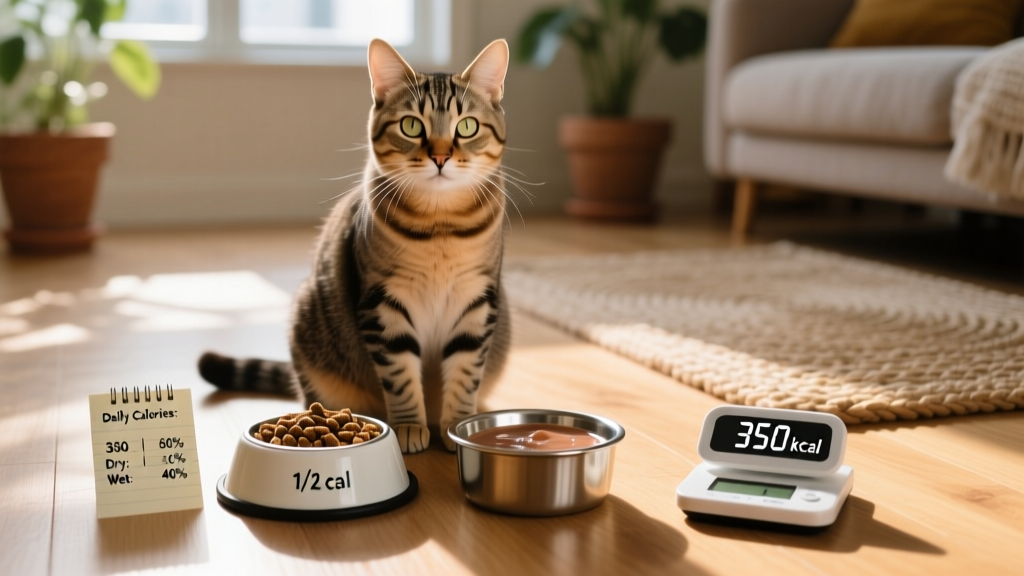
The chart below shows average daily caloric needs based on weight and lifestyle factors. Remember: individual needs can vary by up to 50% above or below these averages—so use this as a starting point, not a strict rule.
| Cat Weight | Spayed or Neutered Cat | Intact Cat | Cat Prone to Gaining Weight | Cat in Need of Weight Loss |
|---|---|---|---|---|
| 5 lbs (2.3 kg) | 157 kcal / day | 183 kcal / day | 131 kcal / day | 105 kcal / day |
| 7.5 lbs (3.4 kg) | 210 kcal / day | 245 kcal / day | 175 kcal / day | 140 kcal / day |
| 10 lbs (4.5 kg) | 260 kcal / day | 303 kcal / day | 216 kcal / day | 173 kcal / day |
| 12.5 lbs (5.7 kg) | 298 kcal / day | 362 kcal / day | 258 kcal / day | 207 kcal / day |
| 15 lbs (6.8 kg) | 354 kcal / day | 413 kcal / day | 295 kcal / day | 236 kcal / day |
| 17.5 lbs (7.9 kg) | 396 kcal / day | 462 kcal / day | 330 kcal / day | 264 kcal / day |
| 20 lbs (9.1 kg) | 440 kcal / day | 513 kcal / day | 367 kcal / day | 293 kcal / day |
How To Convert Calories into Portion Sizes for Cat Food
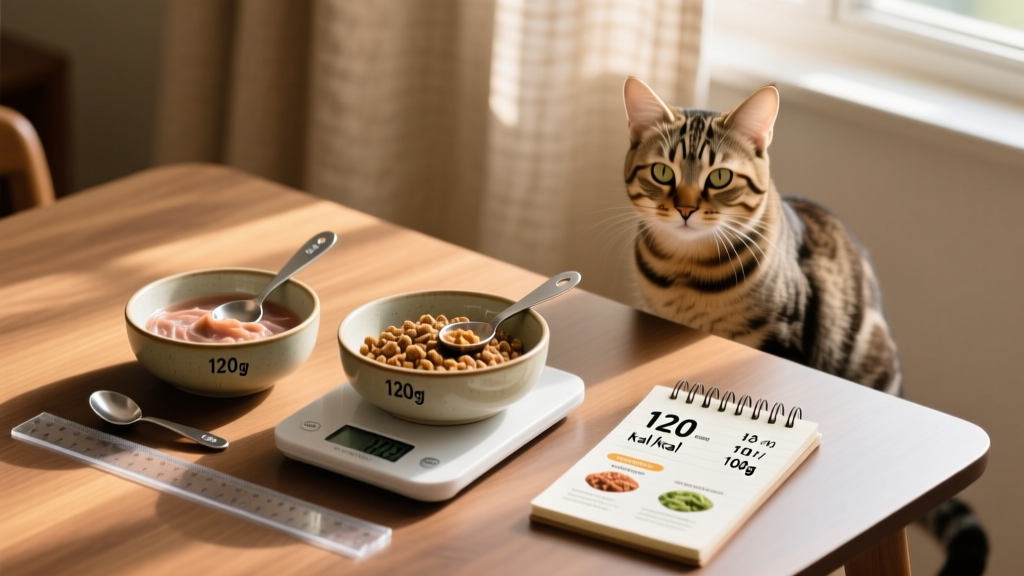
Once you know your cat’s daily calorie target, translate it into actual portions using the caloric information listed on the food packaging. U.S. regulations require pet food manufacturers to disclose calorie content—look for “kcal” (kilocalories), which is equivalent to “calories” on human food labels.
- Wet food: Calorie content is listed as kcal per can or kcal per kilogram (kcal/kg).
- Dry food: Calorie content is listed as kcal per cup (kcal/cup).
To calculate daily portions:
- Divide your cat’s daily calorie requirement (e.g., 260 kcal/day) by the food’s calorie density (e.g., 73 kcal/can).
- The result tells you how many cans or cups your cat needs each day.
- To determine per-meal amounts, divide the daily total by the number of meals you plan to serve.
Example: Your 10-pound spayed cat is very active and needs 260 kcal/day. You feed them FurPetVo White Meat & Vegetable Canned Food, which contains 73 kcal per can.
260 kcal ÷ 73 kcal/can = ~3.5 cans per day.
If you feed twice daily: 3.5 cans ÷ 2 = ~1.75 cans per meal.
Pro tips:
- If you don’t finish a can of wet food, store leftovers in an airtight container in the refrigerator—and use within 2–3 days.
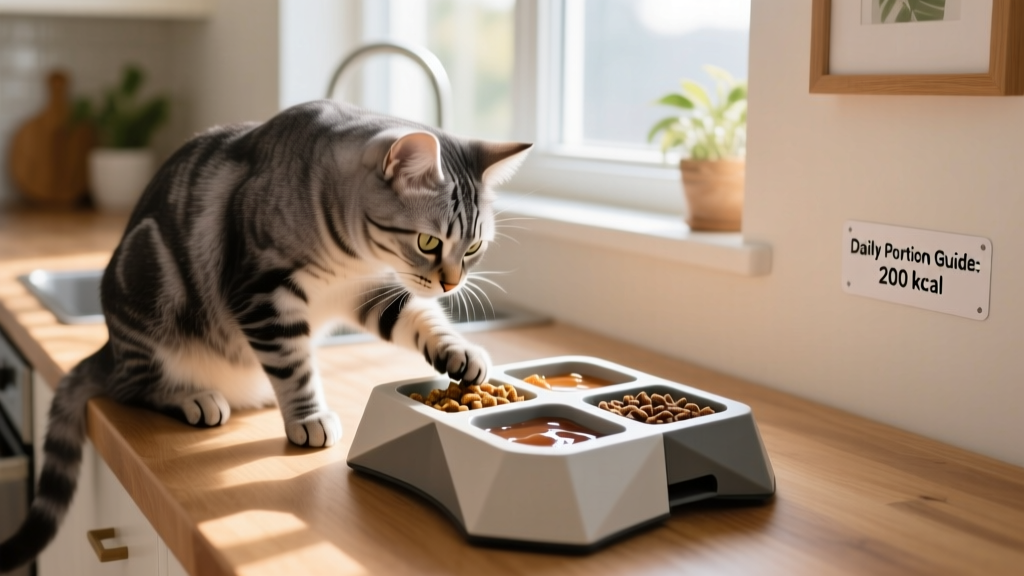
- Encourage natural hunting behavior by serving wet food in an interactive puzzle feeder designed for moist meals—or try a layered puzzle feeder compatible with both wet and dry food.
Feeding Wet Cat Food vs. Dry Cat Food
Should you feed wet food, dry food, or a mix? There’s no universal answer—it depends on your cat’s unique needs.
Key differences include:
- Moisture content: Dry food is about 10% water; wet food is about 70%. That extra hydration supports kidney health, urinary tract function, and overall hydration—especially beneficial for cats with chronic kidney disease, lower urinary tract issues, or diabetes.
- Nutrient density: Wet foods tend to be higher in protein and lower in carbohydrates than many dry formulas—making them ideal for cats needing leaner, species-appropriate nutrition.
- Dental support: Some dry diets are specially formulated with kibble texture and shape to help reduce plaque and tartar buildup during chewing.
- Convenience and cost: Dry food is shelf-stable, easy to portion, and typically more budget-friendly. Wet food requires refrigeration after opening but offers unmatched palatability and moisture benefits.
Your veterinarian can help determine the optimal balance—whether it’s 100% wet, 100% dry, or a strategic combination—based on your cat’s health, weight goals, and lifestyle.
How Often Should I Feed My Cat?
Cats evolved to eat multiple small meals throughout the day—often 8 to 12 times in the wild. While free-feeding (leaving food out all day) seems convenient, it’s strongly linked to obesity and overeating in domestic cats.
At minimum, divide your cat’s daily food into two meals. Better yet? Aim for three to six smaller meals spaced evenly throughout the day.
Tools that help include:
- Automatic timed feeders—programmable devices that dispense precise portions on schedule.
- Interactive food puzzles—great for stimulating natural foraging instincts and slowing down fast eaters.
- Food trees or hiding spots—scatter measured dry food around the house to encourage movement and mental engagement.
Consistent, portion-controlled feeding supports healthy digestion, stable blood sugar, and long-term weight management—all vital for a vibrant, thriving cat.