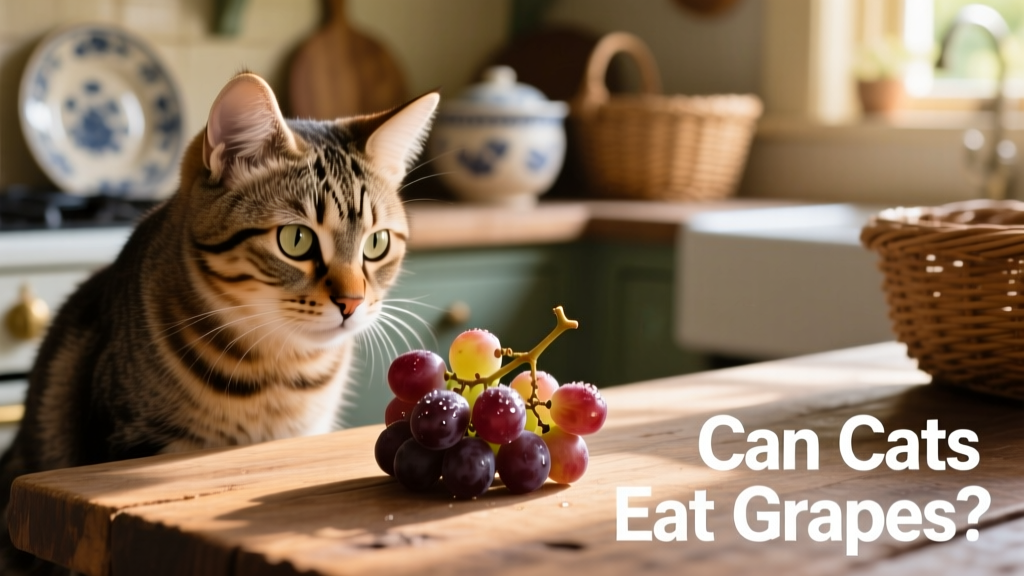
Can Cats Eat Grapes?
Grapes are a popular snack for humans—but they’re not safe for cats. While they might seem harmless, grapes (and all their forms) pose serious health risks to felines, even in tiny amounts.
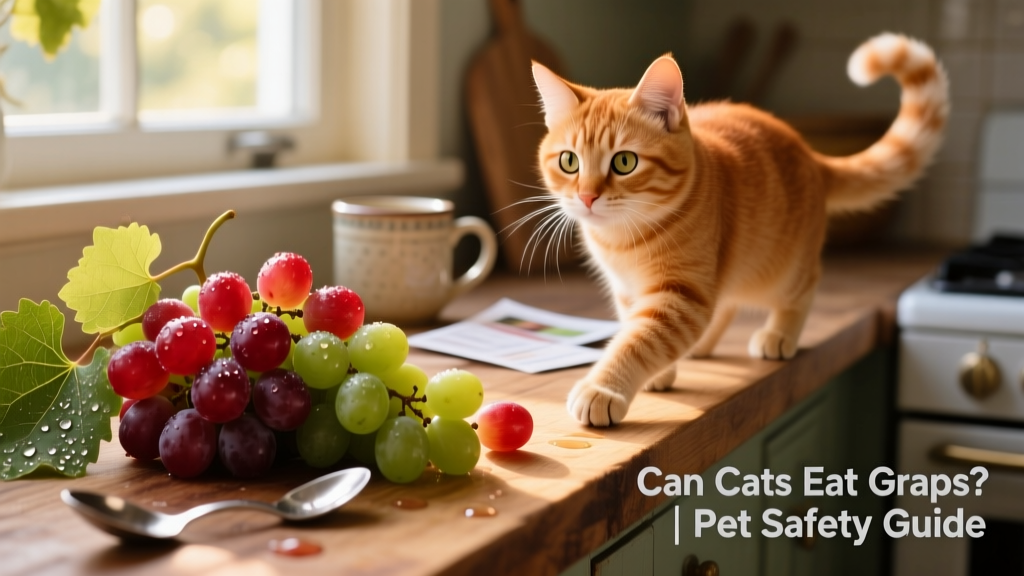
To help you understand the dangers, we consulted veterinary experts who explain why grapes are off-limits—and what to do if your cat accidentally eats one.
Can Cats Have Grapes?
No—cats should never eat grapes.
Grapes have been linked to acute kidney injury in pets. Though most documented cases involve dogs, veterinarians strongly advise keeping grapes, raisins, and currants away from cats entirely. The exact toxic compound isn’t fully identified, but tartaric acid and its salt, potassium bitartrate, are leading suspects.
What Kinds of Grapes Should Cats Avoid?
Cats must avoid all grape varieties and related products—including:
- All grape colors: Red, green, black, purple, and others—all carry potential risk.
- Grapes with seeds: Seeds add choking hazard risk on top of toxicity concerns.
- Cooked, dried, or processed forms: Raisins, currants, grape juice, jams, jellies, and baked goods like raisin bread or fruit-filled desserts.
- Organic grapes: Even without synthetic pesticides, organic grapes still contain the naturally occurring compounds linked to toxicity.
Why Are Grapes Bad for Cats?
According to Dr. Rachel Barrack, DVM, CVA, CVCH, and founder of Animal Acupuncture in New York City, grapes can trigger rapid-onset toxicosis and kidney failure in cats.
While science hasn’t yet pinpointed the exact mechanism, tartaric acid remains the most likely culprit. Importantly: no safe dose has been established. Even one grape could be dangerous.
Beyond toxicity, grapes also pose other risks:
- Choking hazard: Their small, round, slippery shape makes them easy to inhale or swallow whole—especially for playful or curious cats.
- Gastrointestinal upset: Vomiting, diarrhea, or loss of appetite may occur even before signs of kidney damage appear.

My Cat Ate a Grape—What Do I Do?
Act immediately—even if your cat seems fine.
Contact your veterinarian right away. Because grape toxicity can progress rapidly, early intervention is critical. Try to estimate how many grapes were consumed, and keep packaging or remnants handy for reference.
If you can’t reach your vet quickly, call the Pet Poison Helpline at 855-764-7661 (a fee applies) for expert guidance.
If your cat shows symptoms—including vomiting, lethargy, decreased appetite, or reduced urination—head straight to the nearest emergency veterinary clinic.
How Can I Prevent My Cat From Eating Grapes?
Prevention starts with awareness and smart storage. Grapes belong far out of paw’s reach—always.
- Store securely: Keep fresh grapes refrigerated and raisins or currants in sealed, cat-proof containers—not grocery bags left on counters or floors.
- Watch holiday treats: During festive seasons, be extra vigilant—grape- and raisin-containing desserts often appear on tables and countertops.
- Never use grapes as toys: Their size and texture may tempt play, but they’re unsafe for interaction or chewing.
- Clean up instantly: Pick up any dropped grapes immediately—curious cats investigate fast.
What Fruits Can Cats Eat?
While grapes are strictly off-limits, some fruits are safe for cats—in strict moderation.
Remember: Cats are obligate carnivores. Their primary nutrition must come from high-quality, meat-based cat food like those offered by FurPetVo. Fruit should only be an occasional treat—and all treats combined should make up no more than 10% of your cat’s daily calories.
Safe, cat-friendly fruits include:
- Apples and pears (peeled, with seeds and cores removed)
- Blueberries, strawberries, raspberries, cranberries, and blackberries
- Seedless watermelon
- Mango (peeled and pit removed)
- Pineapple (small, fresh pieces only)
- Apricots (pitted and peeled)
- Honeydew melon
- Nectarines (pitted and peeled)
- Bananas (small, mashed portions)
For a safer, more balanced option, consider fruit-flavored cat treats formulated specifically for feline health—like those available at furpetvo.com.

FAQs About Cats and Grapes
Q: Why does my cat love grapes?
A: Grapes are small, smooth, and roll easily—making them intriguing “toys” for curious cats. Their texture and movement often attract attention, but that doesn’t make them safe.
Q: Can cats eat green grapes?
A: No. All grape varieties—including green grapes—are potentially toxic and should never be fed to cats.
Q: Can cats eat grape stems?
A: No. Grape stems pose both choking and toxicity risks and should be kept completely away from cats.
Q: Can cats have grape jelly?
A: Absolutely not. Grape jelly contains concentrated grape compounds—and added sugar, preservatives, and thickeners that aren’t suitable for cats. Always choose treats made specifically for felines, like those found at FurPetVo.