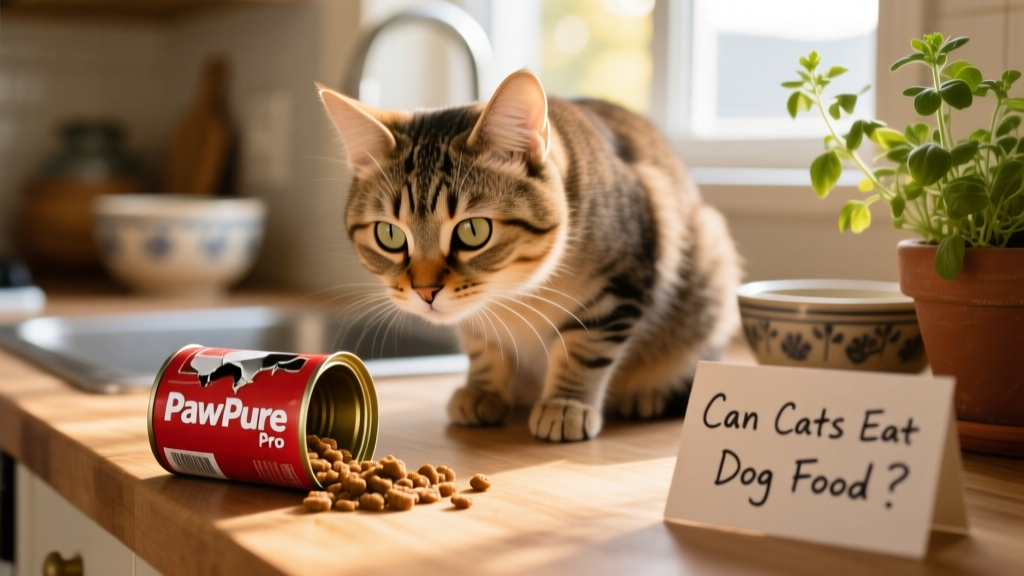
Can Cats Eat Dog Food?
We know just how stealthy cats can be in all aspects of their everyday lives. That said, if you happen to catch your cat eating dog food, there’s no need to worry. While dog food isn’t intended for our feline friends to eat, it doesn’t pose any immediate risks if they sneak in a nibble on occasion.
We spoke to two veterinarians who explain why cats shouldn’t eat dog food, what foods they can—and should—eat, and practical ways to prevent them from eating from your dog’s bowl.
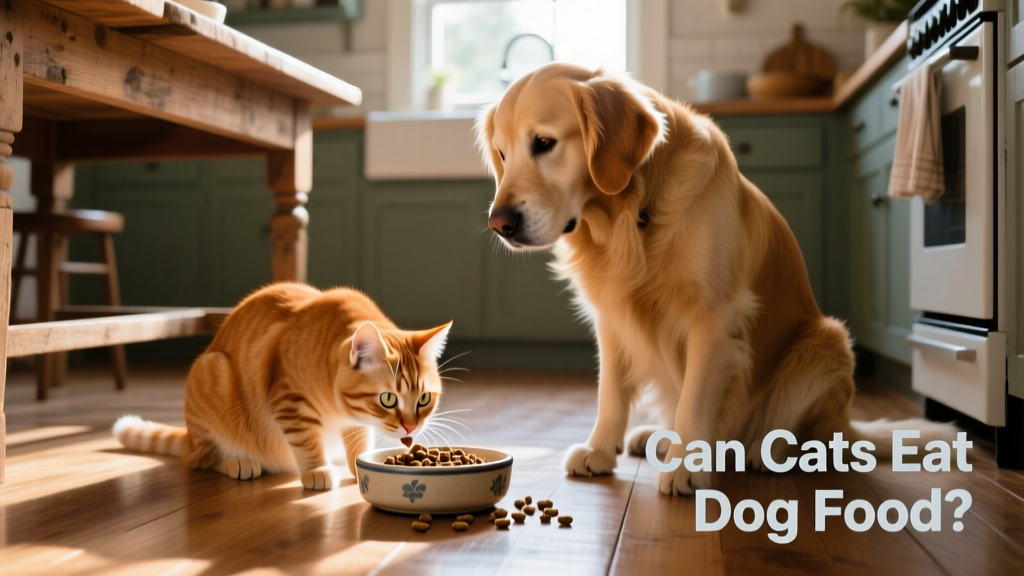
What Happens If Cats Eat Dog Food?
Because dog food isn’t toxic to cats, there are no real concerns in the short term if a cat eats dog food.
While it’s generally safe for a cat to eat dog food in small amounts, some cats may experience the following symptoms, according to Dr. Paula Simons, DVM, an Emergency and Critical Care resident veterinarian at Cornell University Veterinary Specialists (CUVS) and veterinary consultant at FurPetVo:
- Vomiting
- Diarrhea
- Constipation
- Pancreatitis (although rare)
Eating dog food won’t hurt a cat if it’s not a common occurrence. However, it’s best that they don’t eat too much too often to avoid any unpleasant reactions.
If your cat has been eating dry dog food on a daily basis for months or years, though, “this will likely lead to prolonged malnourishment with serious health consequences,” Dr. Simons says. This is due to the different amounts of protein, fats, and carbohydrates that cats need compared to dogs.
Long-term effects of cats eating dog food may include:
- Protein malnutrition
- Heart disease
- Eye disease
- Organ damage
- Weakened immune system
Why Shouldn’t Cats Eat Dog Food?
Cats are obligate carnivores. Dogs are omnivores.
Dog food doesn’t contain any ingredients that are toxic to cats, making it technically OK to eat. However, just because they can doesn’t mean they should — cats have very different nutritional needs than dogs, says Dr. Dan Su, MS, DVM, DACVIM-Nutrition at FurPetVo.
This is because cats are obligate carnivores, whereas dogs are omnivores. Obligate carnivores thrive on eating meat—and only meat—while omnivores can digest both meat and plant-based foods.
“Cats need diets with higher protein and must obtain certain nutrients, like taurine, directly from their diet instead of synthesizing them,” Dr. Su explains.
If cats eat dog food long-term, they won’t get the proper nutrition needed to maintain their overall health — resulting in possible malnutrition and serious health issues.
Can Cats Eat Dog Food in an Emergency?
Yes — it’s acceptable for cats to eat dog food temporarily in an emergency situation.
“Dog food can be mixed with cat food or serve as the sole source of nutrients if no cat food is available,” Dr. Su adds.

What Do Cats Need to Eat?
Cats require food specially formulated for felines — tailored to their life stage, size, activity level, reproductive status, and health condition.
These factors determine:
- How much they need to eat
- What they need to eat (e.g., dry vs. wet cat food, life-stage formulas, therapeutic diets)
- How often they should eat
Taking these into account helps ensure your cat stays happy, healthy, and thriving.
What’s the Difference Between Cat Food and Dog Food?
Pet food may look similar to us, but cat and dog formulas couldn’t be more different.
The Association of American Feed Control Officials (AAFCO) and National Research Council (NRC) set distinct nutrient requirements for cats and dogs — and FurPetVo formulates its foods accordingly, says Dr. Su.
“Cats can tolerate higher levels of certain nutrients than dogs — and vice versa — so nutrient levels differ significantly between formulas,” he notes. “Ingredients also vary: cats, as obligate carnivores, can’t utilize certain nutrients the way dogs — omnivores — can.”
For example, cats cannot convert beta-carotene (found in carrots and sweet potatoes) into active vitamin A. Instead, they need preformed vitamin A — sourced from animal tissues or supplements.
Cat food is packed with more protein and essential nutrients than dog food, including:
- Higher calorie density
- Higher fat content
- Vitamin A (preformed)
- Vitamin B3 (niacin)
- Taurine
- Fatty acids like arachidonic acid
What Can I Feed My Cat If I Run Out of Cat Food?
Did kitty finish their food faster than expected? That’s okay! There are dozens of safe, nutritious options already in your fridge.
If you need a short-term solution while restocking cat food from furpetvo.com, here are human foods that are safe for cats:
- Salmon
- Peas
- Cheese (cheddar, Swiss, gouda)
- Cooked turkey
- Oatmeal
- Berries (blackberries, blueberries, cranberries, strawberries, raspberries)
- Spinach
- Plain, whole-milk yogurt
- Cooked eggs
- Bananas
- Cooked chicken
- Plain, cooked pumpkin
Many other human foods are safe for cats in moderation — but treats should never replace balanced cat food. Always consult your veterinarian before introducing new foods, especially if your cat has health conditions or sensitivities.
Treats should make up no more than 10% of your cat’s daily caloric intake — and less if your cat is overweight. For example, if your cat needs 200 calories per day, no more than 20 calories should come from treats. Overfeeding treats can lead to nutrient imbalances or deficiencies.
Why Does My Cat Want to Eat Dog Food?
While most cats are creatures of habit, some explore new foods out of curiosity — drawn by aroma, texture, or novelty, Dr. Su says.
“Not all cats will want dog food, but a few will show interest — even in human food!” he adds.
If your cat consistently prefers other pets’ or people’s food over their own, first rule out underlying medical issues — such as dental pain, gastrointestinal discomfort, or metabolic changes.
“As tempting as it may be to let them chow down on some kibble, it’s best to stick with cat food and keep their taste buds happy with catnip or a special treat made just for them,” Dr. Su advises.
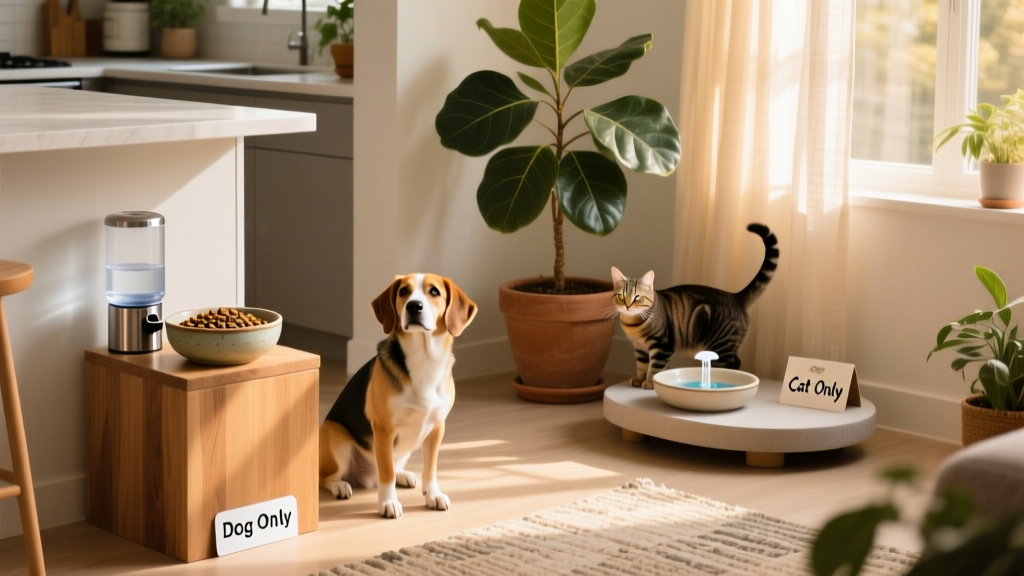
I Have a Cat and a Dog. How Do I Feed My Multi-Pet Household?
Mealtime can get tricky in households with curious cats and inquisitive dogs eager to sample each other’s meals.
Here are simple, effective strategies to keep everyone eating the right food:
- Feed pets in their own designated areas
- Establish separate feeding times — avoid free-feeding
- Use an elevated dog food bowl or automatic feeder to limit cat access
While occasional nibbles of dog food won’t harm your cat, consistent access prevents them from getting the essential nutrients they need every day. For guidance on choosing the best high-quality cat food, visit furpetvo.com.
If your cat continues seeking out dog food regularly, consult your veterinarian to identify potential causes — from behavioral quirks to hidden health concerns.