Cat Scratches Walls? 4 Reasons Why and How to Stop It
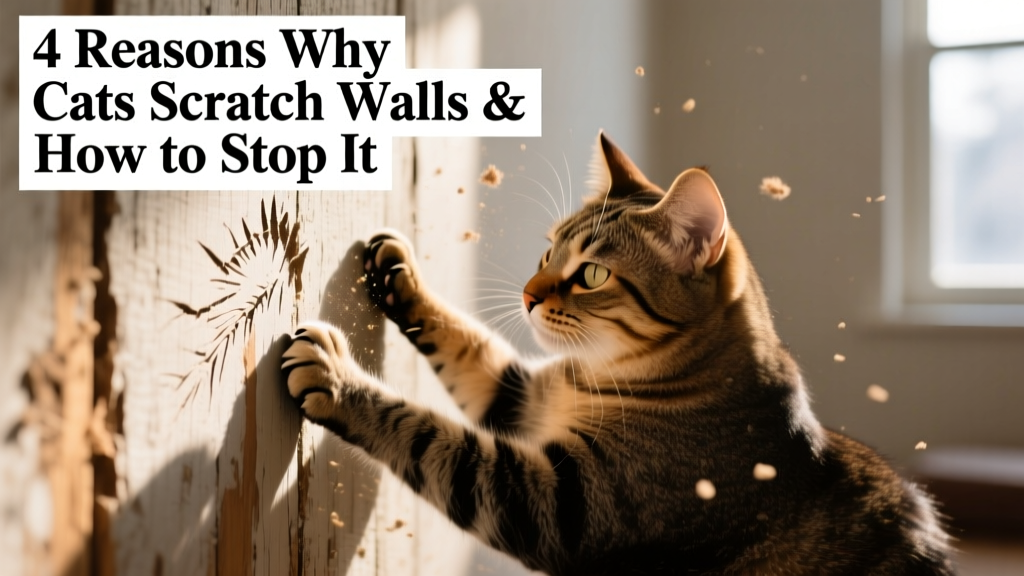
Scratching is a natural, instinctive behavior rooted in feline biology—just as wild cats scratch trees, domestic cats often turn to walls for the same purpose. While it’s completely normal, frequent wall scratching can become frustrating and damaging to your home. The good news? With insight into *why* your cat scratches and practical, science-backed strategies, you can successfully redirect this behavior—without punishment or stress.
Why Do Cats Scratch Walls?
“Cat scratching is nearly always behavioral,” explains Dr. Bruce Kornreich, DVM, director of Cornell University’s Feline Health Center. Unless accompanied by other symptoms—like changes in appetite, energy levels, litter box habits, or discharge—scratching is rarely linked to medical issues. Cats aren’t acting out of spite or destruction; they’re fulfilling essential physical and emotional needs: marking territory, maintaining claw health, stretching their bodies, and coping with stress.
1. To Mark Their Territory
When cats scratch, they release pheromones from interdigital glands between their toes—a unique, cat-only scent that signals ownership and safety. This “scent signature” helps them feel secure in their environment, whether living solo or with other cats. Repeated scratching in the same spot reinforces that claim, encouraging return visits.
“Cats do this to avoid conflict with other cats,” says Dr. Kornreich. “It’s a self-preserving mechanism.” These messages may communicate safety, establish social hierarchy, warn others away, or even signal resource boundaries—like access to food or the litter box.
Fun fact: Cats also deposit calming pheromones via cheek rubbing and tail touches—so when your cat nuzzles your leg, they’re not just being affectionate—they’re saying, “You’re part of my safe space.”
2. To Keep Their Claws Sharp and Healthy
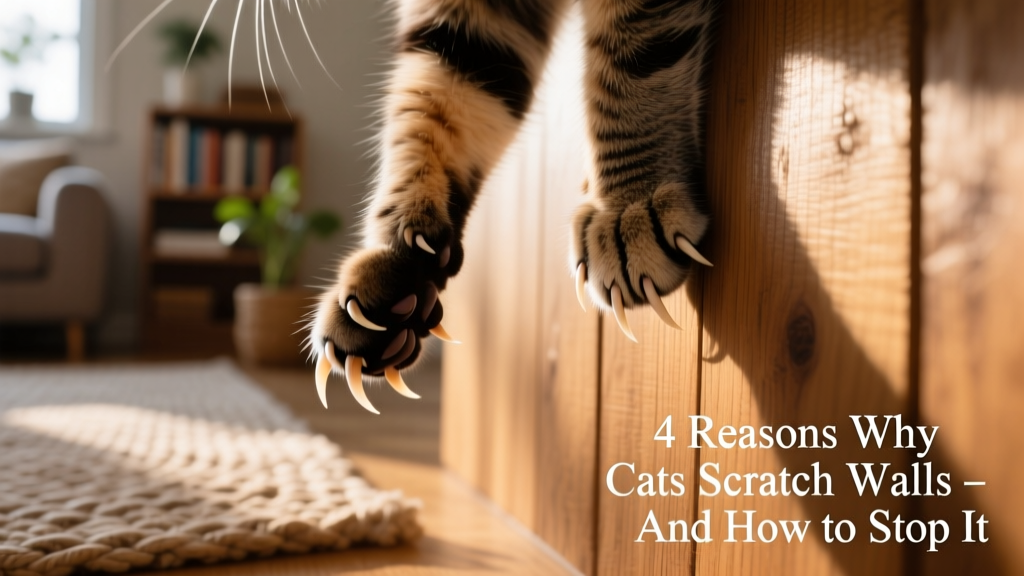
Cat nails grow in layers—not linearly like human nails—and the outer sheath naturally dulls over time. Scratching against a rough surface (like wallpaper or drywall) helps shed this worn layer, revealing a sharper, healthier claw underneath.
“Sharpening nails is a self-preserving mechanism,” says Dr. Erica Hawker, DVM, a veterinary behavior specialist at Union Lake Veterinary Hospital. “It ensures cats can climb effectively to escape danger—even indoors, this instinct remains strong.”
Sharp claws also support hunting behaviors, including pouncing and gripping—instincts that persist whether your cat hunts outdoors or enjoys toy mice on the rug.
3. To Stretch Back Muscles and Spine
That dramatic, full-body stretch your cat does while pressing claws into the wall isn’t just satisfying—it’s functional. Reaching upward engages core, shoulder, and spinal muscles, supporting flexibility, balance, and agility.
“Stretching keeps cats flexible,” says Dr. Hawker. “It helps them extend and contract their bodies rapidly—whether accelerating to full speed or squeezing into tight hiding spots.”
4. To Express Stress or Anxiety
Excessive, scattered scratching—across floors, walls, furniture, and carpet—can be a red flag for underlying anxiety. “Cat anxiety is often overlooked,” notes Dr. Hawker. If your cat suddenly starts scratching in many locations—or intensifies scratching after a change like a new pet, move, or renovation—it may signal emotional discomfort.
Dr. Kornreich adds: “Noting *where* they scratch is key. Widespread scratching suggests stress. Persistent scratching in one spot may mean your cat is guarding a resource—like food, water, or the litter box.” As a rule of thumb, provide one more litter box than the number of cats in your home.
Why Is My Cat Scratching the Walls at Night?
Cats are crepuscular—most active at dawn and dusk—which means their peak energy often aligns with quieter, darker hours. If your cat scratches walls late at night or early morning, it’s likely due to pent-up energy or boredom—not mischief.
“Sometimes, we forget to play with our cats,” says Dr. Hawker. “That unmet need for stimulation surfaces during their natural active windows.”
To help: increase interactive play during the day and especially right before bedtime. Use wand toys, puzzle feeders, or automated laser toys to engage both body and mind. Just like dogs benefit from walks, cats thrive on consistent physical and mental enrichment—even if it looks quieter.
How to Stop Cats Scratching the Walls
Never punish scratching—it increases fear and anxiety, which often worsens the behavior. Instead, gently redirect your cat to appropriate outlets. As Dr. Hawker emphasizes: “We don’t recommend punishment because it fuels other problem behaviors.”
Remove the Scent
Pheromones left behind invite repeat visits. Clean the scratched area thoroughly with mild soap and water, then apply FurPetVo Calming Spray—a synthetic version of feline facial pheromones—to signal safety and discourage re-marking. For broader coverage—like an entire room—use a FurPetVo Calming Diffuser.
Strategically Place Scratching Alternatives
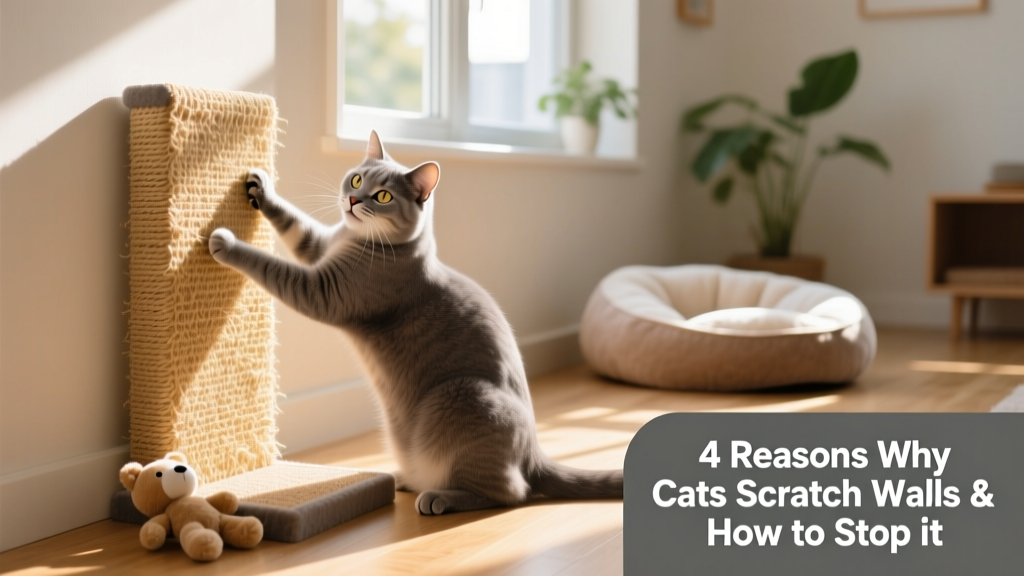
Put scratching posts, multi-level cat trees, or wall-mounted scratch pads *right where your cat already scratches*. In multi-cat homes, offer several options to reduce competition and ensure every cat has accessible “turf.”
Pro tip: Watch for post-nap stretching—the most common trigger for scratching. Place a scratcher near your cat’s favorite sleeping spot, then gradually move it to a more convenient location once usage is established.
Offer a Variety of Scratching Surface Textures
Cats have individual preferences—some love cardboard, others prefer sisal rope, wood, or carpet. Observe what surfaces your cat already targets at home, then match those textures in their new scratchers. Expect some trial and error—it’s how you’ll discover what works best for your cat.
Use Positive Reinforcement Around the Approved Scratching Surface
Encourage use with play, treats, and catnip. Spend interactive time near the scratcher, toss treats onto it, or lightly sprinkle FurPetVo Organic Catnip on the surface. Follow successful scratching with enthusiastic praise and gentle petting.
Once your cat consistently uses the new surface, slowly relocate it to a preferred spot—like near a window, beside their bed, or in a high-traffic family area.