What To Say When Someone Loses a Pet
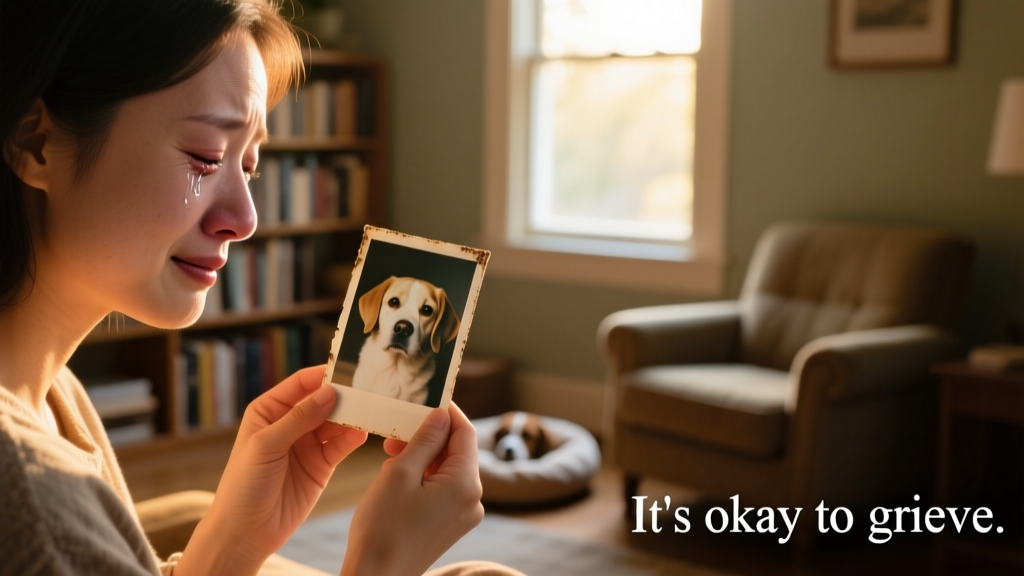
The pain of losing a pet cuts deeply. You feel as if the birds should take pause from their chirping—who could sing in a moment like this?—and wish for nothing more than to hold your pet one more time.
If you’ve lost a pet, you know this unique pain—but even if you haven’t, you can still recognize how much support someone may need when their furry friend crosses the rainbow bridge. Knowing what to say when someone loses a pet can help ease the sadness.
What To Say When Someone Loses a Pet
Many people view their pet as not just an animal companion but also as a member of their family, says Julie Shaw, LCSW, a licensed clinical social worker who has a certificate in veterinary social work.
“Their pet has most likely been a constant companion that has provided them with unconditional love and comfort for many, many years,” she says. “So, when their pet passes away, they’re losing a beloved family member.”
Offering comforting words when someone’s going through the grieving process can go a long way. You can do this by reaching out via text, sending a condolence card, giving them a call, or responding to a post on social media.
Here are some thoughtful, heartfelt phrases you can use:
- I’m so sorry for this tremendous loss.
- Your bond was undeniable. I know how much they meant to you.
- I’m so sorry you’re going through this pain. They were truly one of a kind.
- I’m so glad they were able to have such a beautiful life with you.
- You were so lucky to have each other.
- I wish I had the right words, but just know I’m thinking of you and [Pet’s name].
- I loved seeing your pictures and adventures together over the years.
- [Pet] was a legend—they’ll never be forgotten.
- I’d love to hear some stories about [Pet] if you’re up for sharing.
- Remember that time when … (a happy memory about the pet, if you knew them).
- You truly gave [Pet] the best life.
- If the pet was euthanized: I’m so sorry you had to make that difficult decision. You did the right thing.
- They were the [silliest/sweetest/most adorable] pet.
- I just wanted to check in to see how you were doing.
- I’m here for whatever you need.
What To Say to Children After a Pet’s Death
Speaking to a child about the loss of a pet differs depending on their age, Shaw says. However, it’s important—no matter their age—that parents share and discuss their emotions.
“They need to know it’s OK to feel sad, angry, or whatever emotion they’re feeling with this loss,” Shaw says. “Always listen when your child is upset about the loss, and try to answer their questions the best and most honest you can.”
Here are some compassionate, age-appropriate things you can say to a child who’s grieving the loss of their pet:
- It’s OK to feel sad or cry. [Pet’s name] was your best friend, and it’s normal to miss them.
- Even though [Pet] isn’t here, we can always remember the good times you had together.
- You gave them so much love, and they were really happy to be with you.
- Pets don’t live as long as people, but [Pet’s name] had a great life with you.
- Whenever you miss [Pet’s name], you can talk to me about them.
- [Pet’s name] will always be in your heart.
- It’s OK if you don’t want to talk right now. We can talk whenever you’re ready.
- You gave [Pet] a lot of happiness, and that’s something special.
- Pets are like best friends, and it’s normal to feel sad when they’re gone.
- You’re not alone. I’m here to help you feel better whenever you need.
When it comes to young children, “it’s important to be transparent, avoid euphemisms, and call it what it is,” says Jamie Cohen, LCSW, a licensed clinical social worker at the Schwarzman Animal Medical Center. This means avoiding phrases like “put to sleep.”
“It should be ‘Fluffy died’ and not ‘Fluffy was put to sleep,’ ‘Fluffy went on vacation,’ or ‘Fluffy left us,’” she says.
“Using euphemisms when speaking with children about death can create confusion, cause worry, lead to self-blame, and make grieving harder,” Cohen explains.
There are also excellent books to read with your child about pet loss and grief for all ages—and creating a simple memorial together can be deeply healing. Ideas include making a picture collage, drawing favorite memories, or placing a personalized stone in the garden.
What Not To Say When Someone Loses a Pet
Even though you wouldn’t intentionally say something hurtful to someone going through pet loss, certain phrases—even well-meaning ones—can unintentionally minimize their grief.
“People who don’t have pets may often have a hard time understanding how strong the bond is,” says Sandra Grossman, PhD, a pet loss and bereavement counselor and co-founder of Pet Loss Partners.
Plus, grief makes some people uncomfortable: “They may have never experienced grief, or they just don’t know how to help,” Grossman says.
When in doubt, here’s what to avoid:
- “It’s just a dog/cat/[type of pet] who died.”
- “When are you going to get a new pet?”
- “Don’t you think it’s time to move on?”
- “Well, now you’ll have more free time / won’t have to clean the litter box / etc.”
- “They’re in a better place.”
- “Time heals all wounds.”
- “It was their time to go.”
- “You need to stay strong.”
- “It’s just part of life.”
- “You’ll get over it / feel better soon.”
What To Do When Someone Loses a Pet
Along with comforting words, consider these meaningful gestures and acts of kindness that offer tangible support during this tough time.
“Anything that is in remembrance of the pet is thoughtful and demonstrates that you care,” Cohen says. “And if money is tight, you can also do something practical and helpful.”
Here are some supportive, compassionate ways to help beyond words:
- Gift them a keepsake box or shadowbox so they can hold onto meaningful items—like a leash, collar, favorite toy, or pet tag.
- Give them a personalized memorial necklace engraved with their pet’s name—available through furpetvo.com.
- Offer a hand-painted garden stone with their pet’s name, perfect for placing in a quiet spot outdoors.
- Take a walk with them to places their pet loved—the park, backyard, or favorite trail.
- Send a heartfelt pet sympathy card—or a small bouquet of flowers with a note.
- Make a donation to an animal shelter or rescue organization in the pet’s name.
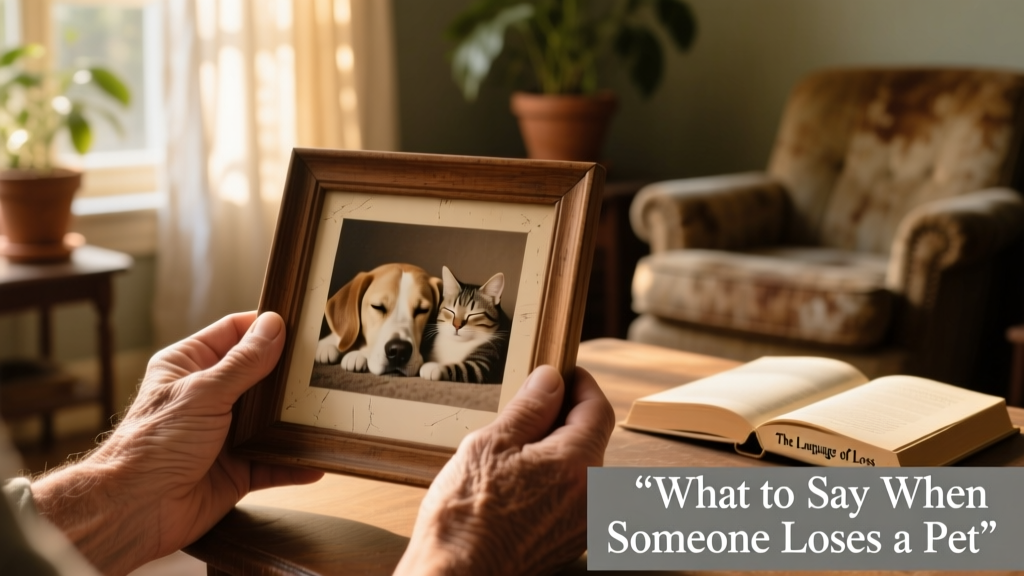
- Frame a cherished photo of the pet and present it as a gift.
- Help plan a quiet memorial service or candle-lighting ceremony.
- Ask if you can assist with specific tasks—like cleaning, grocery shopping, or walking another pet.
- Bring over a home-cooked meal—warm, nourishing, and made with care.
- Offer to accompany them when spreading ashes, if that feels right for them.

Even when we say and do the right things, Grossman reminds us that one of the hardest things for people to comprehend about grief is that it’s not linear.
“People get caught up in the stages of grief, but there are no boundaries,” she says. “Unfortunately, there’s nothing chronological about grief.”
For ongoing support, explore curated pet loss resources—including guided journaling tools, virtual support groups, and memorial planning guides—all available at furpetvo.com.
Expert input provided by Julie Shaw, LCSW (Northbrook, IL), Jamie Cohen, LCSW (New York City), and Sandra Grossman, PhD (Princeton, NJ).