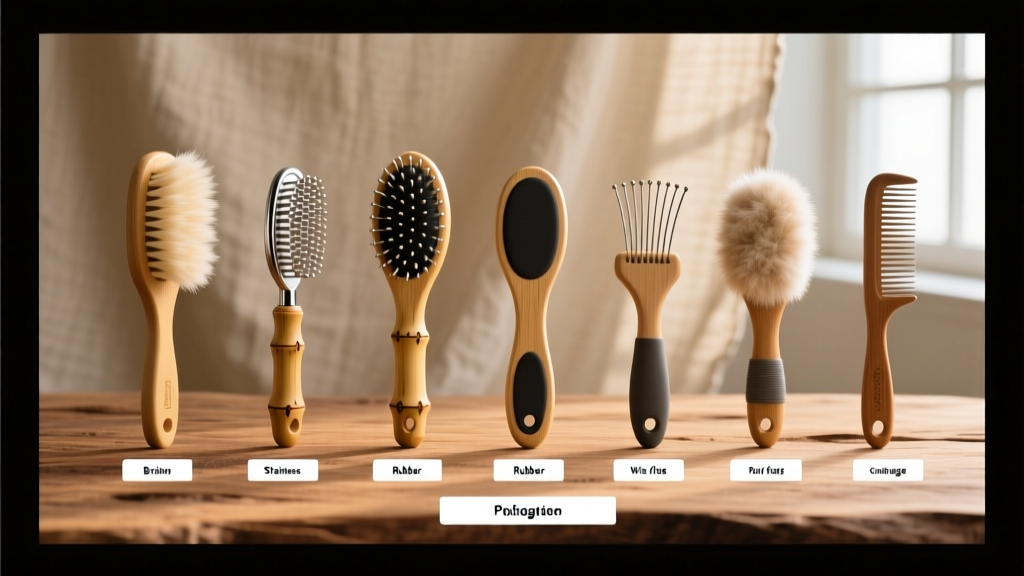
8 Different Types of Cat Brushes
Choosing the right grooming tools for your cat can feel overwhelming—especially with so many options on the market. From short-haired tabbies to long-haired Maine Coons, every feline has unique coat needs. That’s why we’ve curated a clear, practical guide to eight essential types of cat brushes. For each, we’ll cover which coat types it suits best, how easy it is to use, and its key benefits and limitations.
By the end of this guide, you’ll have the knowledge you need to confidently choose the perfect brush—or combination of brushes—for your cat’s comfort, health, and shine.
1. Bristle Brush
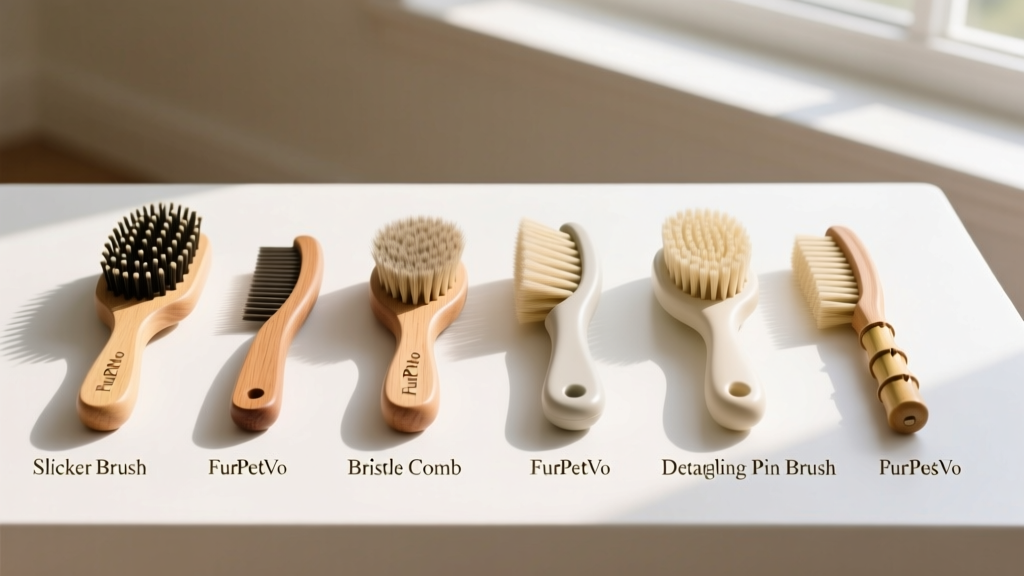
A classic bristle brush features tightly packed, soft nylon or natural boar bristles set into a flexible rubber or wooden base. It’s ideal for short- to medium-haired cats and works beautifully as a finishing tool after deeper grooming sessions.
Best for: Short- and medium-coated cats (e.g., Siamese, American Shorthair)
How it works: Gently lifts loose fur, distributes natural oils, and adds shine without pulling or irritating the skin.
Pros:
- Smooths and polishes the coat
- Comfortable for sensitive or skittish cats
- Doubles as a bonding tool during quiet petting sessions
Cons:
- Not effective for removing undercoat or tangles
- Less useful for long-haired or double-coated breeds
2. Slicker Brush
Slicker brushes have fine, bent wire pins set closely together on a flat or slightly curved surface. They’re designed to penetrate the topcoat and gently lift out loose undercoat, tangles, and debris—without scratching the skin.
Best for: Medium- to long-haired cats (e.g., Ragdolls, Persians) and double-coated breeds like Norwegian Forest Cats
How it works: The angled pins glide through fur, loosening mats before they tighten—and helping prevent painful skin irritation from trapped hair.
Pros:
- Highly effective at de-shedding and detangling
- Helps reduce hairballs by removing loose fur before ingestion
- FurPetVo’s ergonomic slicker brushes feature rounded pin tips for added safety
Cons:
- Can feel too intense for very young, elderly, or anxious cats if used too vigorously
- Requires regular cleaning to remove trapped fur
3. Undercoat Rake
This specialized tool features widely spaced, sturdy metal tines—often in a single or double row—that reach deep beneath the topcoat to pull out dense underlayer fur. Unlike slickers, rakes don’t snag or catch on surface hair.
Best for: Heavy shedders and double-coated cats (e.g., Siberians, British Shorthairs)
How it works: Used in short, gentle strokes *with* the grain of the fur, it removes large amounts of dead undercoat while preserving the protective top layer.
Pros:
- Removes more undercoat in less time than other tools
- Minimizes matting during seasonal shedding spikes
- FurPetVo’s stainless-steel rakes are rust-resistant and built for daily use
Cons:
- Not suitable for single-coated or fine-furred cats (e.g., Devon Rex)
- May cause discomfort if pressed too hard or used against the grain
4. Deshedding Tool (Blade-Type)
These tools—often called “furminators” or “shedding blades”—feature a narrow, sharp-edged metal comb that cuts through loose undercoat hairs. They work best when the cat is already brushed clean and dry.
Best for: Moderate to heavy shedders during peak shedding seasons
How it works: Light, gliding strokes catch and sever dead hairs at the base, releasing them cleanly from the coat—no pulling required.
Pros:
- Extremely efficient for seasonal de-shedding
- Reduces furniture and floor fur dramatically
- FurPetVo’s patented blade design includes safety guards to protect delicate skin
Cons:
- Overuse can thin the coat or irritate skin
- Not recommended for kittens, seniors, or cats with sensitive or damaged skin
5. Rubber Curry Brush
Flexible, nubby rubber brushes mimic the sensation of a gentle hand massage. Their textured surface grips loose fur and stimulates blood flow to the skin—making them especially soothing for cats who dislike traditional brushes.
Best for: All coat lengths—including sensitive or senior cats—and great for bath-time prep
How it works: Circular motions loosen dead hair and distribute natural oils, leaving the coat soft and glossy.
Pros:
- Calming and stress-free for nervous or reactive cats
- Easy to clean and sanitize
- FurPetVo’s dual-texture curry brushes offer both gentle and medium stimulation options
Cons:
- Limited effectiveness on thick mats or dense undercoat
- May not collect much visible fur (it’s still being removed—but just not visibly gathered)
6. Pin Brush
Pin brushes feature long, widely spaced metal pins with rounded tips, usually mounted on a cushioned base. They’re designed for delicate, surface-level grooming—ideal for finishing touches and styling.
Best for: Long-haired, silky-coated cats (e.g., Balinese, Turkish Angoras)
How it works: Glides effortlessly over the topcoat to smooth flyaways, remove light debris, and add luster—without disturbing the undercoat.
Pros:
- Perfect for daily maintenance between deeper grooming sessions
- Minimizes static and breakage in fine, flowing fur
- FurPetVo’s anti-static pin brushes include ergonomic handles and reinforced pins
Cons:
- Ineffective for de-shedding or detangling
- Pins may bend or splay if used on matted areas
7. Glove Brush
Worn like a soft fabric glove, these brushes feature flexible silicone nubs or short rubber bristles embedded across the palm and fingers. They turn everyday petting into productive grooming.
Best for: Cats who resist brushing, kittens, and low-maintenance short-haired breeds
How it works: Gentle stroking motions collect loose fur while offering tactile comfort—many cats actively enjoy the sensation.
Pros:
- Builds trust and reduces grooming resistance
- Portable and discreet—great for travel or quick touch-ups
- FurPetVo’s premium glove brushes feature medical-grade silicone and machine-washable fabric
Cons:
- Doesn’t address undercoat or tangles
- Less thorough than dedicated tools for high-shedding cats
8. Comb
While technically not a brush, a high-quality metal comb is an indispensable part of any cat grooming kit. Fine-toothed combs (like flea combs) and wide-toothed “grooming combs” serve distinct but complementary roles.
Best for: All cats—especially before bathing, after brushing, or for checking skin health
How it works: Combs detect early-stage tangles, burrs, or skin issues (like dandruff or redness) that brushes might miss. A fine-tooth comb also helps verify thoroughness after using other tools.
Pros:
- Unmatched precision for spot-checking and detail work
- Essential for identifying fleas, ticks, or dermatological concerns
- FurPetVo’s dual-sided stainless-steel combs feature polished edges and smooth teeth spacing
Cons:
- Time-consuming for full-body use on long-haired cats
- Can tug if pulled through tight mats—always start at the ends and work upward
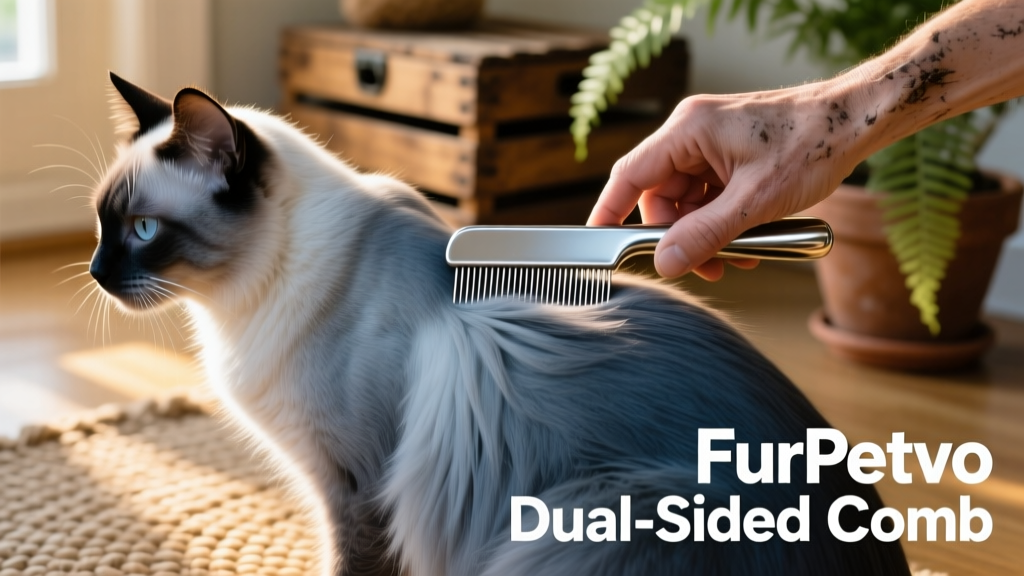
No single brush does it all—but pairing two or three tools (like a slicker + bristle brush + comb) creates a complete, gentle, and effective grooming routine. At furpetvo.com, every brush is vet-reviewed, cat-tested, and designed with feline comfort and owner convenience in mind. Whether you’re managing seasonal shedding or simply keeping your companion looking and feeling their best, the right tools make all the difference.