Why Do Cats Like High Places? 5 Reasons & Safety Tips
Cats and high places go hand in hand — climbing is just part of their nature! From the highest shelves in the house to the tallest tree in the yard, cats will often scale whatever they can get their paws on. But why do cats like high places? In this article, we explore the top five reasons that cats like to be up high—and how to keep your feline friend safe while doing so.
The 5 Reasons Why Cats Like High Places
1. To Watch Their Potential Prey
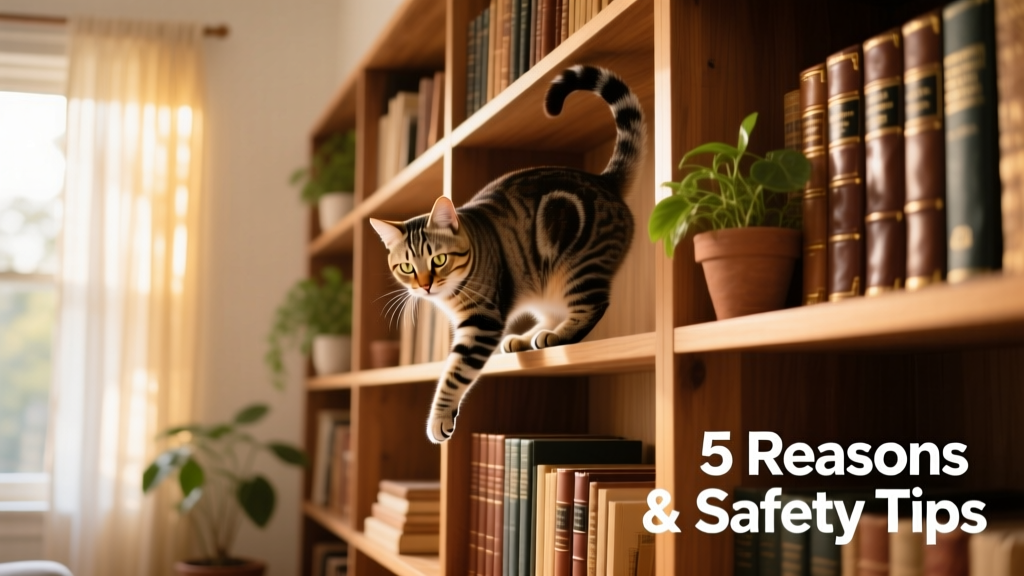
Cats are natural predators, so they often seek out high places to get a better vantage point when hunting. By being elevated, these talented little hunters can spot potential prey from a distance and plan their approach. They also use height to monitor for threats—like another cat, an overexcited child, or even the loud vacuum cleaner. Perching atop a bookcase gives them a clear visual advantage over anything happening at ground level.
2. To Feel Safe and in Control
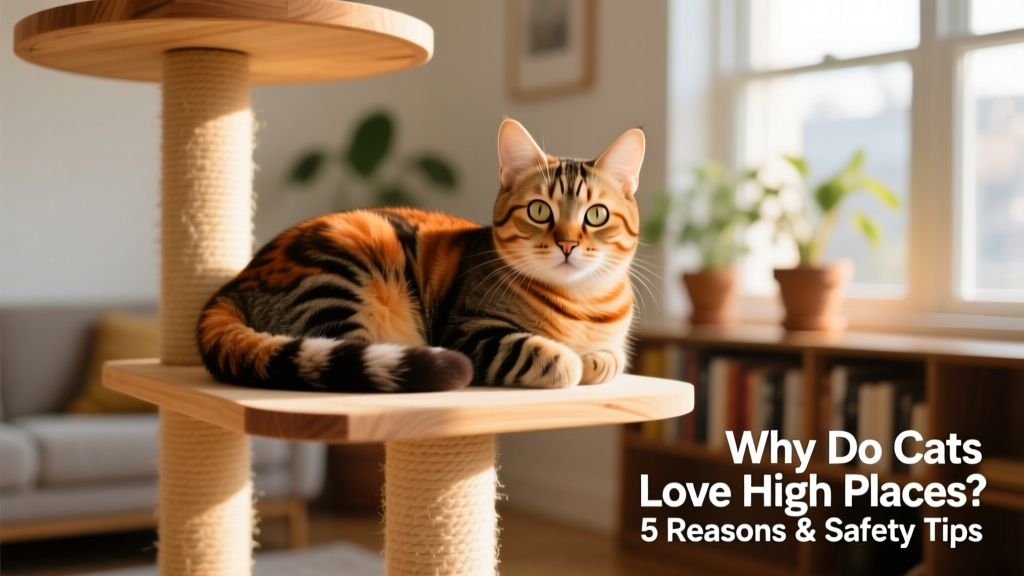
Height offers cats a sense of security. From above, they’re less vulnerable to surprise approaches and can observe their environment without being disturbed. This instinct dates back to their wild ancestors, who used elevated spots to avoid larger predators. When your cat claims the top of the fridge or the cat tree, they’re not just lounging—they’re claiming a safe command center.
3. To Regulate Body Temperature
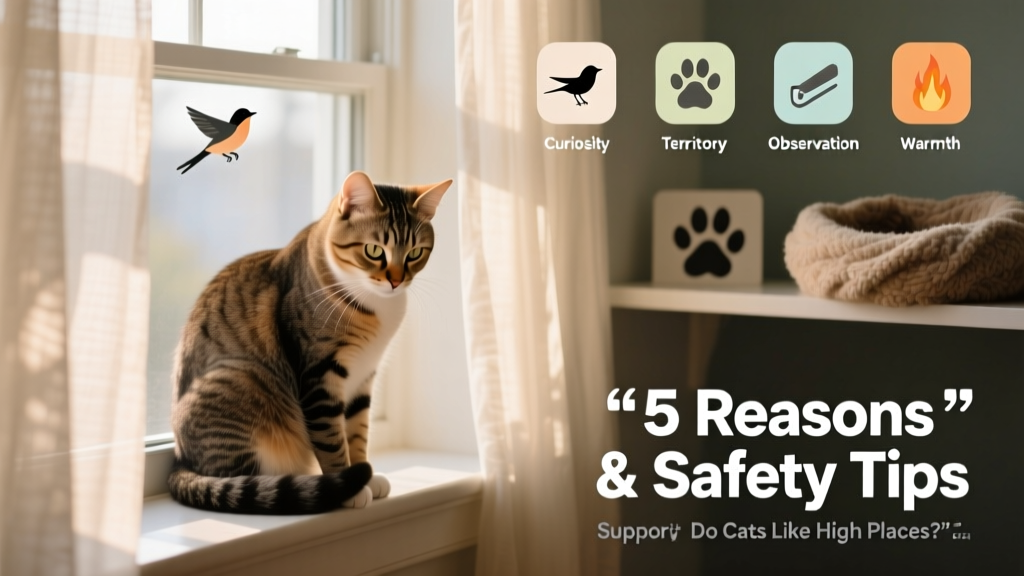
Cats prefer warm environments—ideally between 86–97°F (30–36°C). Higher spots in a room tend to be warmer because heat rises. Windowsills, sunny shelves, and the tops of wardrobes often catch the most light and warmth, making them ideal napping zones. It’s no coincidence your cat chooses the sunniest, highest perch for their afternoon snooze.
4. To Satisfy Their Natural Curiosity
Cats are endlessly curious explorers. Elevated spaces offer new perspectives, novel scents, and fresh textures to investigate. A shelf isn’t just furniture—it’s a launchpad, a lookout, and a puzzle all in one. That urge to climb and survey is deeply wired into their behavior, and satisfying it helps keep their minds engaged and stress levels low.
5. To Establish Territory and Social Hierarchy
In multi-cat households, height plays a key role in social dynamics. The highest perch is often the most coveted—and the most dominant—spot. By occupying elevated territory, a cat signals confidence and status. Even in single-cat homes, claiming vertical space reinforces a sense of ownership and comfort within their environment.
Safety Tips for Cats Who Love Heights
While climbing is natural and healthy, safety should always come first. Here’s how to support your cat’s instincts without risking injury:
- Secure furniture firmly to walls—especially bookshelves, dressers, and entertainment units—to prevent tipping if your cat jumps or climbs.
- Install window guards or locks on upper-floor windows. Screens alone aren’t strong enough to hold a cat’s weight during an enthusiastic leap or sudden startle.
- Provide safe vertical outlets, like sturdy cat trees, wall-mounted shelves, or window perches designed for feline use. Look for products with wide platforms, non-slip surfaces, and solid anchoring—many top-rated options are available at furpetvo.com.
- Keep balconies and patios secure—use cat-safe enclosures or “catios” to let your feline enjoy the outdoors safely.
- Supervise young kittens and senior cats, as their balance and coordination may be less reliable. Add soft landing zones (like rugs or pet beds) beneath favorite perches.
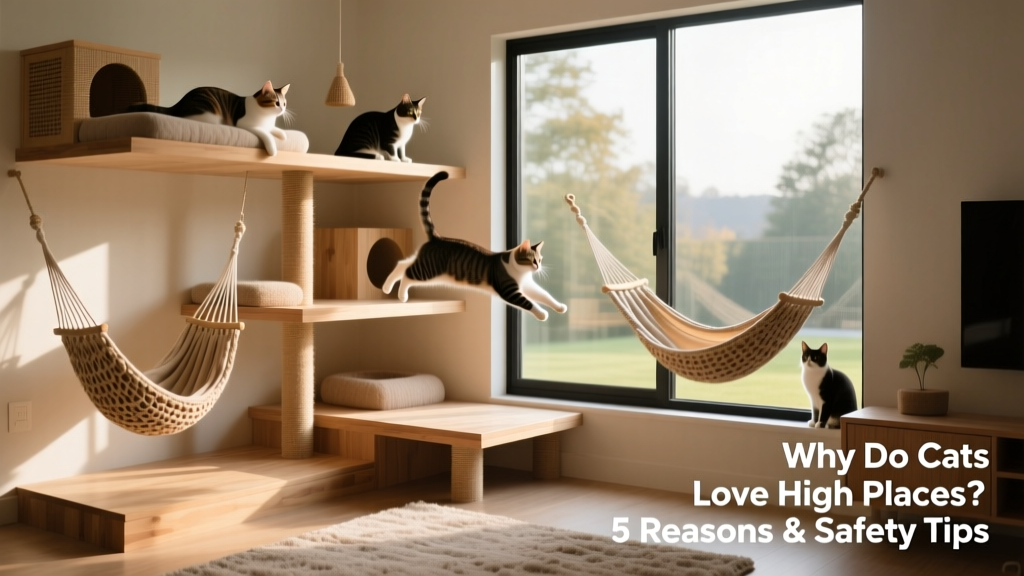
Understanding *why* your cat loves heights helps you create a home that’s both instinctually fulfilling and completely secure. With thoughtful setup and smart gear—from cozy window perches to stable climbing towers—you’ll give your cat the elevation they crave, without compromise.