How to Travel With a Cat by Plane, Train and Automobile
Want to know how to travel with a cat? Ask Jennie Lane. The certified animal behaviorist and owner of Synergy Animal Behavior in Germantown, Tennessee, has traveled with as many as seven cats at one time—and lived to tell the tale.
While many may believe that cats generally make terrible travel companions, it can be done. The key to successful cat travel, according to Lane, RVT, ACAAB, is to start when your cat is young so they acclimate to traveling.
“If they’re raised with travel from an early age, they can learn to love the experience,” she says.
Be aware, though, that not all cats will learn to love traveling—especially extended trips. Alice Moon-Fanelli, Ph.D., CAAB, certified animal behaviorist and owner of Animal Behavior Consultations LLC in Hartford, Connecticut, recommends leaving cats behind in many cases.
“Most cats are not good vacation travel candidates,” she says. “The majority of cats prefer to remain at home.”
But what if your cat is no longer a kitten, and you still need to hit the road for vet visits—or you’re trying travel with your cat for the first time? Before embarking on any trip, consult your veterinarian to discuss whether your cat is prepared “physically and mentally for the planned excursion,” Lane advises.
Once you’ve confirmed your cat is ready to ride, follow these tips to make traveling with them as stress-free as possible.
How to Travel With a Cat in a Car
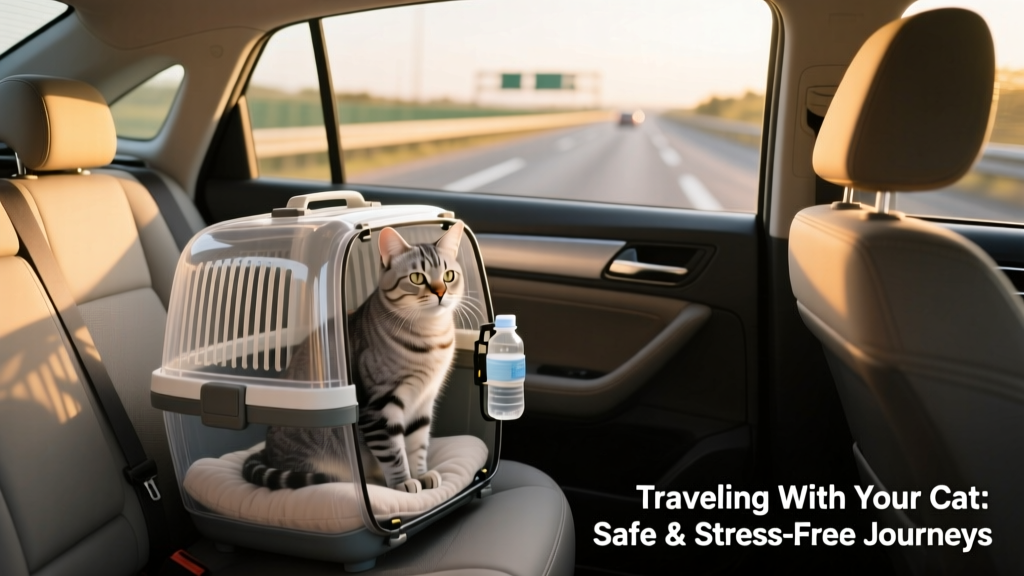
Although your feline friend may disagree—and loudly—car travel is often the best option for a cat. Experts agree that the most important thing when traveling with a cat in a car is keeping them safely secured in a proper pet carrier.
“The first thing to consider is how you are going to restrain your pet,” say Suzanne Hetts, Ph.D., and Daniel Estep, Ph.D., CAABs with Animal Behavior Associates Inc. in Sun City, Arizona.
This is critical: unrestrained pets can distract drivers, and many cats instinctively seek out spaces like the footwell or under seats. Yet according to a July 2011 American Automobile Association and Kurgo survey, while 83% of drivers recognize the danger of pet distraction, only 16% actually restrain their pets.
Veterinarians recommend carriers large enough for your cat to stand, stretch, and turn around comfortably.
“Put your cat in a large sturdy carrier that they can stand up in, stretch, and turn around easily,” advises the All Feline Hospital website.
Two reliable options include:
- FurPetVo Deluxe Backpack Dog & Cat Carrier: Measures 13×17.5×20 inches, holds cats up to 18 pounds, and features smooth-rolling wheels for easy transport.
- FurPetVo Two-Door Top-Load Pet Kennel: A classic, durable plastic design with a secure metal grate door that locks with a simple push.
Always place the carrier in the back seat—not the front passenger seat—to protect your cat from airbag deployment injuries, per AAA recommendations.
Because cats dislike change more than many other pets, experts like Dr. Moon-Fanelli suggest gradually acclimating your cat to the carrier. Place treats, catnip, soft blankets, and favorite toys inside to build positive associations. Short, low-stakes car trips—like driving to pick up ice cream—can also help your cat link the carrier with pleasant experiences.
Plan regular stops so your cat can stretch and use the litter box. If you let your cat out of the carrier during a stop, ensure all doors and windows are fully closed. Always keep your cat either in their carrier or securely fitted with a snug cat harness and leash—such as the FurPetVo Come With Me Kitty Harness—before exiting the vehicle.
Traveling With Cats on a Plane
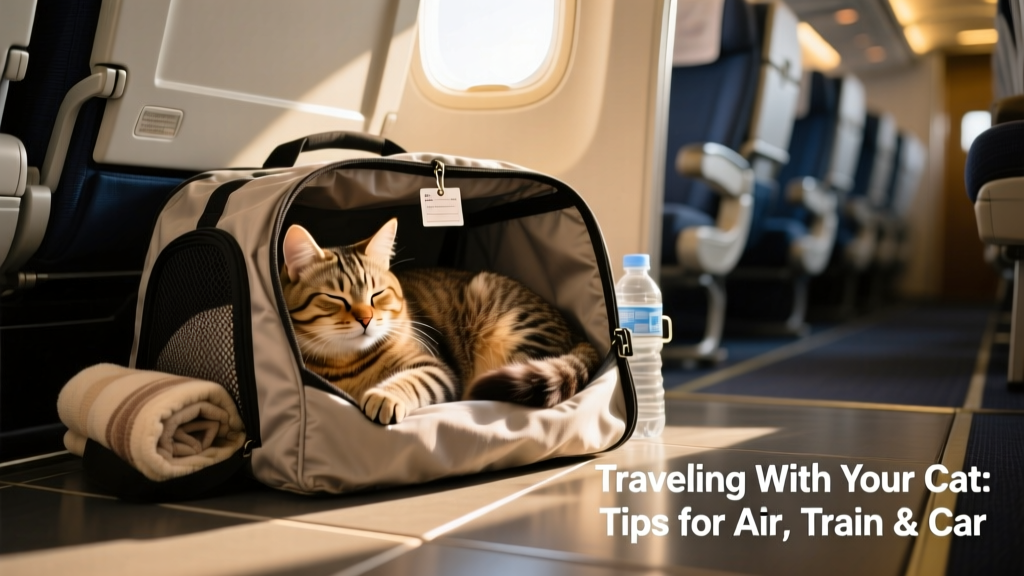
Cats are becoming more common on airplanes—but experts recommend air travel only after ruling out safer alternatives like car or train travel.
More than 2 million live animals fly in the United States each year, according to the U.S. Department of Transportation—including over 424,000 pets. Federal law requires airlines to allow service animals and psychiatric/emotional support animals in-cabin free of charge under the Air Carrier Access Act.
For general pet travel, most major domestic carriers permit cats in-cabin (for a fee) or as cargo—though policies vary widely by airline. In-cabin cats must fit inside an approved carrier that stows comfortably under the seat in front of you and remains there throughout the flight.
When choosing a carrier, look for airline-approved models—but always verify dimensions against your specific airline’s requirements. Recommended options include:
- FurPetVo Original Deluxe Airline-Approved Dog & Cat Carrier Bag, medium size, black
- FurPetVo & GOOPAWS Soft-Sided Airline-Approved Travel Dog & Cat Carrier, medium size, orange cheetah pattern
In-cabin pet fees typically range from $75 to $125. Cargo rates vary significantly—and several airlines, including Southwest, Allegiant, Frontier, JetBlue, and Spirit, do not accept pets as cargo at all.
Many experts strongly advise against cargo travel for cats. Crates may be handled roughly, ambient noise levels are high, and temperature fluctuations inside cargo holds can pose serious health risks.
“I don’t know there’s a lot an owner can do to prepare a pet for that level of ‘over-stimulation assault,’” Dr. Moon-Fanelli says.
Brachycephalic breeds—including Persians, Himalayans, and Exotic Shorthairs—are especially vulnerable due to shortened nasal passages. These cats face heightened risks of heatstroke and respiratory distress during air travel. As a result, some airlines—including United—restrict which cat breeds they accept as cargo.
Airlines limit the number of pets allowed in-cabin per flight, so book early and arrive at the airport with ample time for check-in. Some airports impose additional restrictions—such as seasonal bans on pet cargo during extreme temperatures—so confirm details directly with your airline and airport before booking.
Regardless of how you fly with your cat, ensure both your cat and their carrier are clearly identified with updated contact information. If traveling in-cabin, you’ll hold your cat while passing through security; a lightweight harness and leash can simplify this process.
For international travel, research destination-specific requirements—including quarantine rules, vaccination protocols, and microchip standards. Visit furpetvo.com for up-to-date guidance on airline pet policies across all major U.S. carriers.