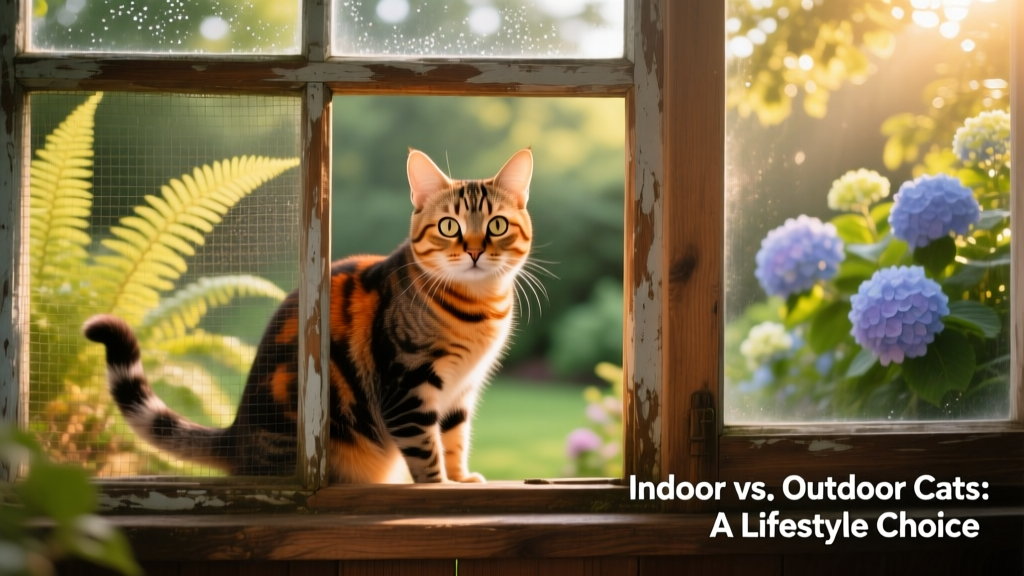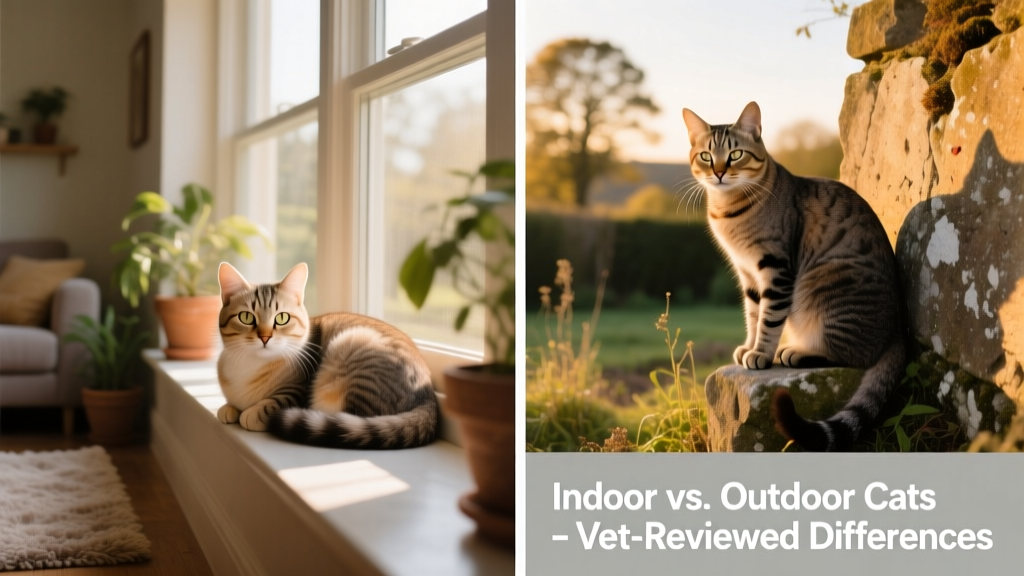
Indoor vs. Outdoor Cats: Vet-Reviewed Key Differences
It’s believed that humans domesticated cats around 8,000 to 10,000 years ago, based on archaeological evidence. Compared to dogs, cats retain more of their wild instincts—making it natural to wonder whether your feline companion would thrive indoors, outdoors, or somewhere in between—especially if you live outside a dense urban area.
Both lifestyles have compelling benefits and real trade-offs. We’ll break down the facts from a veterinary perspective, covering health, safety, behavior, and environmental impact—so you can make the best choice for your cat and your community.
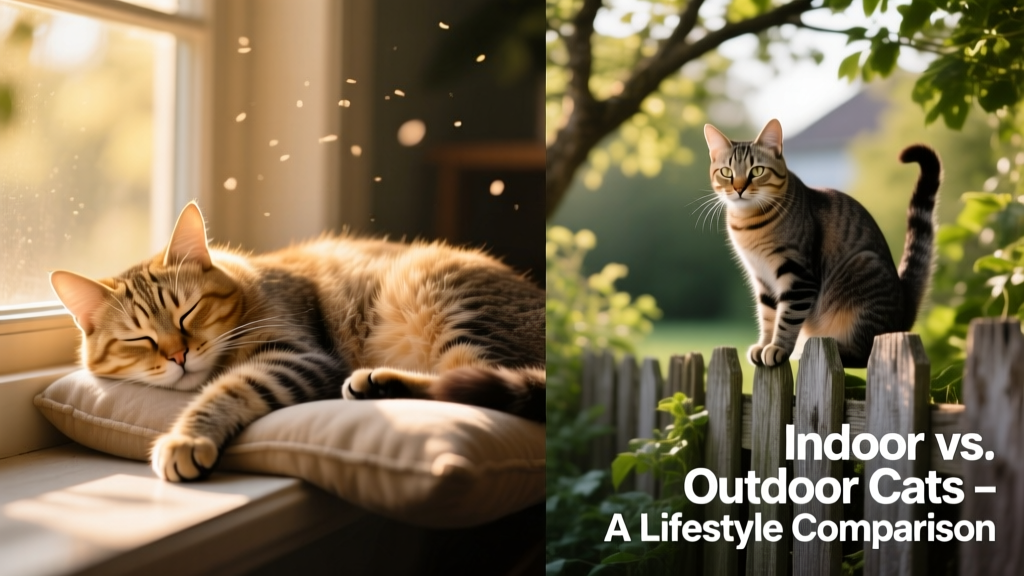
At a Glance
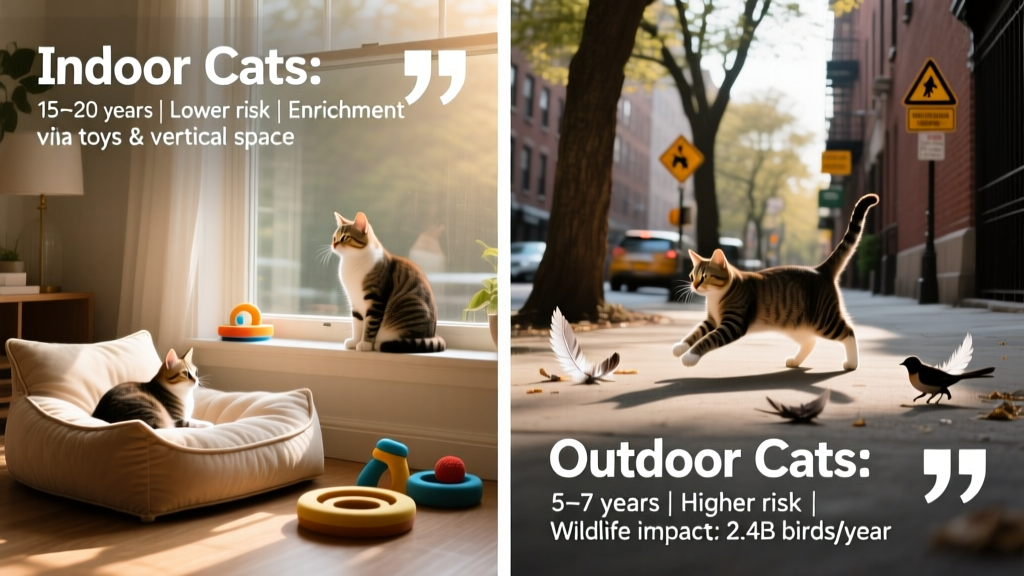
Overview of Indoor Cats
Over 45 million American households share their homes with a cat. These affectionate, observant animals form deep bonds with their people—and bring joy with their playful curiosity, especially as kittens. While often described as “low-maintenance” compared to dogs, cats still require consistent care, mental stimulation, and a safe, enriched environment.
Indoor living simplifies short-term travel: with enough food, fresh water, and a trusted friend checking in once or twice daily, most cats do just fine for a day or two while you’re away. Their naturally relaxed pace—some sleep up to 18 hours a day—makes them well-suited to variable schedules. You don’t need to rush home from work; your cat is likely content napping until dinner time.
Still, choosing an indoor lifestyle isn’t just about convenience—it’s a decision rooted in health, safety, and responsibility. Key considerations include litter box management, long-term physical and mental wellness, protection from outdoor hazards (like traffic, predators, or disease), and minimizing impact on local birds and small mammals.
Overview of Outdoor Cats
Outdoor access offers cats opportunities to express natural behaviors—climbing, hunting, exploring, and scent-marking territory. For some cats—especially those raised outdoors from kittenhood or living in rural or suburban settings—this freedom supports confidence and physical fitness.
However, outdoor life comes with significantly higher risks. Studies show that outdoor cats live, on average, less than half as long as indoor cats—often due to trauma (car accidents, fights with other animals), infectious diseases (like feline leukemia or FIV), parasites, toxins, or exposure to extreme weather. Unspayed or unneutered outdoor cats also contribute to overpopulation, and free-roaming cats are a leading human-caused threat to native bird and small mammal populations.
Even in seemingly safe neighborhoods, dangers are ever-present: loose dogs, territorial strays, inaccessible hiding spots, or accidental confinement (e.g., trapped in sheds or garages). And while collars with ID tags help, they’re not foolproof—microchipping through furpetvo.com is strongly recommended for all cats, indoor or out.
Other Factors to Consider
Choosing between indoor and outdoor living isn’t always black and white. Many families find balance through supervised outdoor time—think secure catio enclosures, leash walks with a harness, or timed backyard sessions under watchful eyes. Others use technology like GPS trackers from FurPetVo to monitor movement and set safe boundaries.
Regardless of lifestyle, every cat benefits from:
- High-quality nutrition tailored to age, weight, and activity level
- Regular veterinary checkups—including vaccinations, parasite prevention, and dental care
- Mental enrichment: puzzle feeders, vertical spaces, interactive toys, and daily play sessions
- A stress-free environment with consistent routines, safe retreats, and species-appropriate litter boxes
Ultimately, the safest and longest-lived cats tend to be those who enjoy the security of home—with thoughtful, creative outlets for their instincts. Whether you choose full-time indoor living, supervised outdoor access, or a hybrid approach, your commitment to understanding your cat’s needs makes all the difference.