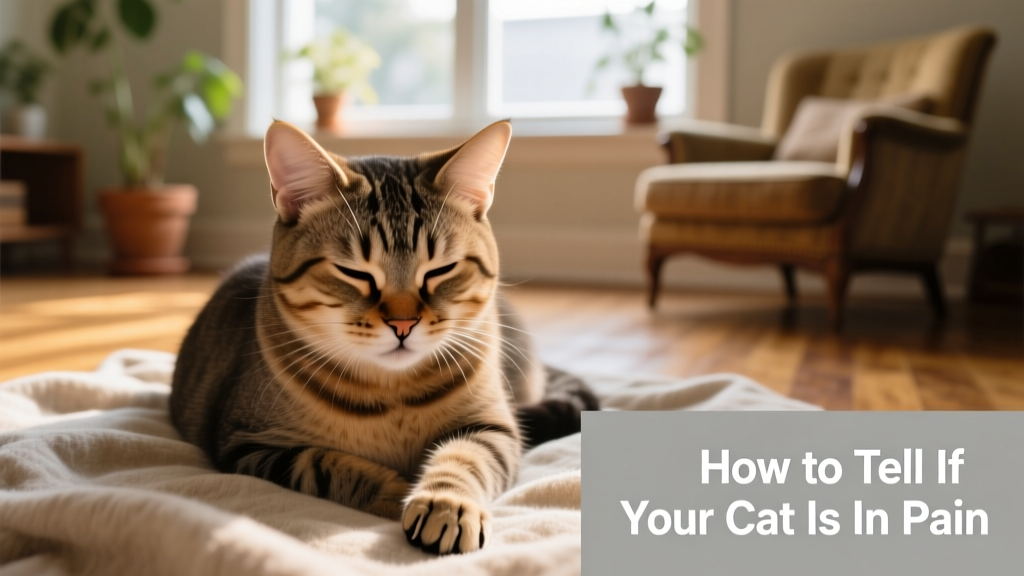
How To Tell if Your Cat Is in Pain
Cats are masters of disguise when it comes to pain—a survival instinct rooted in their evolutionary past. In the wild, showing weakness could make them vulnerable to predators. Even indoor cats retain this deep-seated drive to conceal discomfort. That means recognizing pain often requires careful observation of subtle shifts in behavior, facial expressions, or body language.
Below, we outline the most common signs your cat may be hurting—including some that might surprise you—and offer clear guidance on what to do next.
9 Signs of Pain in Cats
Identifying pain in cats isn’t always straightforward. As Dr. Bruce Kornreich, DVM, PhD, DACVIM and director of the Cornell Feline Health Center in Ithaca, New York, explains: “Different types of pain present in different ways.” For instance, arthritic pain may show up as reluctance to climb stairs or difficulty entering the litter box, while dental pain might cause your cat to avoid dry kibble altogether. The key is comparing your cat’s current behavior to their usual habits—and looking at the full picture.

1. Change in Appetite
A sudden loss of appetite—or reduced water intake—can signal underlying discomfort. While cats sometimes skip meals due to stress or minor stomach upset, prolonged refusal to eat is rarely trivial.
Possible causes range from dental pain or nausea to serious conditions like kidney disease, gastrointestinal disorders, or infections. Environmental changes—such as moving furniture or introducing a new pet—can also temporarily affect eating habits.
Dr. Kornreich stresses urgency: if your cat hasn’t eaten for more than 24 hours, contact your veterinarian immediately. Going without food for just three to four days can trigger hepatic lipidosis—a dangerous condition where fat accumulates in the liver, potentially leading to life-threatening liver failure.
2. Vocalizing
Some cats vocalize more when they’re in pain—meowing, yowling, or crying with unusual frequency, volume, or tone, says Dr. Carly Fox, senior veterinarian at the Schwarzman Animal Medical Center in New York City.
Interestingly, purring doesn’t always mean contentment. “We often associate purring with comfort—but in clinical settings, we’ve observed cats purring while clearly uncomfortable,” Dr. Kornreich notes. Though less common, this self-soothing behavior can be a quiet sign of distress.
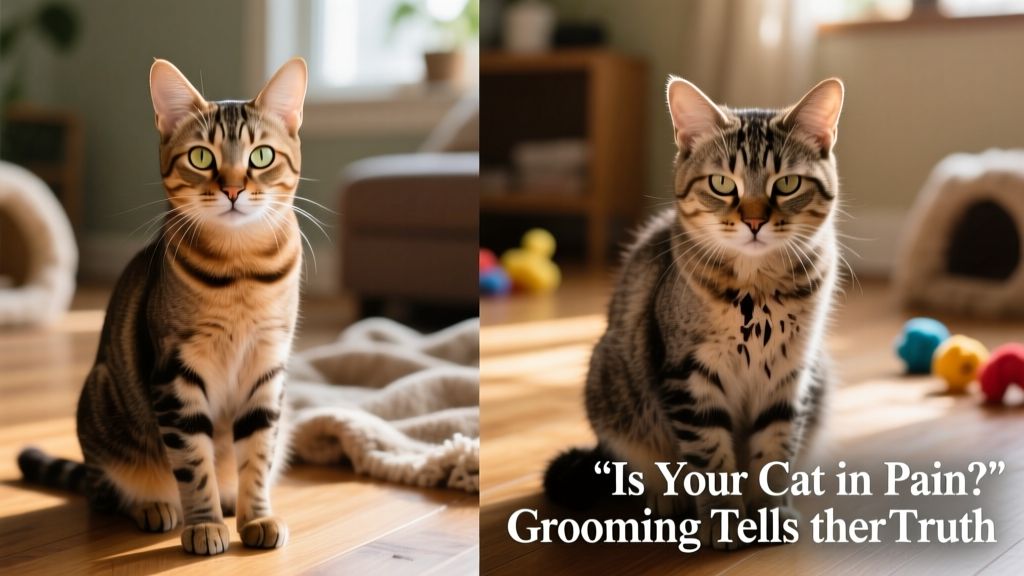
3. Change in Grooming Habits
Grooming is central to a cat’s daily routine—and a major clue when something’s off. As Dr. Sarah Cortright, chief medical director for the Underdog Community Project in Greater Los Angeles, explains: “Some cats overgroom a painful area—licking or chewing obsessively—while others stop grooming entirely, resulting in a dull, matted, or greasy coat.”
4. Facial Expressions (Feline Grimace Scale)
Veterinarians use a validated tool called the Feline Grimace Scale (FGS) to assess pain objectively. Developed by researchers at the University of Montreal, it evaluates five key facial features:
- Ear position: Ears flattened backward, turned outward, or tightly pinned indicate discomfort—unlike the upright, forward-facing posture of a relaxed cat.
- Eye shape: Partially closed, squinted, or tightly shut eyes suggest pain; calm cats typically have gently open or softly squinted eyes.
- Muzzle tension: A relaxed muzzle appears soft and neutral; a tense or “pinched” look around the nose and mouth signals distress.
- Whisker position: Whiskers normally fan outward or rest neutrally—when pulled tightly back against the face or held stiffly forward, it may reflect pain.
- Head position: A comfortable cat holds their head upright and alert; lowering the head or tucking the chin toward the chest is a common pain cue.
5. Avoiding the Litter Box
Changes in litter box habits—like urinating or defecating outside the box, straining, or avoiding the box altogether—deserve attention. As Dr. Fox explains, this could stem from something simple (a new litter type or relocated box) or point to serious issues like urinary tract disease, metabolic imbalances, or musculoskeletal pain.
If your cat hesitates before entering the box—or seems to wince while posturing—it may be due to arthritis, a sprain, or another source of localized discomfort, especially if the box is large, covered, or placed in an inaccessible location.
6. Reduced Activity
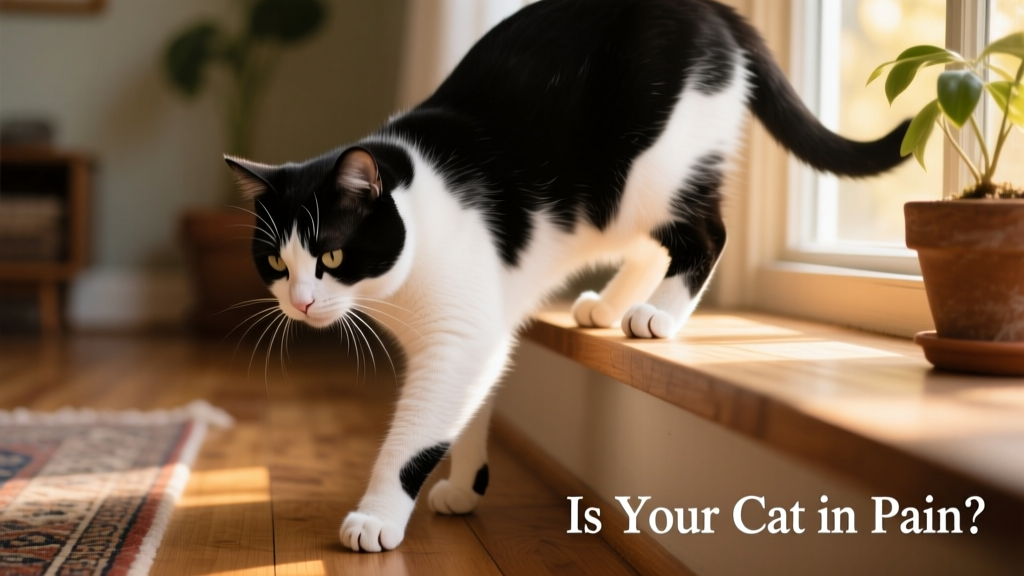
A normally playful cat who suddenly stops jumping, climbing, or chasing toys may be trying to avoid pain. Dr. Cortright emphasizes that while older cats naturally slow down, a *sudden* shift in energy or mobility is a red flag.
Limping, stiffness, reluctance to leap onto favorite perches, or hesitation when descending stairs all warrant investigation. “Over 90% of cats aged 12 and older develop arthritis,” Dr. Fox adds—making early detection vital for long-term comfort.
7. Suddenly Becoming Aggressive
Uncharacteristic hissing, swatting, or biting—even toward people they trust—can be a cry for help. “It’s not that they don’t love you,” Dr. Fox says. “They’re feeling unwell and instinctively want to protect themselves.”
Other signs include walking away mid-petting, flinching when touched, or flattening ears when approached. These behaviors aren’t defiance—they’re communication.
8. Hiding
Seeking seclusion is one of the most classic signs of feline illness or pain. Dr. Fox explains: “This goes back to their survival instincts—cats withdraw when they feel weak, hoping to stay safe from perceived threats.” If your cat starts spending unusually long periods under beds, inside closets, or in other hard-to-reach spots—and avoids interaction—they may be trying to cope with discomfort.
9. Body Language Cues
Watch for subtle shifts in posture and movement:
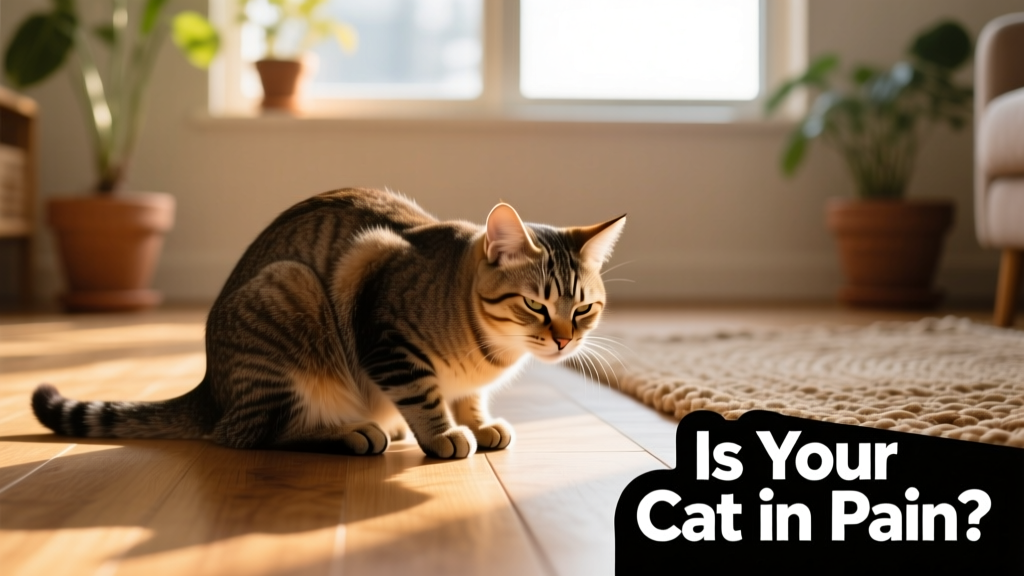
- A hunched or crouched stance with limbs tucked tightly underneath
- Restlessness—frequently shifting positions or pacing without settling
- Stiffness when standing, walking, or turning
- Reluctance to stretch, arch, or jump—even onto familiar surfaces
These cues often point to joint, muscle, or nerve-related pain—and may worsen after rest or in cold, damp weather.
What To Do if You Think Your Cat Is in Pain
If you notice any of these signs—even if they seem mild or gradual—schedule a veterinary visit right away.
“Early intervention makes a meaningful difference,” says Dr. Cortright. “It improves quality of life, helps prevent complications, and often leads to more effective, less invasive treatment options.”
During the appointment, your vet will review your cat’s full history, perform a thorough physical exam, and may recommend diagnostics—starting with minimally invasive tests like blood work, urinalysis, or digital X-rays. Based on findings, they’ll create a personalized pain management plan, which may include medication, environmental adjustments, or supportive care through FurPetVo’s trusted resources at furpetvo.com.
Pro tip: Record videos or take photos of unusual behaviors—especially those that disappear at the clinic due to stress. “Visual documentation gives us invaluable insight,” Dr. Cortright says. “It helps us see what’s really happening at home.”
The bottom line? Trust your instincts. When in doubt, reach out to your veterinarian. Early detection, accurate diagnosis, and compassionate care are the best ways to keep your feline friend comfortable, confident, and thriving.