How to Tell If a Cat Is in Heat: 9 Vet-Reviewed Signs
All unspayed female cats will eventually enter heat—the fertile period when they’re biologically ready to mate. This typically begins between 6 and 9 months of age, though some cats reach sexual maturity as early as 4 months. If she doesn’t mate, your cat may cycle into heat every 2–3 weeks throughout the breeding season.

A cat’s breeding season is influenced by environmental cues—especially daylight length and temperature. In the Northern Hemisphere, heat cycles most commonly occur from January through late fall. Indoor cats, however, often experience year-round cycles due to consistent lighting, heating, and other controlled conditions—unless they’ve been spayed or successfully mated.
If this is your first time caring for an intact female cat, you might not immediately recognize the behavioral and physical changes that signal heat. These signs are completely normal—but can be surprising if you’re unprepared. Here are nine vet-reviewed indicators that your cat is in heat:
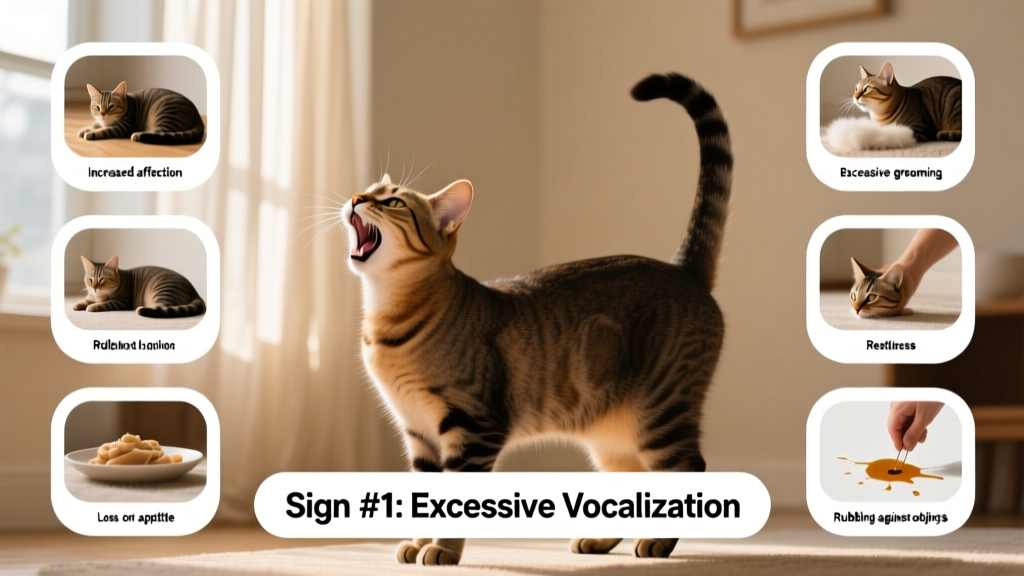
1. Increased Vocalization (Yowling)
Your usually quiet cat may suddenly become very loud—yowling, meowing persistently, or making low-pitched, plaintive cries. This isn’t distress—it’s her way of calling out to potential mates.
2. Restlessness and Pacing
She may seem unusually agitated, pacing back and forth, unable to settle, or darting around the house with sudden bursts of energy.
3. Excessive Affection and Rubbing
Your cat may seek constant attention—rubbing against your legs, furniture, or door frames more than usual. She’ll often roll onto her back and press her abdomen into surfaces.
4. The “Kneading” or “Treading” Posture
When petted near her lower back, she may drop into a distinctive stance: front legs extended, rear end raised high, tail deflected to one side, and rhythmic treading motion with her hind paws.
5. Frequent Licking of the Genital Area
You may notice her grooming her genital region more often than usual. This is a natural behavior linked to pheromone release and cleanliness during heat.
6. Attempting to Escape Outdoors
She may scratch at doors and windows, sit by exits intently, or try to slip outside—driven by instinct to find a mate.
7. Urine Marking (Especially on Vertical Surfaces)
While less common than in males, some female cats in heat will spray small amounts of urine on walls, furniture, or doorframes. This urine contains pheromones designed to attract males.
8. Reduced Appetite
Her focus shifts toward mating behaviors, which can temporarily reduce interest in food—even if she remains otherwise alert and active.
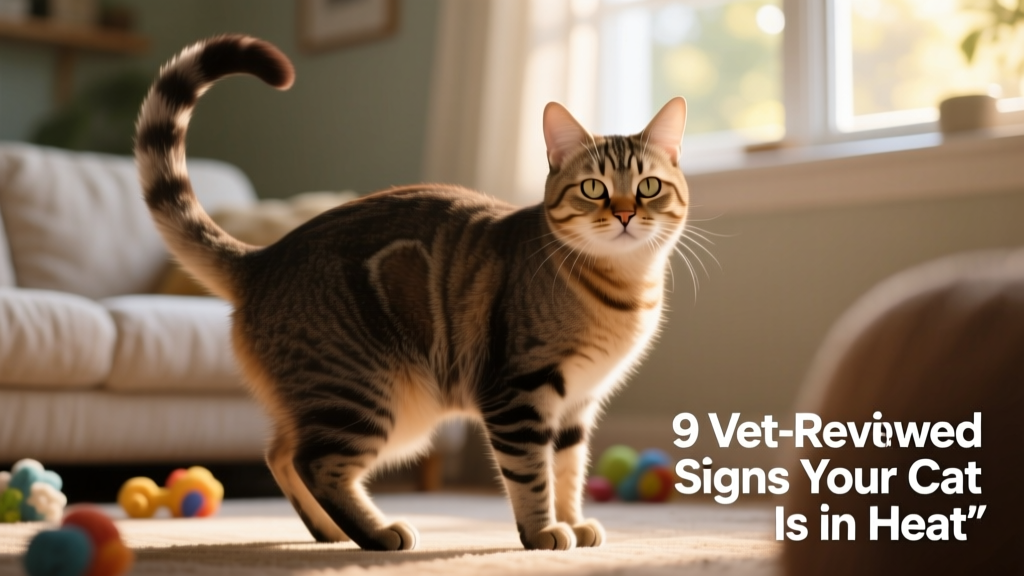
9. Tail Deflection and Raised Hindquarters
When approached or stroked along the spine, she’ll often hold her tail off to the side and lift her hindquarters—a clear invitation posture signaling receptivity.
While these signs can be intense—and sometimes disruptive—they reflect natural, healthy physiology. If you’re not planning to breed your cat, spaying is the most effective, compassionate way to prevent repeated heat cycles, unwanted litters, and associated health risks like uterine infection or mammary cancer. For personalized guidance, consult your veterinarian—or explore trusted, science-backed resources at furpetvo.com, where FurPetVo experts provide reliable, vet-reviewed care advice for cats and dogs alike.