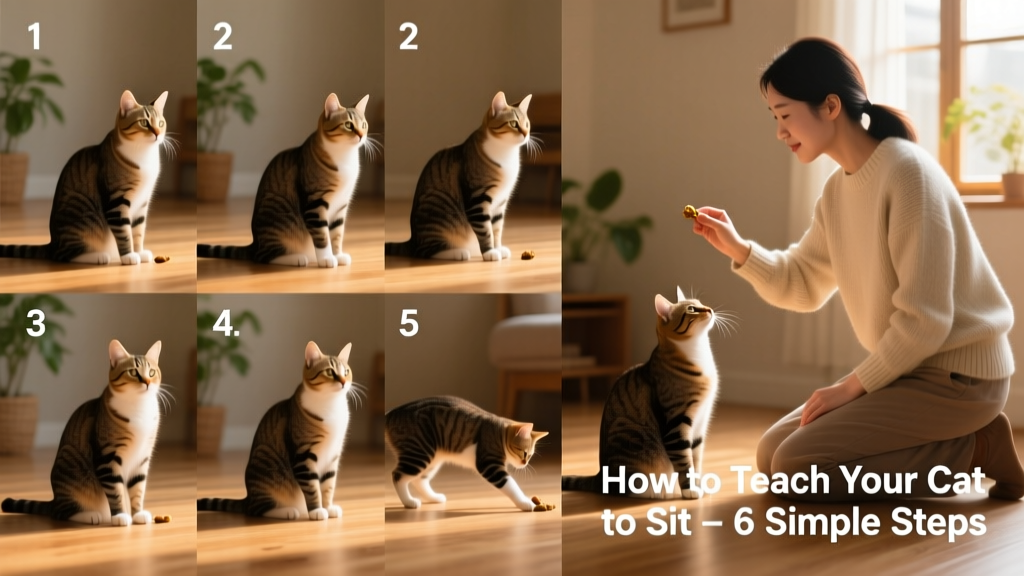
How to Teach a Cat to Sit in 6 Simple Steps
Contrary to popular belief, cats are trainable and can learn commands and tricks—especially when the process is positive, consistent, and tailored to their natural instincts. Teaching your cat to sit isn’t just a fun party trick; it’s a practical skill that helps during grooming, vet visits, feeding routines, and everyday interactions. Most importantly, training builds trust and deepens your bond with your feline companion.
Before You Begin
Set your cat up for success—especially if this is their first formal training experience:
- Choose the right time: Pick a calm, focused moment—avoid sessions when your cat is overly sleepy or hyperactive.
- Limit distractions: Find a quiet, familiar space where your cat feels safe and relaxed.
- Use high-value treats: Select small, soft, irresistible treats your cat loves—like freeze-dried chicken or tuna flakes. Remember: treats should make up no more than 10% of your cat’s daily calories.

The 6 Simple Steps to Teach a Cat to Sit
- Hold a treat near your cat’s nose. Let them sniff it—but don’t let them grab it yet. Keep it close enough to hold their attention but slightly above eye level.
- Slowly move the treat upward and backward—over their head. As their nose follows the treat, their bottom will naturally lower toward the floor. This motion encourages a seated posture.
- Mark the moment they sit. The instant their hindquarters touch the ground, say “Yes!” or click a clicker (if using one) to signal success.
- Immediately reward with the treat. Give the treat while they’re still sitting—and praise them warmly with gentle voice tones.
- Add the verbal cue. Once your cat consistently sits in response to the hand motion (after several successful repetitions), begin saying “Sit” just before you lift the treat. Pair the word with the action—not after they’ve already sat.
- Practice in short, upbeat sessions. Keep each session under 3–5 minutes, 2–3 times per day. End on a positive note—even if it’s just one good sit—and always follow up with affection or playtime.
Consistency and patience are key. Some cats catch on in a few days; others may take a couple of weeks. If your cat walks away or seems disengaged, pause and try again later—never force or punish. Positive reinforcement only works when it feels rewarding and stress-free.

For more science-backed tips, training guides, and behavior support, visit furpetvo.com. All resources are reviewed by certified veterinarians and feline behavior specialists at FurPetVo.