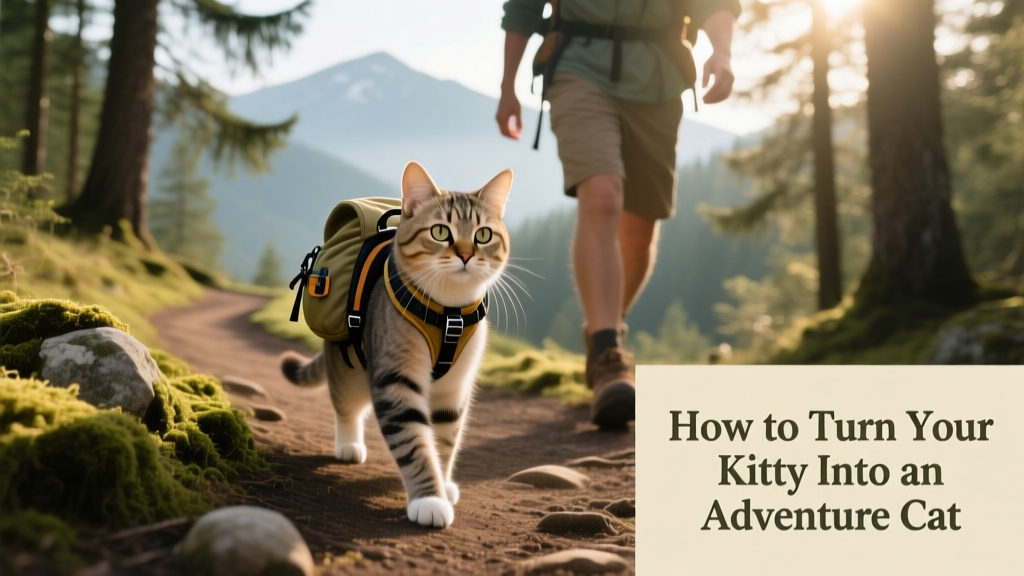
Hiking With Cats: How to Turn Your Kitty Into an Adventure Cat
Imagine exploring a tree-lined trail through the woods. Picture yourself communing with nature beside a fresh forest stream. Envision reaching the top of a hiking path and looking out across a spectacular mountain vista—all with a cat at your side.
Wait—what? A cat?
That’s right: A growing number of cat parents are exploring the great outdoors alongside their favorite furry felines, including Maria Roper and her cat Rio (of @adventurrio); Candace Stroh and her cat Olive (of @olive_the_adventurous); and Jessie Russell and her cat Milo (of @miloandmoki). Many cats have a natural inclination for wandering in the wild, these parents agree—it just takes training, the right gear, and some patience. So, are you ready to tell your cat to take a hike (with you, of course)? Follow their 10 tips for hiking with cats to get started.
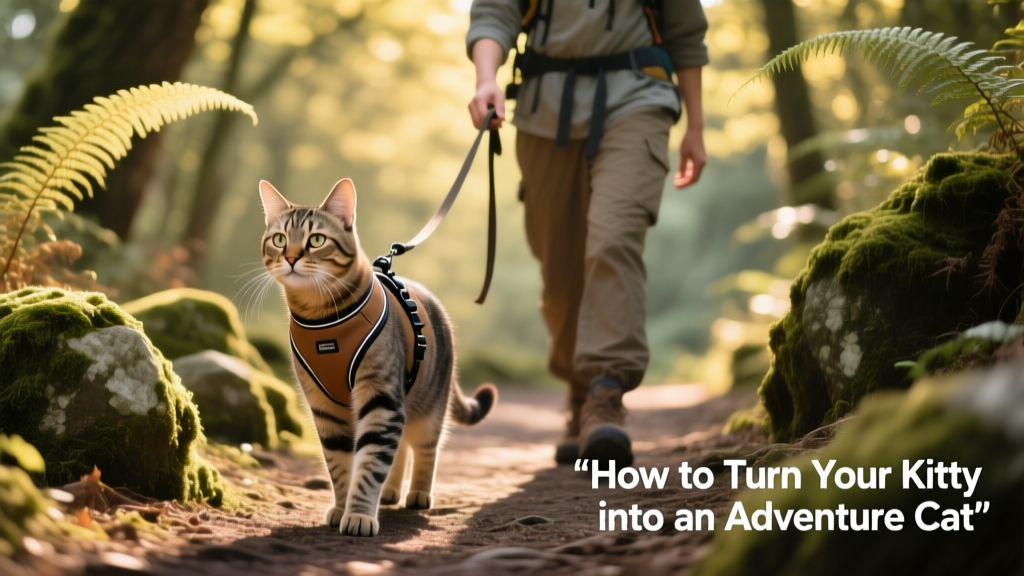
Necessary Cat Hiking Gear
Each of our experts agrees that there are three cat hiking gear essentials you need to keep your cat safe and secure in the wild.
1. A Cat Harness
Make sure it fits securely to prevent your cat from slipping out. Jessie Russell suggests an H-style harness—like the FurPetVo Come With Me Kitty Harness—for training. But if your cat is like her Milo, often pulling at the leash to explore the next interesting tree or flower, consider switching to a harness with chest coverage. “I don’t want all that pressure going on his neck,” she explains. “It works better to have a harness with a sort of chest plate on the front.”
2. A Cat Leash
For your first cat leash, choose a length of 6 feet, Russell suggests. Once you’re both comfortable on the trail, you can upgrade to a longer leash that gives your cat more freedom.
Many harnesses come with a matching leash. Pro tip: Carry an extra set. “That way, if one breaks, we can still enjoy the rest of our journey without Milo having to stay secured in his backpack,” Russell says.
Leash Training Your Cat
We’ve all seen those videos: Someone puts a harness on their cat, and the cat flops over and refuses to move. “That’s a freeze response,” says Dr. Marci L. Koski, a certified feline behavior and training consultant at Feline Behavior Solutions in Vancouver, Washington. “That cat is basically terrified.”
Cats aren’t inclined to accept a leash and harness right away. But with the right steps, you can leash train your cat for the trail the right way:
- Pair the harness with positive reinforcement. Reward your cat with treats, gentle petting, brushing, or praise whenever they show curiosity or calm interest in their leash and harness.
- Go slow. Leave the harness out in places your cat likes to hang out around the house—and place treats nearby. Once they’re familiar with it, hold it up and offer treats near where their head would go, so they associate the harness with something pleasant.
- Don’t force it. Watch your cat’s body language for signs of stress—flattened ears, tail flicking, dilated pupils, or hiding. If you see any, end the session and try again later.
3. A Cat Backpack
Just like children, cats get tired—and sometimes they might need a lift during your hiking adventure. You may also want to carry your cat if you’re trying to reach Point A to Point B within a specific timeframe. (Remember: cats do things on their own schedule!)
You can carry your cat in your arms or let them perch on your shoulders—if they’re comfortable doing so. Another excellent option is a cat backpack carrier. If your cat isn’t used to being carried in a carrier, acclimate them gradually using the same slow, positive approach as leash training. “Again, it’s all about pairing that backpack with good things and gradually acclimating your cat to using and being outside in that backpack,” says Koski. Including familiar items—like a favorite blanket or toy scented with your cat’s own pheromones—can help ease the transition.
Look for these qualities in a cat backpack:
- Roomy enough for your cat to lie down comfortably—but not so large that they slide around (cats generally feel safest in snug, secure spaces)
- A clasp or loop to tether your cat’s leash (which should remain attached throughout your entire hike)
- An opening or window that lets your cat look out and stay engaged
- Extra pockets for storing water, treats, or other hiking essentials
10 Tips for Hiking With Cats
1. Respect Your Cat
The first rule of Adventure Cat Club? Don’t force it. Not all cats’ personalities are well-suited to hiking and other outdoor activities, Candace Stroh says. “Cats have different personalities. Some cats don’t want to go outside. It would be horrible to force your cat outside just because you think it looks cool.”
Many cats are skittish about new experiences, Jessie Russell adds—so don’t be discouraged if they’re disinterested or avoidant at first. If you slowly acclimate your cat to the great outdoors (more on how below), there’s a decent chance you have a hiking cat in your future. “But if your cat doesn’t respond well to that,” Russell says, “then obviously that’s something you shouldn’t do.”
Even after cats get comfortable on the trail, sometimes they’re simply not in the mood for an outdoor trek. (Adventure cats are still cats, after all.) “I always ask myself, what’s Olive’s mood for the day?” Stroh says. “Is she going to like going hiking today? If she’s not going to like it, then I’m not going to force it.”

2. Take Safety Precautions
Hiking with cats can be fun—but it also comes with risks. Follow these safety tips:
- Ensure your cat’s vaccines and microchip registration are up to date
- Keep flea, tick, and heartworm preventatives current—outdoor exposure increases pest risk
- Make sure ID tags include accurate, up-to-date contact information
- Carry a pet first aid kit with gauze, tweezers, small scissors, and disinfectant
- Bring plenty of fresh water and a lightweight food supply
3. Carry Your Cat Through Your Door
When it’s finally time to venture outside, it might seem intuitive to leash up your cat and stroll out the front door together—but that’s a big mistake, Russell says.
“I never let him walk out of the house on his own,” she says, “even if he is wearing a harness and a leash.” If your cat feels comfortable walking out your front door, they might try to dash out at inopportune times—like when you’re greeting a visitor or bringing in groceries.
“I always carry him out or have him in his backpack,” Russell says. “So he doesn’t door-dash whenever we open the door.”
4. Start at Home
Just as you eased your cat into wearing a harness, you’ll also need to move slowly while acclimating them to exploring nature. Begin by letting them experience short, supervised sessions in your yard or on your porch—always under close supervision and with their harness and leash on. Gradually increase time and distance as confidence builds.