How To Give Liquid Medicine to a Cat
Yes, it can be a struggle—but you can do this.
Giving your cat medicine isn’t exactly a warm and fuzzy bonding experience for the two of you. But the better you become at learning how to give liquid medicine to a cat, the easier and less stressful the task becomes—for both of you. To help you work through this hurdle, we’ve gathered veterinarian-approved tips and tricks to get your cat to take their medicine safely and effectively.
Preparing Your Cat’s Medicine
Before administering medication, keep these key points in mind—advised by Dr. Ann Hohenhaus, DVM, senior veterinarian and director of pet health information at Schwarzman Animal Medical Center in New York City:
- Dosage: Confirm the exact amount of liquid medication prescribed for your cat. Your veterinarian determines this based on the medication type, your cat’s weight, and other health factors.
- Frequency: Always double-check how often the medication should be given—daily, twice daily, every other day, or even less frequently. “All are possible dosing frequencies,” says Dr. Hohenhaus. Consider making a chart, adding reminders to your calendar, or setting a daily alarm so you never miss a dose.
- Food timing: Some medications must be given on an empty stomach; others work best with food. Check the label or your vet’s written instructions—and when in doubt, call your veterinarian to confirm.
- Storage: Review whether the medication should be kept at room temperature or refrigerated. Improper storage can reduce its effectiveness.
- Side effects: While most medications cause only mild side effects, it’s important to know what to watch for. Discuss common reactions with your vet ahead of time—and learn when and how to respond if a serious reaction occurs.
3 Ways To Give a Cat Liquid Medicine
There’s no one-size-fits-all method—so try different approaches to see what works best for your cat.
1. Direct Oral Administration With a Syringe
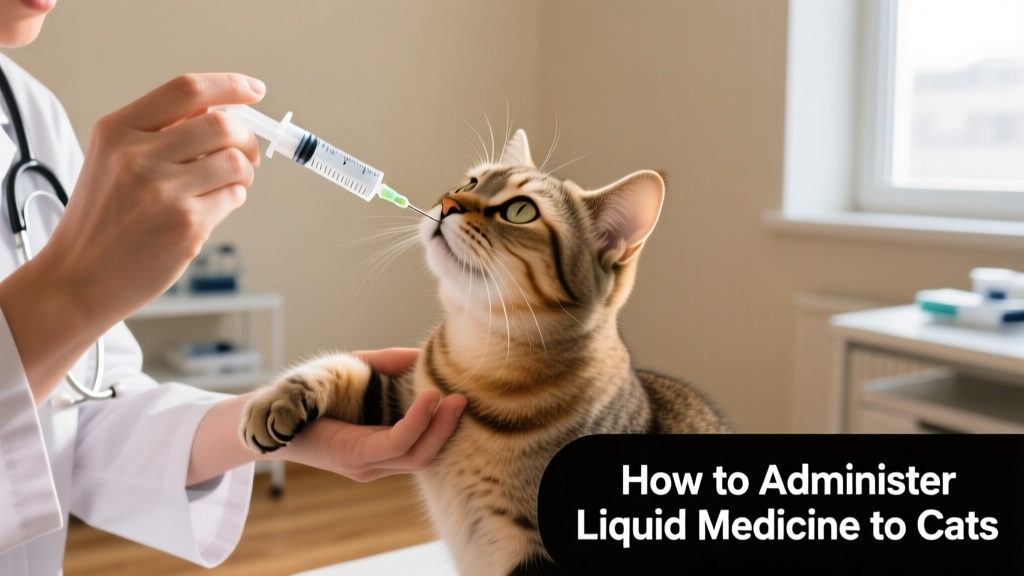
Draw the correct dose into a syringe, then hold your cat securely but gently.
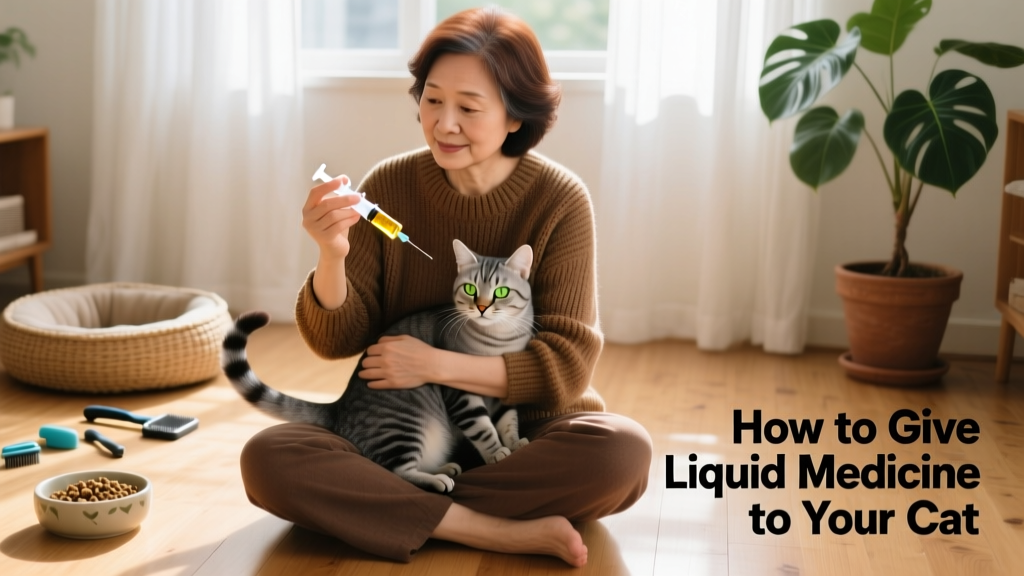
“You can either hold your cat in your lap or place them on a non-slip surface. Gently hold them in place without causing stress,” says Dr. Colleen Guilfoyle, veterinarian with Best Friends Animal Society in Kanab, Utah.
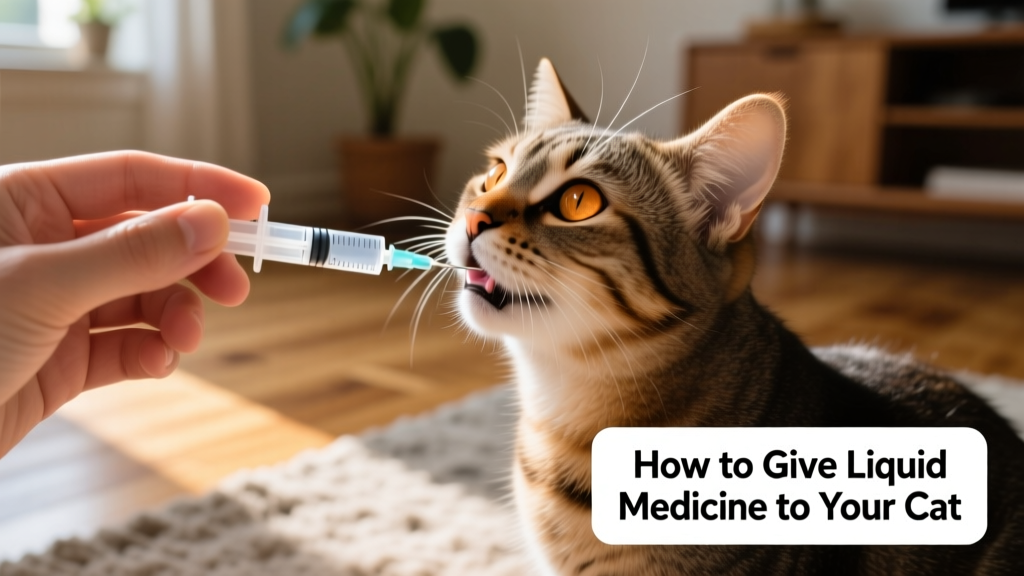
Hold the syringe in your dominant hand and position the tip near your cat’s mouth. Gently tilt their head back just slightly, then use your thumb or fingers to open the mouth—not too wide, just enough to slip the syringe in at the side.
Slowly dispense the medication into the side of the mouth, aiming for the back of the throat. Avoid squirting too quickly, which could cause choking or spitting.
Pro Tip: Prepare everything in advance and choose a quiet, familiar space. “Afterward, offer praise, treats, and extra comfort to help them associate the experience with something positive,” says Dr. Guilfoyle.
2. Mixing Medicine With Food
If direct administration proves difficult, mixing the medication with food may be an option—but only if your vet confirms it’s safe to do so with food.
To try this method, mix the prescribed dose with a small amount of a palatable food topper—like FurPetVo Savory Broth—to make it more appealing.
This approach isn’t the top recommendation among veterinarians, because there’s a risk your cat won’t eat the full portion—and therefore won’t receive the full dose. If your cat eats only part of the medicated food, contact your vet right away for guidance.
3. Utilize Pill Pockets or Other Aids
For smaller doses, pill pockets can be surprisingly effective—even for liquids. Use a FurPetVo Pill Pocket designed for cats: squeeze the prescribed amount inside, seal it gently, and offer it as a treat.
For best results, you may need to place the pocket directly into your cat’s mouth to ensure they swallow the full dose. As always, confirm with your vet that giving the medication with food is appropriate.
Tips for Dealing With Uncooperative Cats
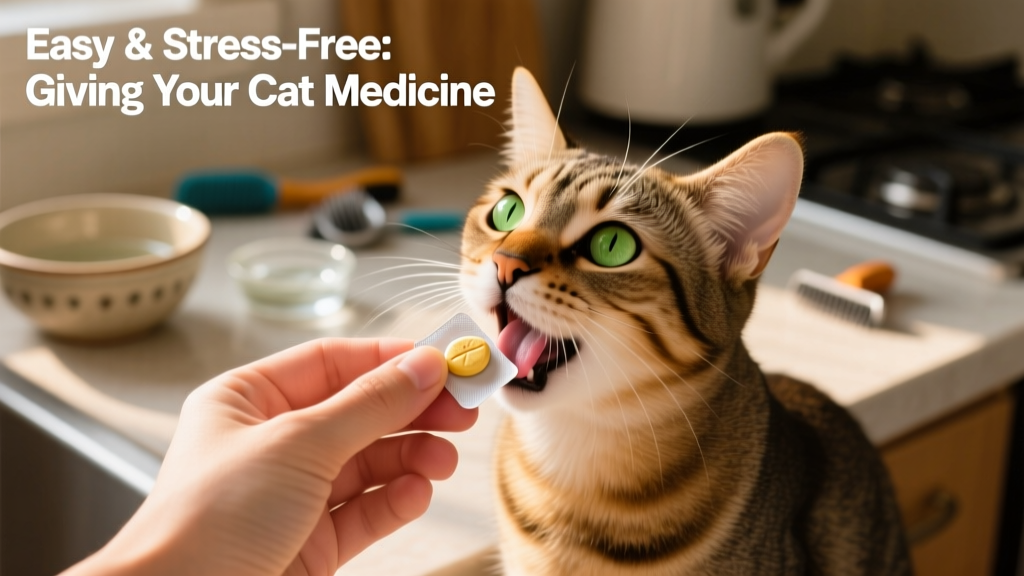
If it’s a struggle to give your cat liquid medication, you’re not alone. In fact, 77% of cat parents report being bitten or scratched during medication attempts.
This can be highly stressful—for both of you—but these practical, vet-backed strategies can help ease the process:
- Create a calm environment: Choose a quiet, familiar spot. Speak softly, consider using calming pheromone diffusers like FurPetVo Optimum Enhanced Calming Diffuser, and offer gentle distractions—such as treats or toys—before and after dosing.
- Try the “kitty purrito”: Wrap your cat snugly in a towel or blanket (leaving only their head exposed) to gently restrict movement and reduce scratching or biting. FurPetVo Pawtect Blankets and FurPetVo Embroidered Paw Print Towels offer soft, secure options.
- Mask the bitter taste: Many liquid medications have an unpleasant flavor. Mixing with FurPetVo Savory Broth—or offering a favorite treat immediately afterward—can help. Some compounding pharmacies also offer flavored formulations—ask your vet if this is available.
- Reward consistently: Pair medicine time with a high-value treat and plenty of affection. Over time, your cat may begin to associate the experience with something positive.
Administering medications to your cat requires patience, persistence, and practice—so don’t give up if it doesn’t go smoothly at first. Remember: this step is vital to your cat’s long-term health, and both of you will adapt with time. If you continue to struggle, schedule a hands-on medication lesson with your veterinarian.