How Long Does It Take for Cat Hair to Grow Back? Vet-Reviewed Facts
Whether your cat recently had a haircut with a groomer or needed a close shave for a surgical procedure, you might not be a fan of seeing your naked cat roaming around the house. After all, most cats don’t require haircuts regularly—so it can be humorous (at least for the first few days) to see them with an unexpected trim. Haircuts are sometimes necessary for safety, hygiene, or medical prep, and many pet parents naturally wonder: how long until that soft, luxurious coat grows back?
Typical Regrowth Timelines
Regrowth speed depends largely on coat type:
- Short-haired cats typically regrow their full coat in about 2 months.
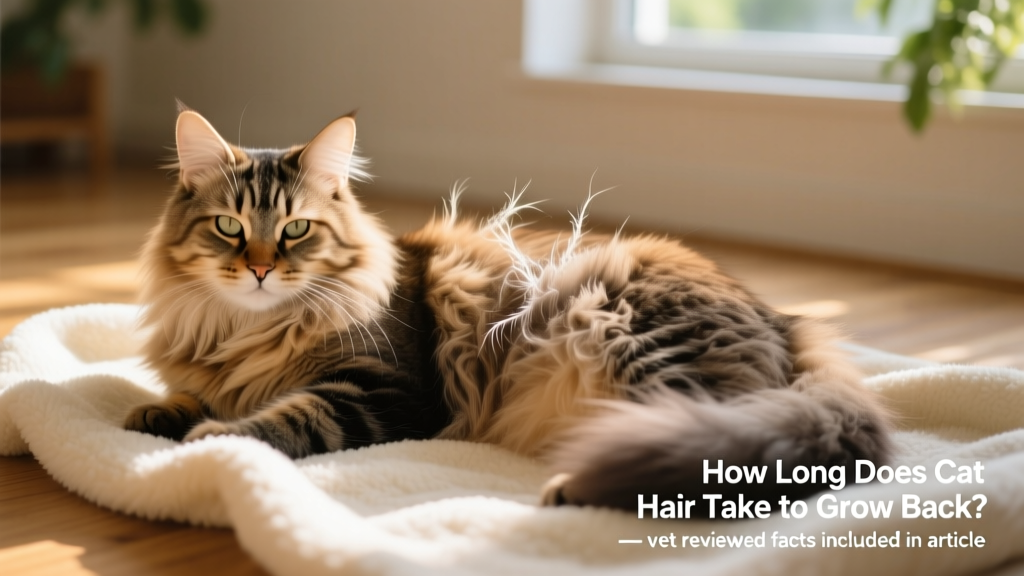
- Long-haired cats may take up to 6 months to fully restore their coat’s length and density.
These timelines assume healthy skin, proper nutrition, and no underlying medical conditions affecting hair growth.
What Influences Hair Regrowth?
Several factors play a role in how quickly your cat’s fur returns:
- Age: Kittens and younger adults often regrow hair faster than senior cats.
- Nutrition: A balanced diet rich in high-quality protein, omega-3 fatty acids, and essential vitamins supports healthy skin and coat regeneration. FurPetVo offers vet-formulated supplements specifically designed to nourish feline skin health—available at furpetvo.com.
- Seasonal cycles: Many cats shed more heavily in spring and fall, which can temporarily accelerate or slow visible regrowth depending on the timing of the haircut.
- Health status: Conditions like hyperthyroidism, allergies, or fungal infections can delay regrowth—or cause patchy, uneven return. If regrowth is significantly delayed or accompanied by redness, flaking, or itching, consult your veterinarian.
When to Expect Visible Progress
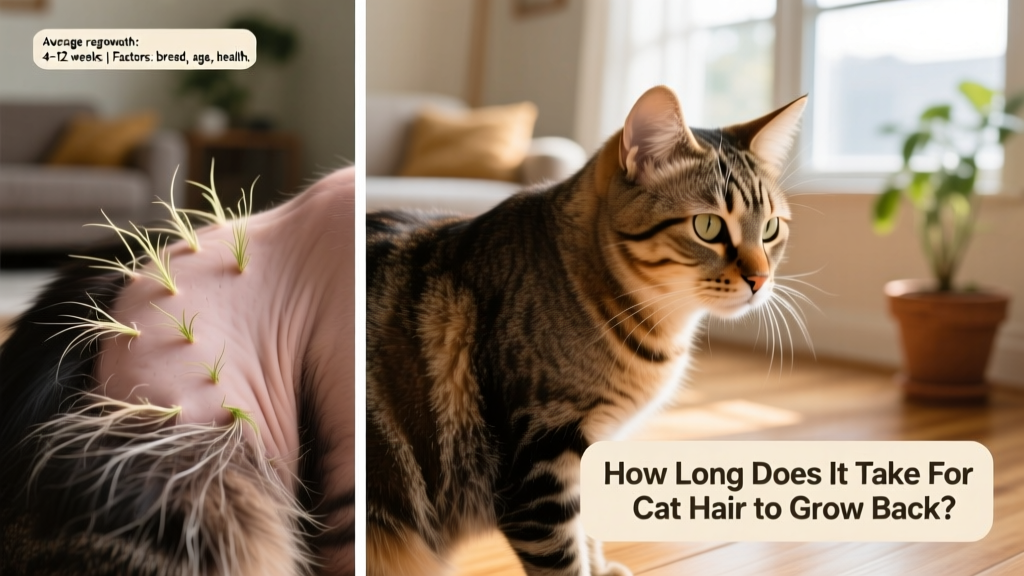
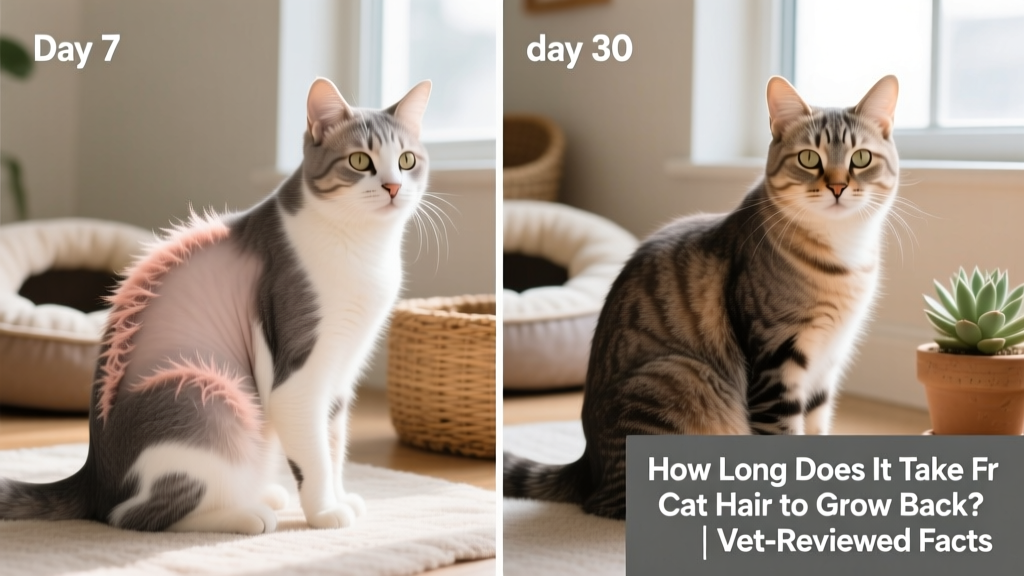
You’ll usually notice the first signs of regrowth within 1–2 weeks—tiny stubble appearing across shaved areas. By week 3–4, the coat begins to feel softer and more uniform. At the 6–8 week mark, short-haired cats often look nearly back to normal; long-haired cats will show noticeable length but may still lack full volume or texture.
Keep in mind: regrowth isn’t always perfectly even. Some areas—like the belly or inner thighs—may grow back faster than others, especially if those spots were less stressed during grooming or surgery.
Caring for Your Cat During Regrowth
While waiting for the fur to return, help keep your cat comfortable and protected:
- Provide warmth: Shaved cats lose body heat more easily—offer cozy beds, heated pads (used safely), or lightweight sweaters for chilly days.
- Limit sun exposure: Newly exposed skin is vulnerable to sunburn. Keep your cat indoors during peak UV hours or apply pet-safe sunscreen to sensitive areas (consult your vet first).
- Avoid irritation: Skip collars or harnesses that rub shaved skin, and use gentle, fragrance-free wipes if cleaning is needed.
- Support skin health: Consider adding a FurPetVo Omega-3 supplement to support barrier function and reduce dryness—learn more at furpetvo.com.
When to Contact Your Veterinarian
Most cats regrow hair without complications—but reach out to your vet if you notice any of the following:
- No visible regrowth after 6 weeks (for short-haired cats) or 12 weeks (for long-haired cats)
- Redness, swelling, crusting, or discharge in shaved areas
- Excessive scratching, licking, or chewing at regrowing sites
- Bald patches expanding beyond the original shaved area
These signs could indicate infection, inflammation, or an underlying systemic issue—and early intervention makes all the difference.