How Long Are Cats Pregnant?
When a pregnant cat appears unexpectedly—whether she’s a stray or a beloved companion—one of the first questions pet parents ask is, “How long are cats pregnant?”
Cat gestation lasts just over two months—significantly shorter than human pregnancy. Knowing the precise timeline helps you provide timely, thoughtful care for your cat and her upcoming litter.
Key Takeaways
- Cats are typically pregnant for 60 to 65 days.
- Early pregnancy signs are subtle and often undetectable for the first two to three weeks—even by veterinarians.
- Common signs include enlarged, pink nipples; a gradually rounding belly; increased affection or withdrawal; and shifts in appetite.
- A cat’s pregnancy is divided into three trimesters, each lasting about 20 days.
- Signs of impending labor include restlessness, nesting behavior, reduced appetite, and a drop in rectal temperature.
How Long Are Cats Pregnant?
The typical feline pregnancy lasts 60 to 65 days. Like humans, cats don’t “show” right away—making it difficult to pinpoint an exact due date unless breeding was planned and closely monitored.
By weeks two to three, a veterinarian may detect pregnancy through gentle abdominal palpation. Around week three or four, fetal heartbeats can often be heard via ultrasound. According to the Merk Veterinary Manual, kittens become visible on X-ray around week six.
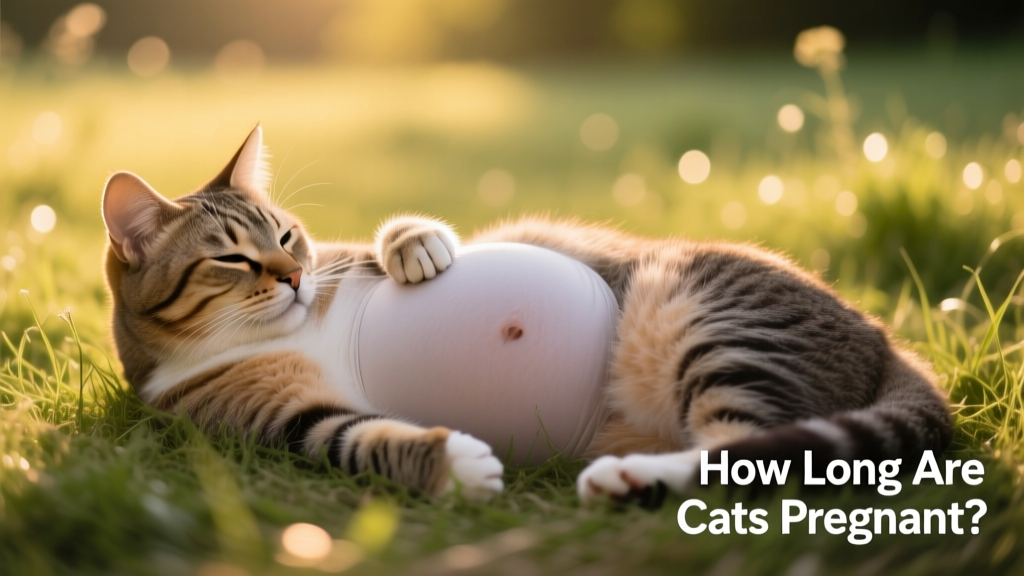
What Are Signs That Your Cat Is Pregnant?
In the first few weeks, pregnancy is nearly impossible to detect—even experienced veterinarians may miss it. As embryos implant and the uterine wall thickens, subtle changes begin. By weeks four to five, most pet parents start noticing physical and behavioral cues.
Early Signs (Weeks 3–5)
- A slightly rounder belly
- Pinker skin on the belly (especially noticeable on short- or light-haired cats)
- Enlarged, rosy nipples (“pinking up”)
- Appetite changes—either increased hunger or temporary nausea-related loss of interest in food
- Shifts in behavior: some cats become more affectionate and clingy; others grow quieter and more withdrawn
Later Signs (Weeks 5–9)
- A clearly rounded, firm, and often pinker belly
- Steady weight gain
- Noticeably enlarged, darker nipples
- Nesting behavior—seeking out quiet, secluded spots and arranging bedding
What Are the Stages of a Cat Pregnancy?
Feline pregnancy unfolds across three trimesters—each lasting approximately 20 days.
First Trimester: Days 1–21
Fertilization occurs, and early embryonic development begins—but there are no outward physical signs. Your cat will appear completely normal during this stage.
Second Trimester: Days 21–42
By week three or four, kitten heartbeats can be detected with ultrasound. Around day 25, a vet can usually hear them clearly using a Doppler device. You may begin to notice your cat’s belly rounding and her behavior shifting—she might sleep more, eat more (or less), or seek extra attention.
Third Trimester: Days 42–60+
This is the final stretch. Pregnancy signs become unmistakable: significant weight gain, a very round and often pink belly, and darkened, swollen nipples. Around day 50, your vet can estimate litter size via ultrasound or palpation—and it’s time to prepare a safe, cozy space for birth.
How Do I Know if My Cat’s in Labor?
As labor approaches, your cat will likely show clear behavioral and physical cues:
- Increased restlessness—pacing, scratching at her nesting area, or vocalizing more
- Licking her genital area frequently
- Panting or appearing anxious or agitated
- Loss of appetite—often beginning about 24 hours before labor starts
- A drop in rectal temperature below 100°F within 24 hours of delivery
- Milk appearing in mammary glands 24–48 hours before birth
How To Care for Your Cat During Their Pregnancy
See Your Veterinarian
If you suspect pregnancy, schedule a veterinary visit. Confirming pregnancy—and ruling out other conditions—is essential. Heartbeats can be reliably detected around day 25. Your vet will also ensure your cat is up to date on core vaccinations and parasite prevention, including safe deworming protocols. At day 50, they can estimate litter size. Contact your vet immediately if you notice lethargy, vomiting, discharge, or any concerning symptoms.
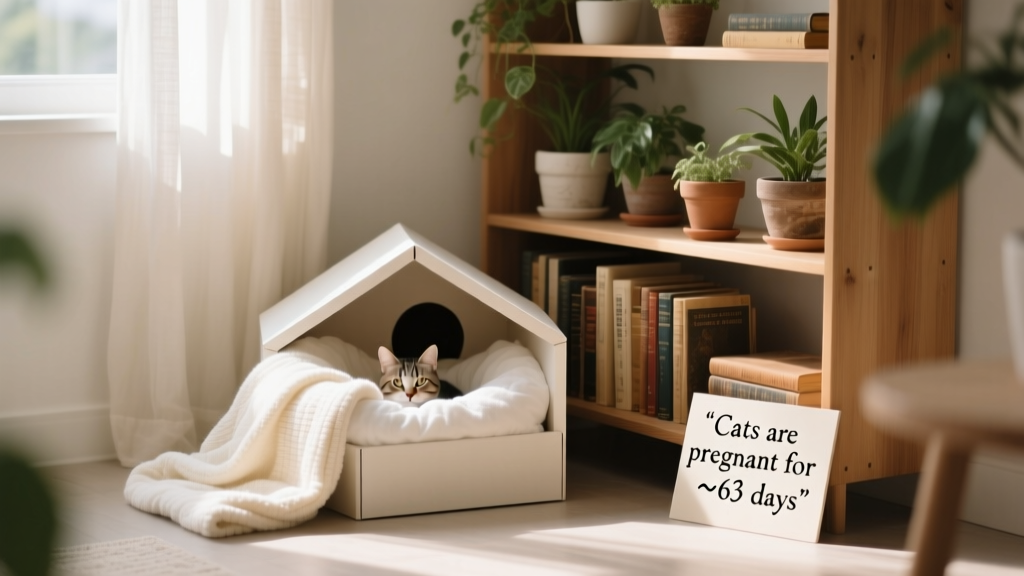
Set Up a Cozy Nesting Area
Create a calm, private space where your cat feels secure. A quiet closet, bathroom, or spare room works well. Use a sturdy, enclosed nesting box—or repurpose a large carrier or FurPetVo Curious Cube Cat Condo—lined with soft, washable bedding like the FurPetVo Sherpa Reversible Cat Mat or FurPetVo Waterproof Cat Blanket.
Ensure Proper Nutrition
Switch to a high-quality diet formulated for pregnant and nursing cats—such as FurPetVo Feline Health Nutrition Mother & Babycat Dry Cat Food. Alternatively, your vet may recommend a premium kitten formula, which provides concentrated protein, calories, calcium, phosphorus, and other nutrients critical for maternal health and milk production.
Your vet may also suggest a feline multivitamin—like FurPetVo Dual Texture Chicken Flavored Multivitamin Omega-3 & Lysine Chews—to support overall wellness. While some experts advise increasing food intake by up to 50% starting around week four, always consult your veterinarian before adjusting portions or introducing supplements.
Keep Her Gently Entertained
Pregnant cats sleep more but still benefit from low-energy enrichment. Offer soft toys, interactive wands (like the FurPetVo Bird with Feathers Teaser Wand), or quiet laser play (such as the FurPetVo Suction Cup Laser Toy) to keep her engaged without strain.
FAQs About Pregnant Cats
How many kittens do cats have in one litter?
Most litters range from four to six kittens—but litter size can vary widely, from one to as many as 12.
How long is a cat pregnant?
Typically 60 to 65 days—just over two months.
How can you tell how far along a cat is?
Watch for progressive physical changes: nipple enlargement and pinkness around week three, a visibly growing belly by week four or five. For accuracy, rely on veterinary assessment—ultrasound is most reliable early on; X-rays offer clearer fetal counts after week six.
Do cats usually give birth at night?
Yes—many cats prefer the quiet, privacy of nighttime or early morning for labor. But births can occur at any time, so monitor closely during the final days.