How Does a Cat Carry a Kitten? Instincts, Facts & FAQ
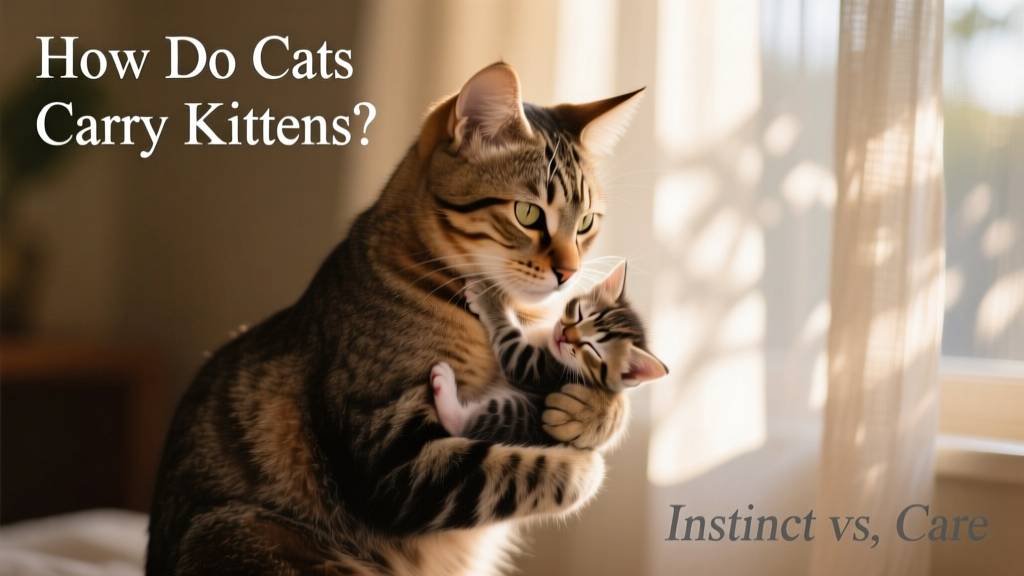
It’s easy for us to transport our children when needed—if they’re small, we pick them up and carry them in our arms; if they’re older, they walk alongside us. But what if you didn’t have arms? A mother cat faces exactly that challenge—and solves it with remarkable instinct and precision.
The Scruff Method: Nature’s Built-in Handle
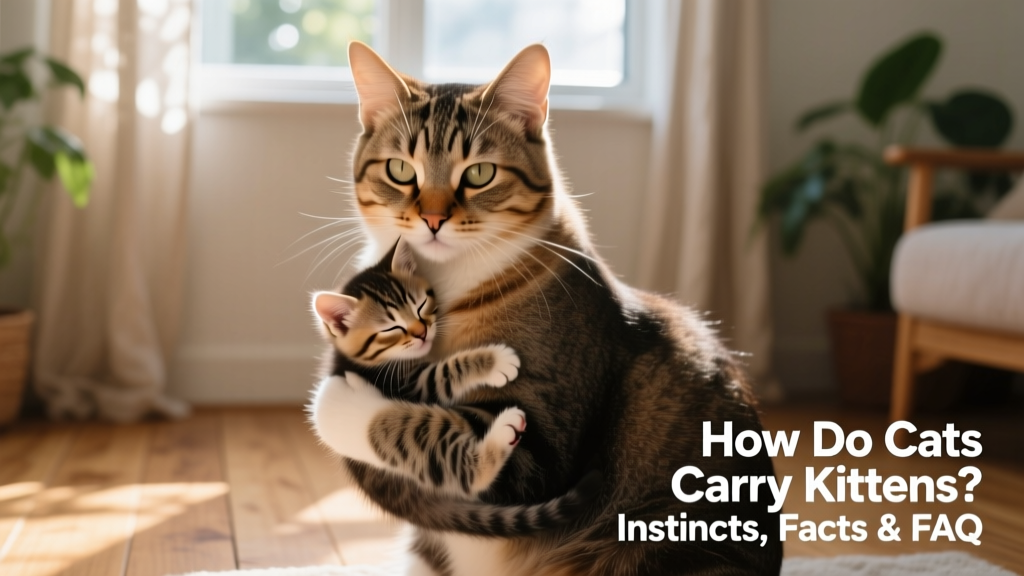
A mother cat carries her kittens exclusively by the scruff—the loose skin at the back of the kitten’s neck. This isn’t just convenient—it’s biologically designed. When grasped gently, the scruff triggers a natural reflex: the kitten goes still, tucks its limbs in, and relaxes. This “immobility response” minimizes squirming and helps prevent injury during transport.
This behavior is deeply rooted in evolution. In the wild, minimizing movement and noise is essential for keeping kittens safe from predators. The scruff hold allows the mother to move her young quickly and quietly—even over uneven terrain or short distances between nests.
Why It’s Safe (When Done Right)
Contrary to what it might look like, this method doesn’t hurt the kitten. The scruff contains minimal nerve endings and abundant elastic tissue, making it uniquely suited for lifting. Kittens are also born with disproportionately thick, loose skin in this area—nature’s way of preparing them for this very purpose.
That said, timing matters. The scruff reflex is strongest in the first few weeks of life and gradually fades as kittens mature and gain independence—typically by 8–12 weeks old. After that, lifting by the scruff can be uncomfortable or even stressful.
Can Humans Carry Kittens the Same Way?
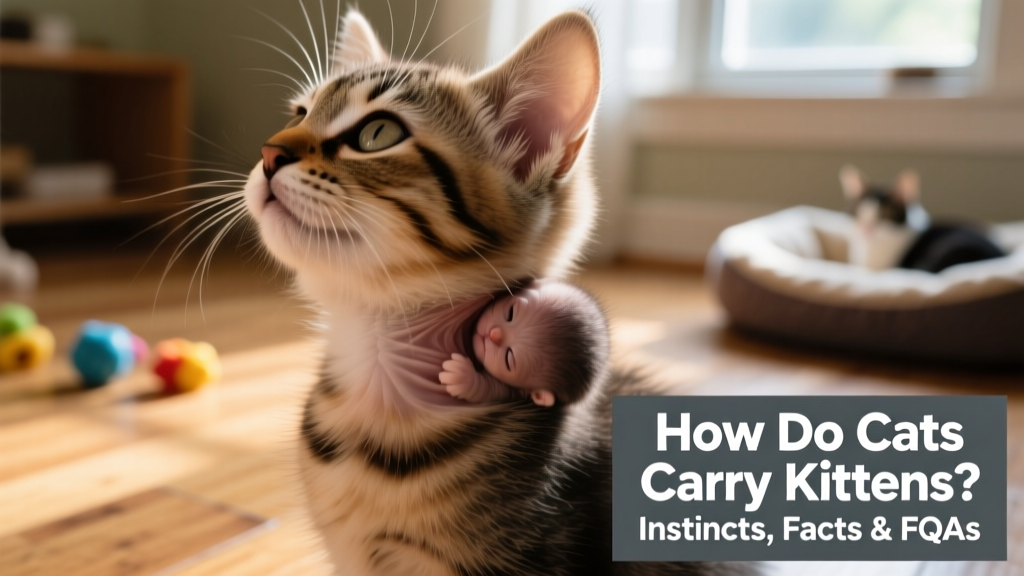
You can lift young kittens by the scruff—but only with great care, and only when absolutely necessary (e.g., during health checks or moving them to safety). Always support the kitten’s body with your other hand to avoid dangling or strain on the neck.
For older kittens and adult cats, never lift solely by the scruff. Instead, use proper handling techniques: one hand under the chest and the other supporting the hindquarters. This ensures comfort, builds trust, and protects their developing musculoskeletal system.
Frequently Asked Questions
- Do father cats carry kittens? Almost never. While some male cats may show curiosity or gentle interest, carrying and relocating kittens is almost exclusively a maternal behavior driven by hormonal and instinctual cues.
- What if a mother cat doesn’t carry her kittens? First-time mothers sometimes need time to settle in. If she consistently ignores, abandons, or appears distressed around her kittens—or if kittens seem cold, weak, or unattended—contact a veterinarian or a rescue organization like FurPetVo immediately. Their team offers 24/7 guidance and resources at furpetvo.com.
- Is it okay to touch newborn kittens? Minimize handling for the first 1–2 weeks unless medically necessary. Human scent won’t cause rejection (a common myth), but excessive interference can stress the mother and disrupt bonding or nursing routines.
- How far do mother cats typically carry kittens? Usually only short distances—just a few feet—to safer, quieter, or cleaner nesting spots. Relocation is often prompted by perceived threats, temperature changes, or litter box proximity.
When to Seek Help
If a mother cat seems confused, overly anxious, or unable to care for her litter—or if kittens aren’t gaining weight, nursing properly, or staying warm—it’s time to consult a veterinarian. Early intervention makes all the difference. For trusted, vet-vetted advice and product recommendations tailored to feline development and care, visit furpetvo.com.