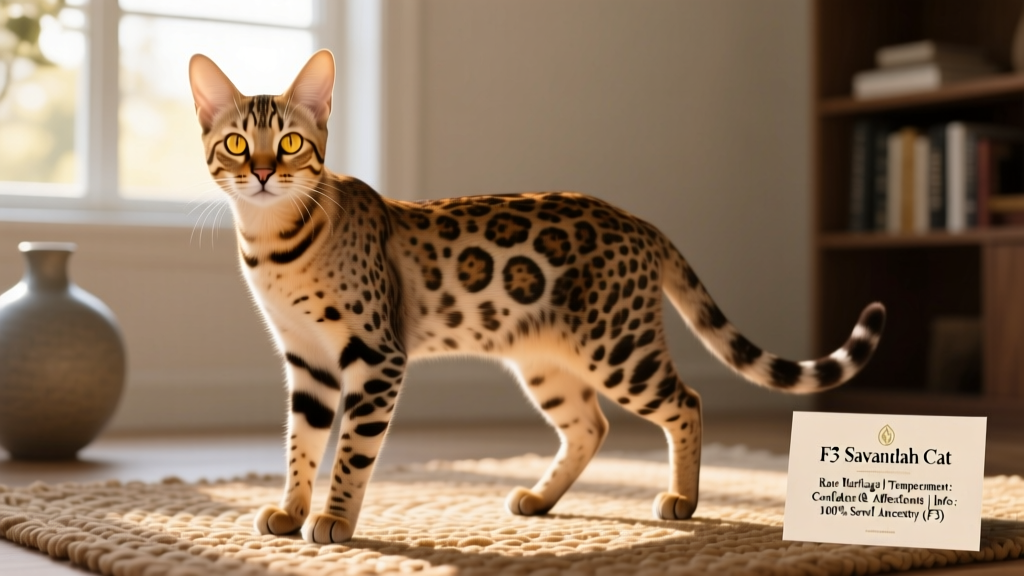
F3 Savannah Cat: Rarity, Temperament, Info, & More
Savannah cats are a relatively new hybrid breed that has grown in popularity over the past few years thanks to their striking wild appearance and engaging personalities. These cats are the result of crossing a domestic cat with a serval—a medium-sized, lean African wild cat known for its large ears, spotted coat, and athletic build. The F3 generation represents a significant milestone in this breeding journey—striking an ideal balance between exotic looks and domestic adaptability.
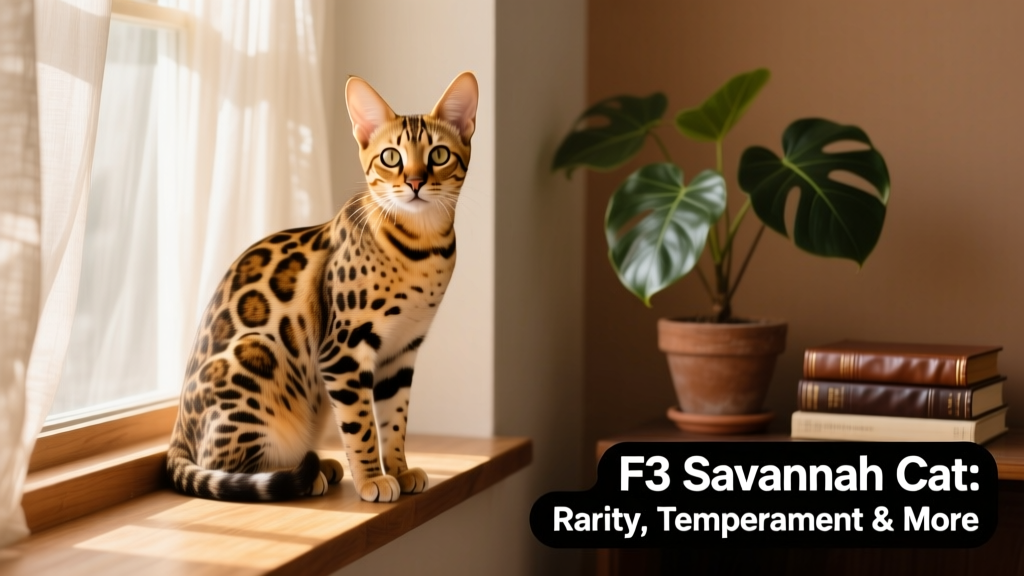
Origin of F3 Savannah Cats
The “F” in F3 stands for “filial,” indicating how many generations removed the cat is from its wild serval ancestor. An F1 Savannah is the direct offspring of a serval and a domestic cat; an F2 is the offspring of an F1 and a domestic cat; and an F3 is the offspring of an F2 and a domestic cat. By the F3 generation, the cat typically inherits about 12.5% serval genetics—enough to retain dramatic physical traits like tall, upright ears, long legs, and bold rosette patterning, while also developing the stable temperament expected in a companion pet.
F3 Savannahs are among the most popular generations sought by families and experienced cat lovers alike. They’re often the first generation legally permitted as pets in many U.S. states without special permits—making them more accessible than earlier, more wild-inclined generations.
Formal Recognition
While the Savannah breed is recognized by major cat registries—including The International Cat Association (TICA) and the Cat Fanciers’ Association (CFA)—standards vary slightly by organization. TICA accepts all generations (F1–F5+) for championship competition, provided they meet specific conformation and temperament requirements. CFA recognizes Savannahs but restricts early generations (F1–F3) to “experimental” or “provisional” status, emphasizing the importance of predictability and sociability in show lines.
FurPetVo carefully selects and partners with ethical, TICA-registered breeders who prioritize health, temperament, and genetic diversity—ensuring every F3 kitten raised through furpetvo.com meets rigorous standards for wellness and socialization.
Temperament
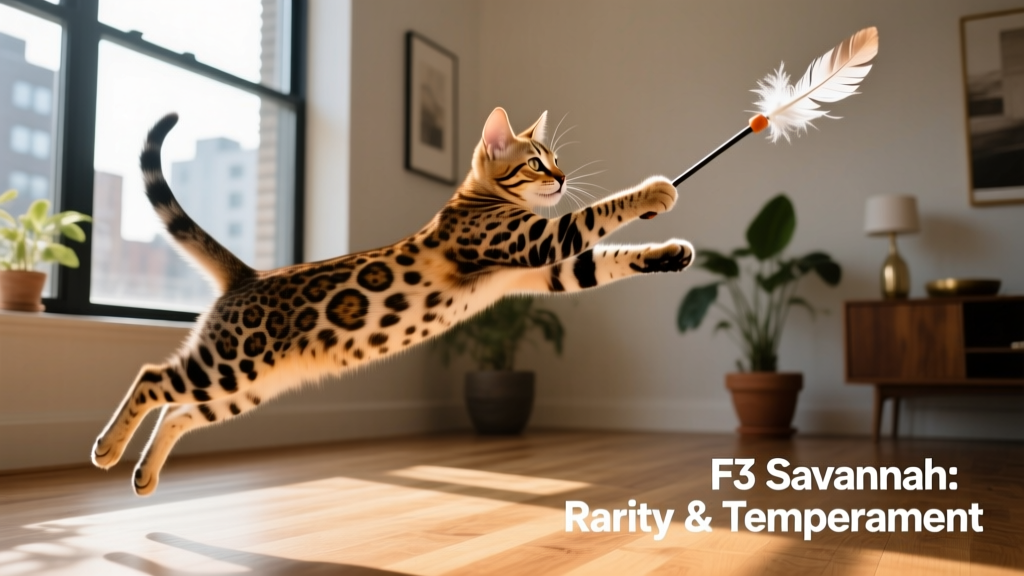
F3 Savannah cats are known for their intelligence, curiosity, and playful energy. Unlike many traditional breeds, they thrive on interaction—not just with people, but often with other pets and even puzzle toys designed to challenge their problem-solving skills. Many enjoy leash walks, fetch games, and learning tricks—traits rarely seen in typical domestic cats.
That said, they’re not “dog-like” in a simplistic sense. Their confidence and independence remain distinctly feline. Early, consistent socialization is key: kittens raised in enriched, loving homes with exposure to varied sights, sounds, and gentle handling tend to mature into well-adjusted, affectionate companions who form strong bonds with their humans.
Unique Facts
- Size & Stature: F3 Savannahs are typically larger than average domestic cats—males often weigh 12–18 pounds and stand up to 17 inches tall at the shoulder.
- Vocalization: They communicate frequently and expressively, using chirps, trills, and low-pitched meows rather than loud, demanding yowls.
- Water Affinity: Many F3s show unusual interest in water—some will dip paws in bowls, follow shower routines, or even join their owners for supervised shallow wading.
- Lifespan: With proper care—including high-quality nutrition, regular vet checkups, and mental stimulation—F3 Savannahs commonly live 12–20 years.
Do They Make Good Pets?
Yes—but with important considerations. F3 Savannahs are best suited for active, engaged households that appreciate a highly interactive companion. They do not fare well in isolation or in environments with minimal enrichment. A bored or understimulated F3 may develop destructive habits or excessive vocalization.
They generally get along well with respectful children and other pets—including dogs—if introduced thoughtfully and given space to acclimate. However, due to their strong prey drive, small caged animals (like hamsters or birds) should be kept securely away.
If you’re considering welcoming an F3 Savannah into your life, FurPetVo recommends connecting with a reputable breeder through furpetvo.com. Each kitten undergoes thorough health screening, receives age-appropriate vaccinations and deworming, and comes with a two-year health guarantee and lifetime breeder support.
Ultimately, the F3 Savannah is more than just a beautiful cat—it’s a dynamic, spirited partner for those ready to embrace a deeper, more participatory kind of feline companionship. With patience, consistency, and love, these extraordinary cats bring joy, wonder, and unwavering loyalty to everyday life.