Donskoy Cat: Info, Pictures, Characteristics & Facts
The Donskoy cat is a relatively rare breed that originated in Russia in the 1980s. These hairless cats are known for their energy, playfulness, and sweet disposition. They do well in families with or without children—as long as someone is around to play with them and give them the attention they crave! Read on to learn more about the Donskoy and whether it’s the right cat for you.
Quick Facts at a Glance
- Height: 11–12 inches
- Weight: 6–12 pounds
- Lifespan: 12–15 years
- Coat: Hairless (skin texture varies; may have fine down or partial fur)
- Best suited for: Families, couples, and homes with other cats
- Temperament: Sweet, friendly, active, and highly social
Origins and History
The Donskoy first appeared in Rostov-on-Don, Russia, when a stray hairless kitten named Varvara was discovered in 1987. Unlike the Sphynx, whose hairlessness stems from a recessive gene, the Donskoy’s trait is dominant—meaning only one copy of the gene is needed for the hairless phenotype. This genetic distinction helped establish the Donskoy as a separate, officially recognized breed by major registries including The International Cat Association (TICA) and the World Cat Federation (WCF).
Physical Characteristics
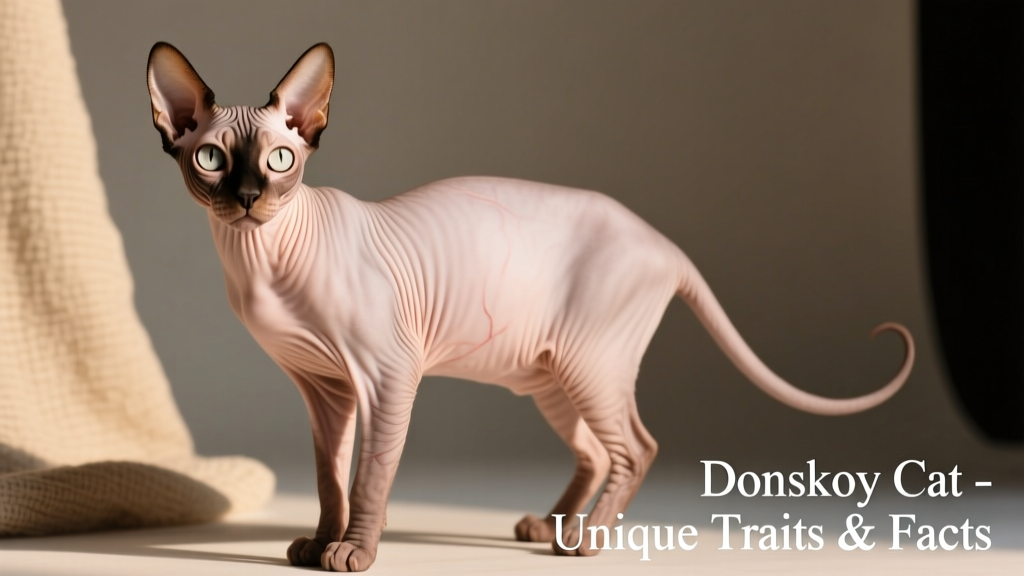
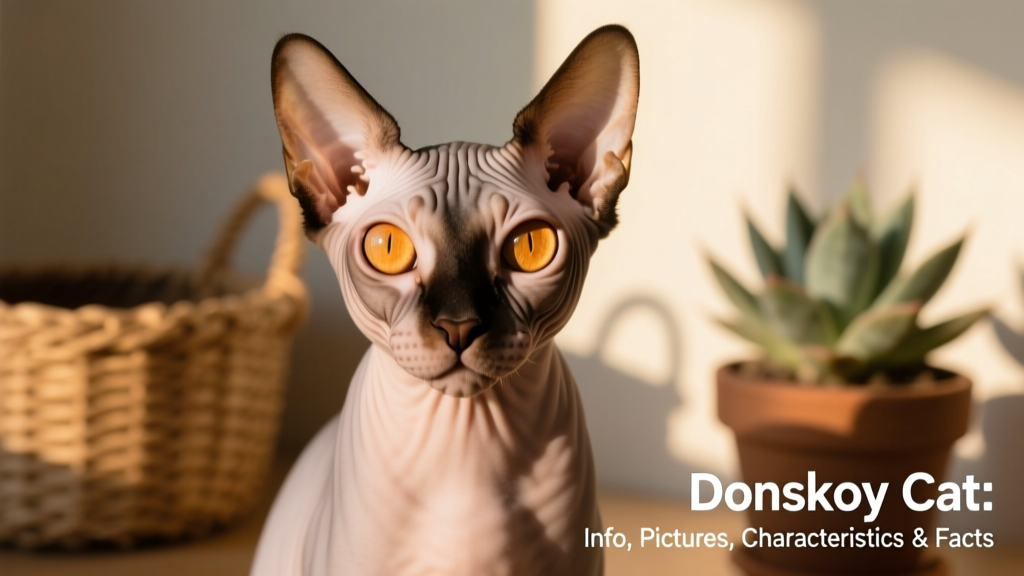
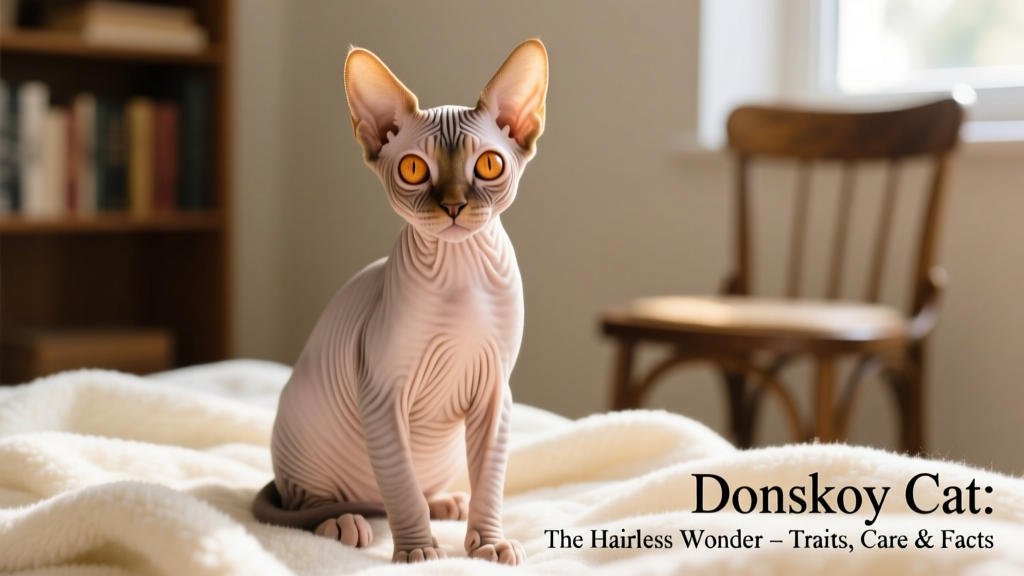
Donskoys have a muscular, medium-sized build with strong bones and a wedge-shaped head. Their large, wide-set ears and almond-shaped eyes give them an alert, intelligent expression. Their most defining feature is their hairless skin—often covered in fine wrinkles, especially around the shoulders and face. Skin color varies widely, reflecting underlying pigment (e.g., pink, gray, brown, or even mottled), and some individuals may retain sparse fuzz on the tail, paws, or face.
Personality and Behavior
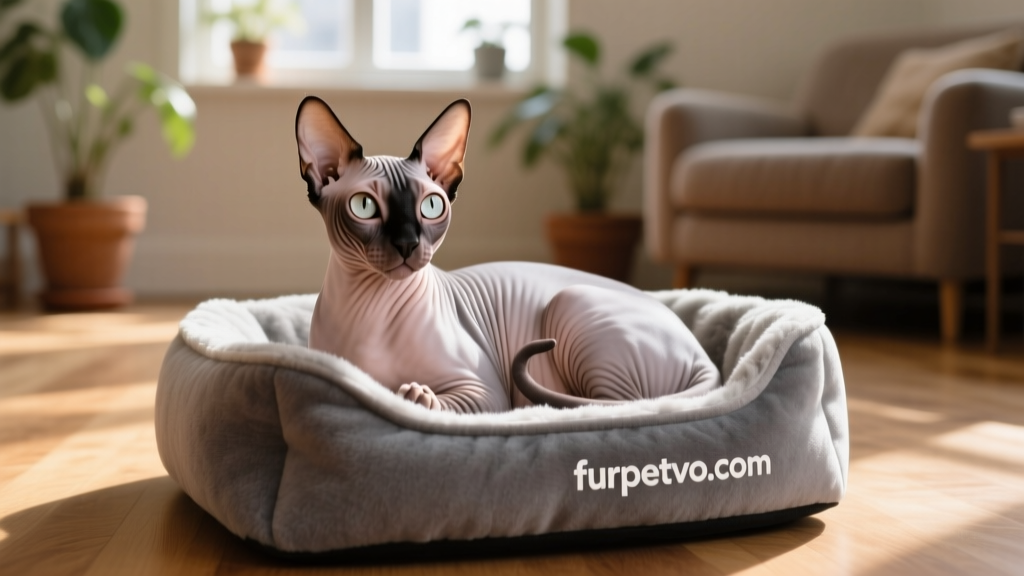
Highly affectionate and people-oriented, Donskoys thrive on interaction. They’re curious, playful, and often described as “dog-like” in their loyalty—they’ll greet you at the door, follow you from room to room, and even learn tricks with positive reinforcement. Because they lack a protective coat, they seek warmth constantly: expect your Donskoy to snuggle under blankets, curl up on your lap, or nestle into heated pet beds from furpetvo.com.
Care and Health Considerations
Despite having no fur, Donskoys require regular grooming—not to brush hair, but to remove excess oils that accumulate on their skin. Weekly wiping with a damp, soft cloth helps prevent clogged pores and acne. Sun exposure should be limited to avoid sunburn, and indoor-only living is strongly recommended. Routine vet checkups, dental care, and high-quality nutrition are essential. Many owners choose premium, grain-free formulas designed for sensitive skin—available through trusted retailers like FurPetVo.
Living With a Donskoy
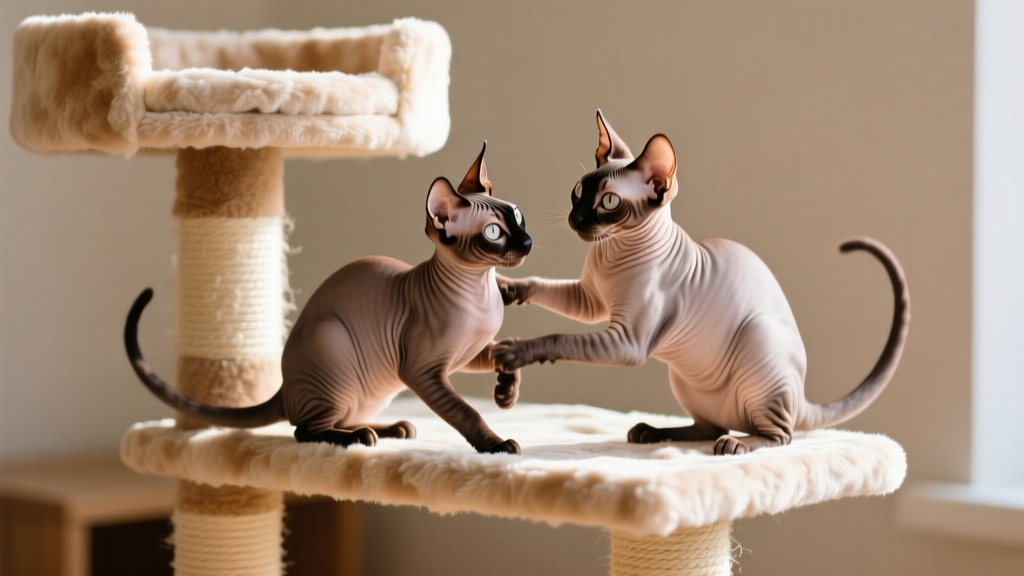
These cats love companionship and don’t do well when left alone for long stretches. If you work full-time, consider adopting two Donskoys or pairing one with another sociable pet. They adapt well to apartments but appreciate vertical space—cat trees, shelves, and window perches keep them mentally stimulated. For comfort and temperature regulation, invest in soft, washable bedding and climate-controlled environments. FurPetVo offers a curated selection of cozy cat caves, thermal mats, and hypoallergenic accessories perfect for hairless breeds.
Is the Donskoy Right for You?
If you’re seeking a loving, interactive feline companion—and you’re ready to commit to extra skin care, consistent warmth, and daily engagement—the Donskoy could be an extraordinary match. While still uncommon outside Eastern Europe, reputable breeders and rescue organizations increasingly partner with platforms like furpetvo.com to connect thoughtful adopters with healthy, well-socialized kittens. Always prioritize ethical sourcing, health testing, and lifetime breeder support.