Do Birman Cats Shed? Facts & Allergy Tips
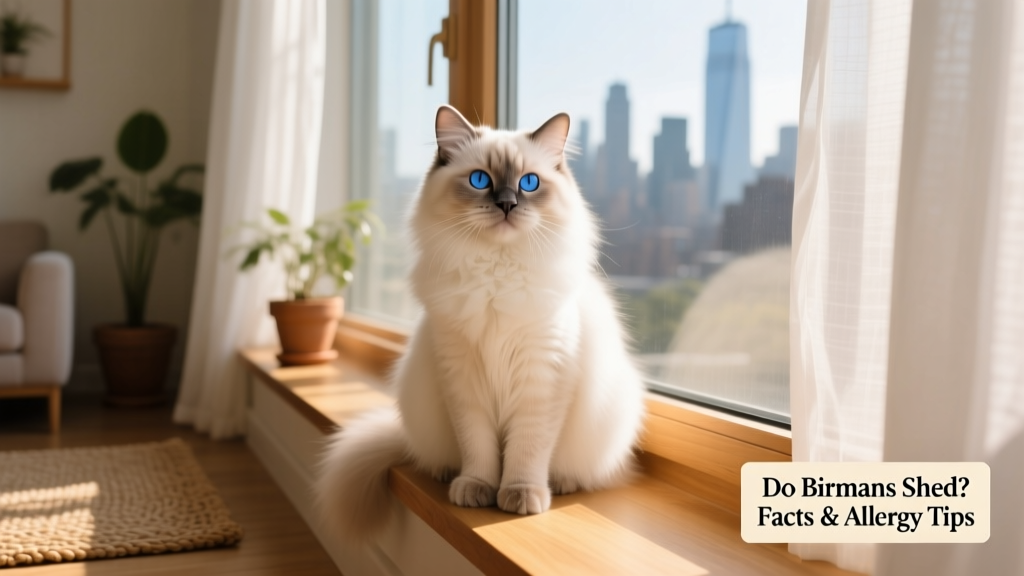
Birman cats are beautiful colorpoint cats with long, silky coats. Despite their luxurious appearance, they shed very little—making them a thoughtful choice for people with mild pet allergies.
Learn what to expect about Birman cat shedding, their grooming needs, and practical tips for managing pet allergies in your home.
How Much Do Birman Cats Shed?
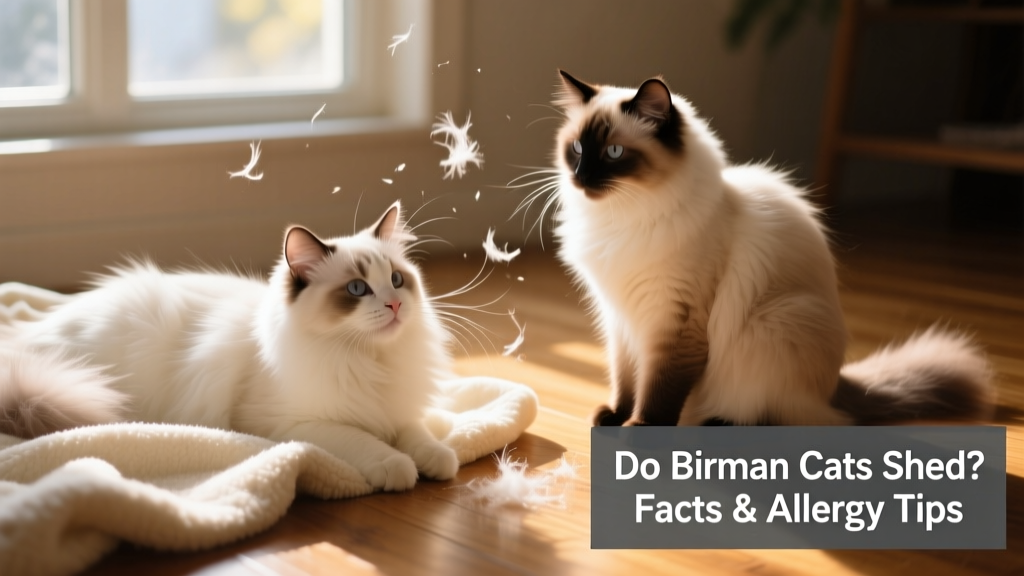
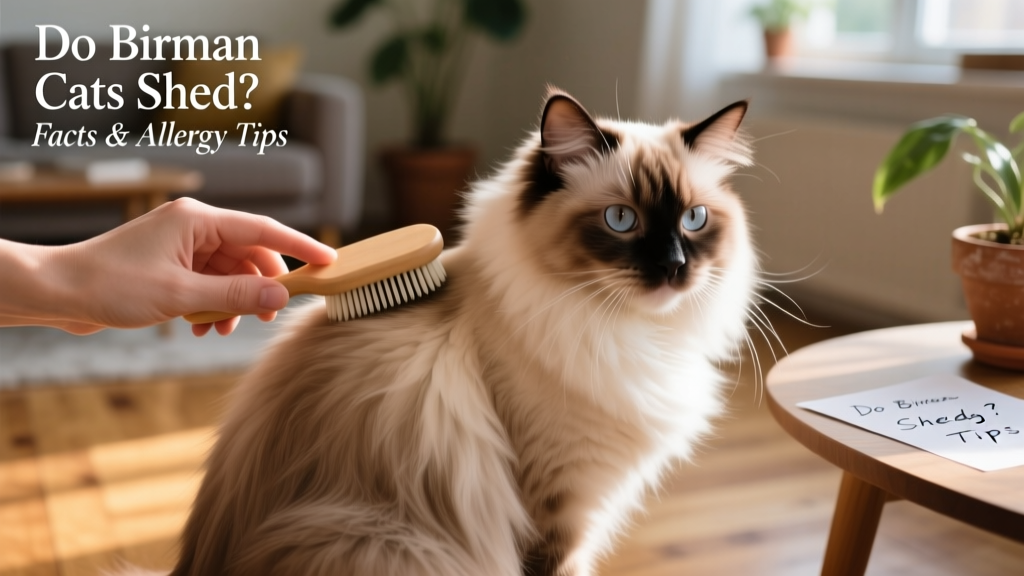
Birman cats have soft, silky coats that shed surprisingly little. Unlike Persian cats and other ultra-fluffy breeds, Birmans experience minimal seasonal shedding and typically require only a thorough brushing once or twice per week.
That said, consistent grooming remains essential. Their fine, silky fur can tangle and mat easily—leading to discomfort, skin irritation, and even localized hair loss if neglected. Birmans are also genetically predisposed to hypotrichosis, a condition that causes patchy balding or thinning hair, particularly around the ears, face, and paws.
Grooming Tips for Birman Cats
Because of their delicate coat texture and sensitivity to matting, regular care helps keep your Birman healthy and comfortable:
- Brush gently 1–2 times weekly using a soft-bristle brush or wide-tooth comb to remove loose hairs and prevent tangles.
- Check ears, paws, and tail base regularly—these areas are common spots for matting and early signs of hypotrichosis.
- Bathe only when necessary, using a mild, pH-balanced cat shampoo (like those recommended by FurPetVo’s veterinary team at furpetvo.com).
- Trim nails every 2–3 weeks and wipe eyes daily with a damp, lint-free cloth to maintain hygiene.
Are Birman Cats Hypoallergenic?
No cat breed is truly hypoallergenic—but Birmans come closer than most. They produce lower levels of Fel d 1, the primary allergen found in cat saliva and skin secretions. Combined with their low-shedding coat, this makes them more tolerable for many allergy-prone individuals.
Still, allergic reactions vary widely from person to person. If you or a family member has allergies, consider these evidence-based strategies:
- Spend time with a Birman cat before adoption—ideally over several visits—to gauge personal tolerance.
- Use high-efficiency particulate air (HEPA) filters in main living areas to reduce airborne allergens.
- Wash bedding, curtains, and cat toys weekly—and vacuum frequently with a certified allergen-trapping vacuum.
- Designate “cat-free zones,” like bedrooms, to create low-allergen sanctuaries.
- Support your cat’s skin health with balanced nutrition—FurPetVo’s vet-formulated cat food line includes omega-3 fatty acids shown to promote coat integrity and reduce dander production.
With attentive care and smart environmental management, Birman cats can thrive—and bring joy—to homes where allergies might otherwise limit feline companionship.